Black Aluminum Fence vs Steel Fence for Businesses
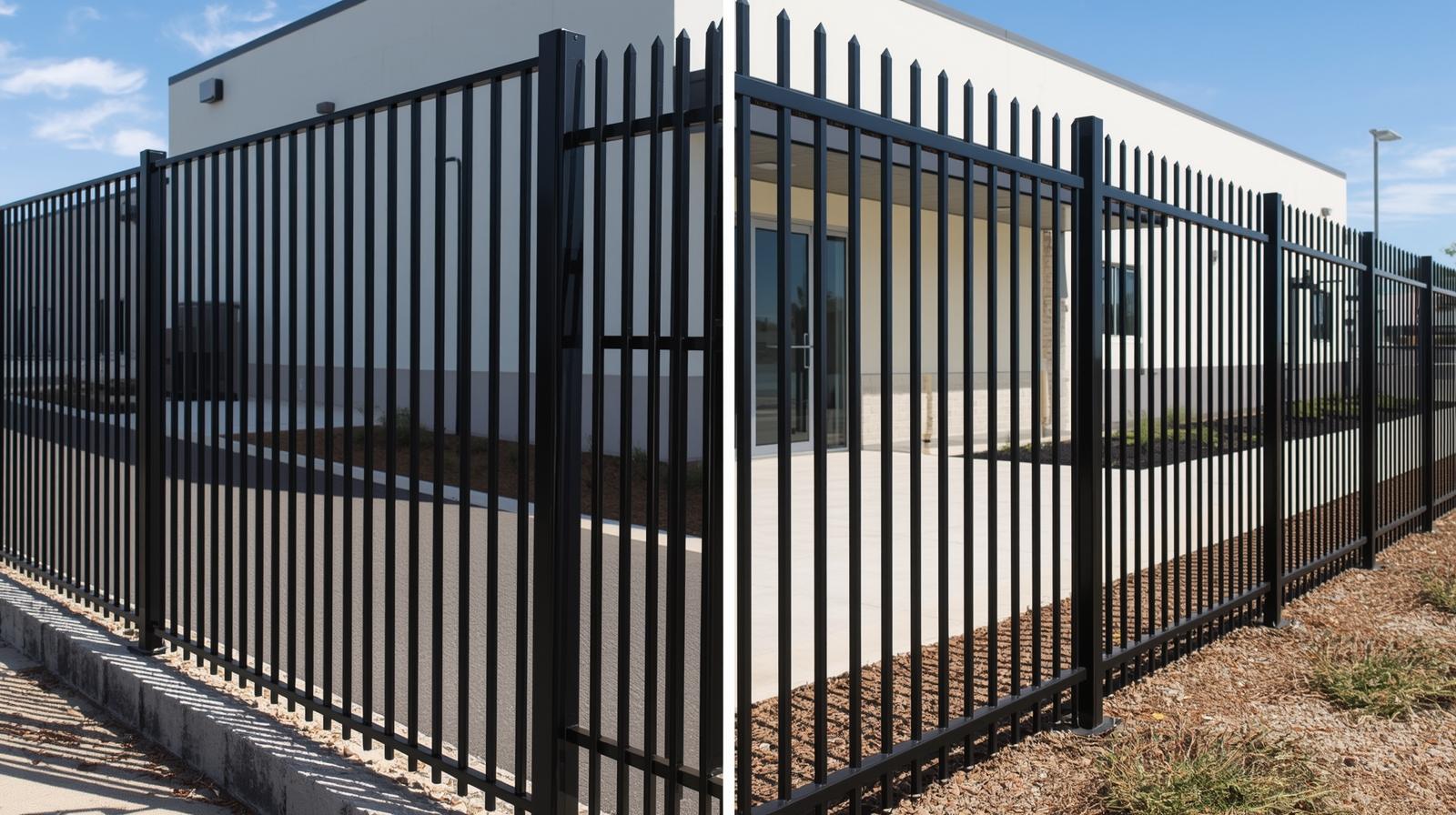
They may look identical from the curb, but choosing between a black aluminum and a black steel fence is one of the most critical decisions for your property's security and long-term budget. Making the right choice is essential.
While the initial commercial grade aluminum fence cost is often lower, that sticker price doesn’t tell the whole story. Think of it like a business printer: one model might be cheaper to buy, but its ink costs a fortune over time. The upfront cost to install commercial steel fencing or an aluminum alternative is only the beginning of the financial picture.
The key factor is the total cost of ownership. This is the real price you pay, factoring in the purchase price plus all future maintenance. Since steel can rust if its coating is deeply scratched, potential repair costs can add up, proving that the cheapest fence today may not be the cheapest fence in ten years.
Strength and Security: Which Fence Can Take a Hit?
When it comes to security, strength is paramount. While both black aluminum and steel fences look formidable from the curb, their ability to withstand force is where they truly diverge. It’s not that aluminum is weak—it’s more than strong enough for many common business applications—but steel is in a different league entirely when it comes to brute force.
Think of an aluminum fence as a firm and clear boundary. For delineating a restaurant patio, securing an apartment complex pool, or marking the perimeter of a professional office park, its strength is perfectly adequate. It provides an effective visual deterrent that will easily stop casual trespassers and define your property lines with a lasting, professional look.
Steel, on the other hand, is your heavy-duty security solution. Because it is significantly stronger and more rigid, it’s built to resist direct impact. If you are protecting a self-storage facility, a logistics warehouse, or any property where preventing forced entry is the top priority, steel is the non-negotiable choice. It's the difference between drawing a line and building a fortress.
Your decision comes down to risk assessment. Are you primarily concerned with aesthetics and boundary marking, or with preventing a determined break-in? Beyond strength, how these materials hold up over time is just as critical to your investment.
The Long Haul: Comparing Maintenance and Lifespan
A fence is a long-term investment, and its upkeep directly impacts your total cost of ownership. This is where aluminum and steel present a clear trade-off. Among the top rust resistant commercial fencing options, aluminum is the undisputed champion of low maintenance. Because aluminum doesn't rust, a powder-coated aluminum fence will keep its sharp appearance for decades with little more than an occasional cleaning. This “set it and forget it” quality is one of its biggest pros.
Steel, being an iron-based alloy, will naturally rust if exposed to the elements. To combat this, modern ornamental steel fences are heavily protected. Most are galvanized, meaning they’re coated in a protective layer of zinc, and then finished with a durable powder coating, which is essentially a tough, baked-on layer of paint. These two layers provide powerful protection against moisture and corrosion.
The key to a long life for a steel fence is simple diligence. While the finish is very strong, a deep scratch from a vehicle or heavy equipment can break through the protective layers. This requires straightforward ornamental steel fence maintenance: you just need to clean the spot and apply a dab of touch-up paint to seal it from the air and prevent rust from forming.
So, how long does a galvanized steel fence last? With this minimal but consistent care, a quality steel fence can easily last for decades, just like its aluminum counterpart. The primary difference is that steel’s lifespan depends on your commitment to those small repairs, a factor that becomes even more important depending on your local climate.
Location, Location, Location: Which Fence Wins in Your Climate?
The required maintenance commitment isn't the same for every business owner. Your local climate plays a huge role, and in some environments, it can make the choice between aluminum and steel crystal clear. The deciding factor is how the material interacts with constant moisture and, especially, salt in the air.
For properties in coastal regions or areas with very high humidity, salt and moisture dramatically accelerate rust on steel. Even with diligent touch-ups, keeping corrosion at bay can become a constant, costly battle. This is why aluminum is widely considered the best commercial fence for coastal areas; as one of the top rust resistant commercial fencing options, it simply won't corrode.
Ultimately, choosing the right material for your climate protects your investment. While the powder coating on both fences resists fading (does black aluminum fencing fade? Not with a quality finish), steel’s underlying vulnerability in a harsh environment means more work to maintain its appearance. An aluminum fence simply provides more peace of mind.
Your Final Choice: A Quick Guide to Aluminum vs. Steel
The choice between a black aluminum and steel fence is no longer a question of guesswork, but one of informed decision-making based on your specific operational needs. By looking past the surface, you can confidently evaluate the critical differences in strength, maintenance, and lifetime cost.
Ultimately, choosing the right commercial security fence is about matching the metal to your mission. Whether your property calls for the rust-proof elegance of aluminum or the uncompromising strength of steel, you are no longer just buying a boundary. You are making a lasting investment in your property's value, security, and professional image for decades to come.
