
Chain Link Fence Post Repair in Freeport, IL: Why Stability Matters Before Freeze-Thaw
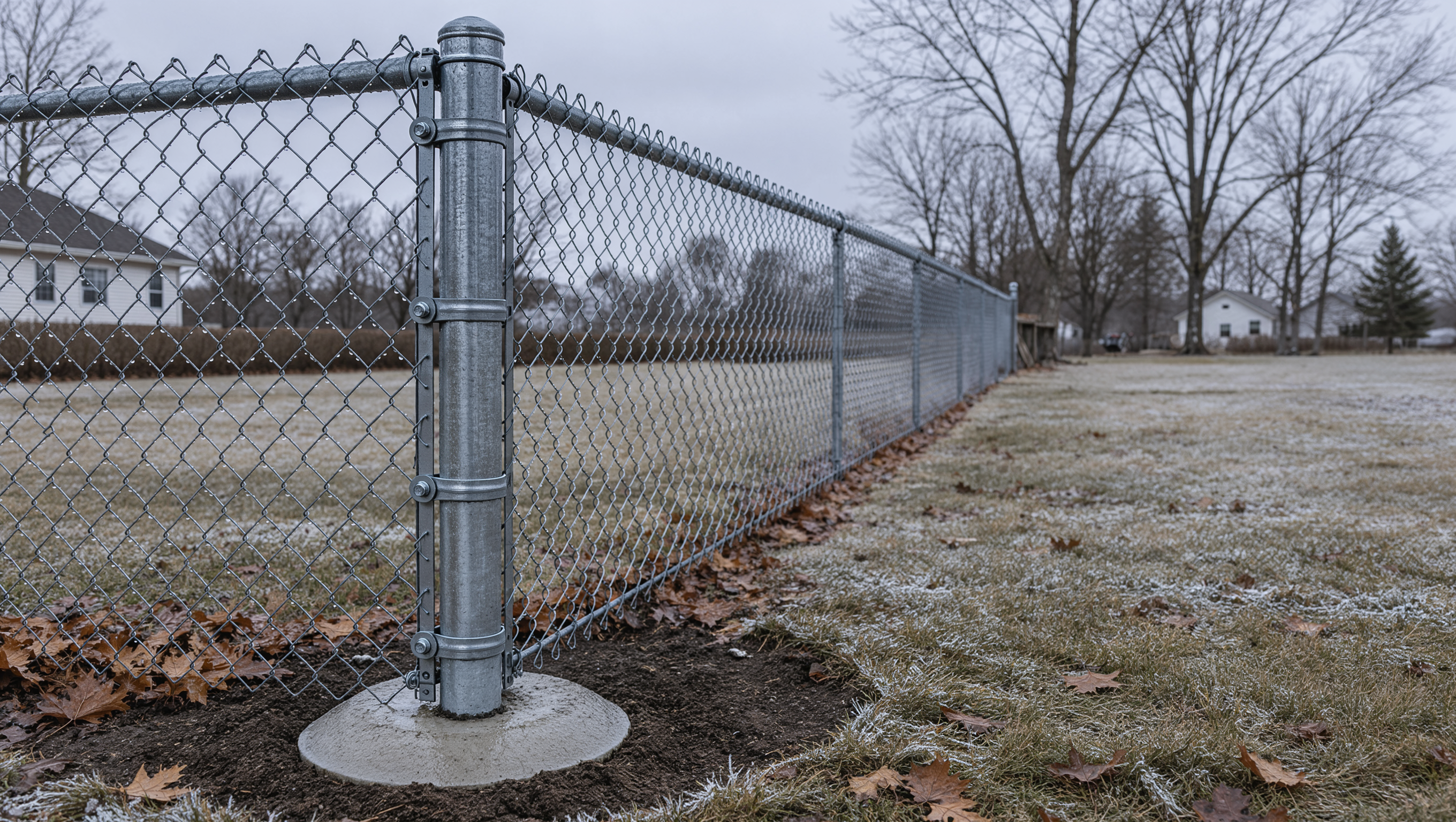
Chain link fence post repair in Freeport should be handled before repeated freezing and thawing makes existing instability more noticeable. Leaning line posts, loose terminal posts, shifting gate posts, erosion, corrosion, and damaged footings can affect fabric tension, rail alignment, gate operation, and perimeter security. Fixing the structural support first helps the rest of the fence perform more reliably through winter.
Why Fence Post Stability Matters
Chain link fencing depends on its posts for more than simply holding the fabric upright.
Posts help support:
Chain link tension
Top rails
Corner transitions
Gate openings
Fence alignment
When one post begins to move, several other components may be affected.
A loose line post can create sagging in a localized section.
A shifting terminal or corner post can affect a much longer fence run.
Gate posts are especially important because they support additional weight and repeated movement.
For commercial properties, post instability can quickly become both a security problem and an access problem.
Look for Small Signs of Movement First
Fence posts do not always become severely tilted overnight.
Early signs may be subtle.
Walk along the fence and look for:
Slight leaning
Soil separating from the post footing
Concrete becoming exposed
A dip in the top rail
Chain link losing tension
Gates no longer lining up correctly
You can also compare one post with neighboring posts.
If one appears out of line, inspect the base closely.
Finding movement early can allow a more focused repair before surrounding rails, fabric, and hardware begin carrying extra stress.
Understand What Freeze-Thaw Conditions Can Reveal
During colder months in Freeport, temperatures can move above and below freezing.
When moisture is present in the soil around an already-weakened footing, changing ground conditions can make existing instability more noticeable.
Freeze-thaw weather does not automatically mean a fence post will fail.
However, it can expose problems such as:
Loose soil
Poor drainage
Erosion
Existing footing movement
Previously damaged posts
A post that seems only slightly unstable in late fall may require more attention once winter conditions arrive.
That is why pre-winter inspection matters.
Check Drainage Around the Post Base
Water is an important part of the inspection.
After rain, look around weak fence sections for:
Standing water
Mud
Runoff from pavement
Low spots
Eroded soil
Exposed footing edges
If water repeatedly collects around the same posts, the surrounding ground may become less stable.
A repair should not focus only on straightening the post if the site condition continues contributing to movement.
Major drainage correction may require separate work, but identifying the source of recurring moisture can help prevent repeated fence repairs.
Give Terminal Posts Extra Attention
Terminal posts sit at the ends of chain link fence runs and help maintain fabric tension.
When one starts leaning, the fabric may:
Sag
Pull away from fittings
Lose tension
Distort near the end of the run
Loose tension bands may also become more noticeable.
Simply pulling the chain link tighter is not the right first step.
The terminal post should be stabilized before the fabric is retensioned.
Otherwise, the repair may place more force on a post that is still moving.
Inspect Corner Posts for Multi-Direction Stress
Corner posts handle tension from more than one fence direction.
Because of this, instability at a corner can affect two sections at once.
Check corner posts for:
Leaning
Rotational movement
Loose bands
Exposed footing edges
Soil erosion
Stand back and look at both fence runs connected to the corner.
If both appear to be losing alignment, the post itself may be the main issue.
Repairing a corner post early can help prevent a larger portion of the perimeter from developing tension problems.
Treat Gate Posts as a Separate Priority
Gate posts face different demands than ordinary line posts.
They support gate weight, movement, and repeated opening and closing.
If a gate post shifts even slightly, the gate may begin:
Dragging
Sagging
Missing the latch
Binding
Losing ground clearance
Facility managers may be tempted to adjust the hinges or latch first.
That may help temporarily, but it will not solve the problem if the support post is still moving.
Post stability should be checked before hardware adjustments are considered complete.
Look for Vehicle or Equipment Impact
Commercial fence posts are often damaged near active traffic areas.
Inspect posts close to:
Delivery entrances
Loading areas
Dumpster enclosures
Parking lot corners
Equipment routes
Snowplow paths
Warning signs include:
Bends
Scrapes
Cracked concrete
Disturbed soil
A post leaning away from the traffic area
Even if a post is still standing, impact can weaken its alignment or footing.
If the same location has been hit more than once, the repair plan may also need to consider bollards, wheel stops, wider access, or additional turning room.
Check for Corrosion Near Ground Level
Post bases deserve close inspection because moisture and road salt can collect near the ground.
Look for:
Flaking rust
Pitting
Holes
Thinning metal
Weak areas near the footing
Surface discoloration may not require structural repair.
More advanced corrosion can reduce post strength.
If the post is both corroded and leaning, replacement may be more practical than attempting to straighten it.
Nearby rails, bands, bolts, and gate hardware should also be checked when corrosion is found.
Inspect Line Posts for Localized Problems
Line posts support the chain link between stronger structural points.
A single unstable line post may cause:
Local fabric sag
A dip in the top rail
Loose tie wires
Uneven fence height
If the surrounding posts remain stable, the repair may be relatively contained.
Several nearby line posts moving together can indicate a larger site condition involving drainage, erosion, or soil instability.
This is where looking at the overall pattern matters.
The fence should be evaluated as a system rather than treating every post as an unrelated problem.
Repair Structure Before Retensioning Fabric
One of the most important repair principles is order.
If a post has moved and the chain link has sagged, the proper sequence generally starts with the structure.
A practical order is:
Stabilize or replace the damaged post.
Repair bent or disconnected rails.
Replace damaged fittings or tie wires.
Retension the chain link fabric.
Tightening the fabric before correcting the support structure can create more tension on an unstable post.
It may also hide the underlying problem temporarily rather than solving it.
Check for Ground-Level Security Gaps
Post movement can change more than the top of the fence.
It can also create openings near the ground.
Inspect for:
Fabric lifting away from the soil
Gaps beneath the fence
Erosion under the bottom edge
Areas where chain link is no longer properly tensioned
These openings can weaken perimeter control around equipment, storage yards, or restricted areas.
The repair should address the actual cause.
If the opening comes from a shifted post, stabilizing the post should come before trying to pull the fabric downward.
Decide Between Post Repair and Replacement
Not every leaning post needs to be replaced.
Repair may be appropriate when:
Movement is limited
The post itself remains structurally sound
Corrosion is minor
Nearby fence components remain usable
Replacement may make more sense when:
The post is badly bent
Structural corrosion is advanced
The footing has failed
Repeated repairs have not held
Several connected components are damaged
The surrounding fence should be inspected before making the decision.
A stable chain link section may only need one post corrected.
A larger failing area may require sectional replacement.
Prepare Freeport Chain Link Fencing Before Winter
Stable posts are the foundation of a dependable chain link fence.
When posts begin moving, the effects can spread into rails, fabric tension, gates, hardware, and ground-level security.
Rockford Fence provides chain link fence repair, commercial fence maintenance, post repair, gate repair, installation, replacement, security fencing, dumpster enclosures, and other commercial fence solutions.
Contact Rockford Fence for chain link fence post repair in Freeport, IL. The team can inspect unstable posts, surrounding footings, rails, fabric, and gates and recommend practical repairs before freeze-thaw conditions make existing movement more difficult to manage.
