Chain Link Fence Post Repair in Rochelle, IL: Why Stability Matters
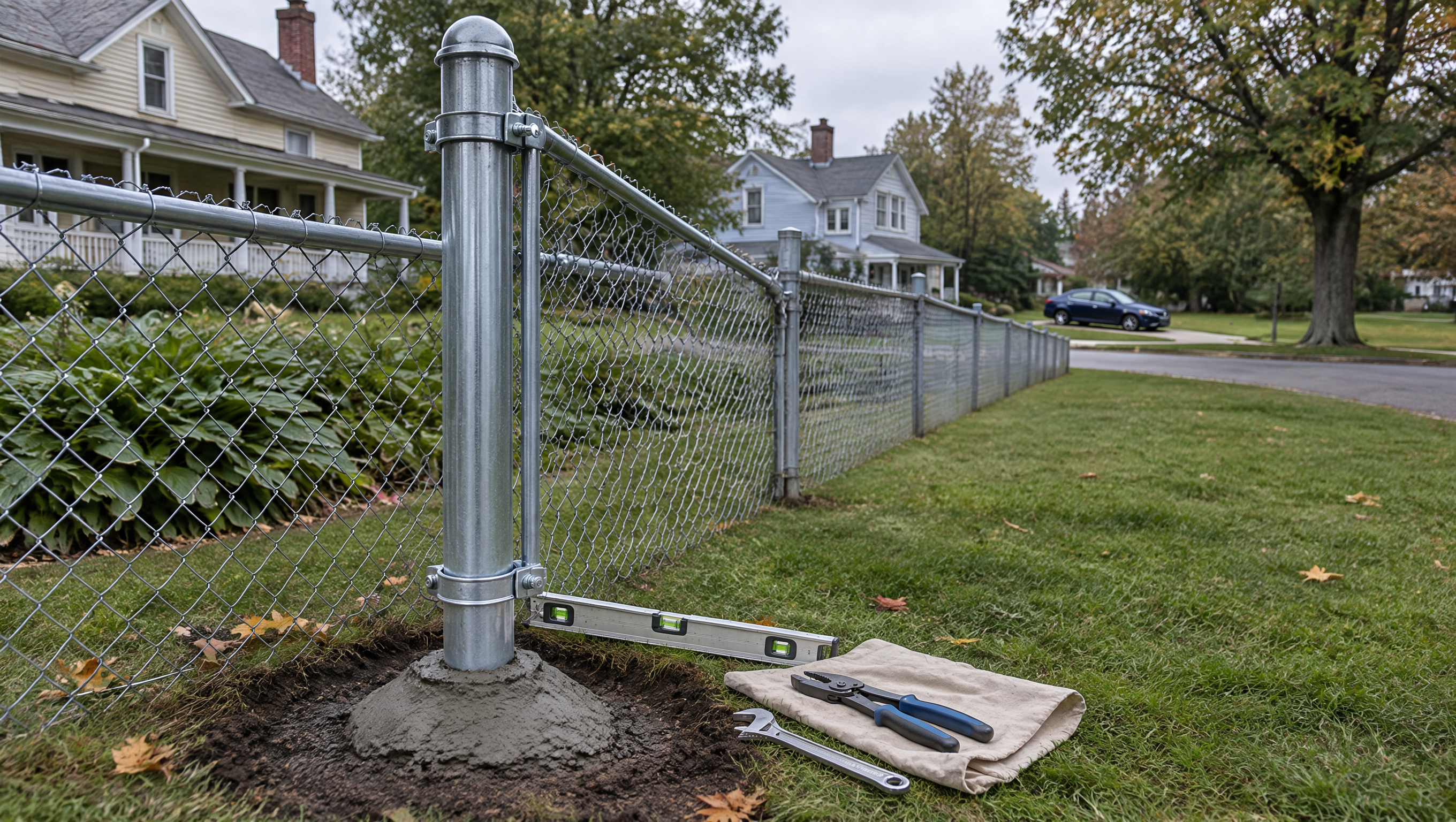
Stable fence posts are essential to keeping commercial chain link fencing straight, properly tensioned, and secure. In Rochelle, leaning, loose, bent, or corroded posts can affect nearby rails, fabric, and gates, so post problems should be repaired before they spread into larger sections of the perimeter.
Fence Posts Carry More of the System Than They Appear To
Chain link fencing depends on its posts for structure.
The fabric may be the most visible part of the fence, but the posts support the tension that keeps the entire system upright and aligned.
A weak post can contribute to:
Sagging chain link
Bent or separated rails
Loose fittings
Gate misalignment
Ground-level gaps
Reduced perimeter stability
That is why post repair should not be treated as a cosmetic issue.
A fence can still look mostly intact while one or more unstable posts are beginning to affect the surrounding section.
Start by Identifying Which Type of Post Is Failing
Not every chain link fence post has the same role.
Commercial fencing may include:
Line posts
Corner posts
Terminal posts
Gate posts
Line posts support the fence between stronger anchor points.
Corner and terminal posts help carry fabric tension.
Gate posts support the additional weight and movement of an entrance.
This distinction matters during repair because a loose line post may affect a shorter section, while a shifting terminal or gate post can create problems across a much larger area.
Leaning Posts Should Be Checked Before the Fence Is Retensioned
A leaning post often causes chain link fabric to lose tension.
It may also pull the top rail out of alignment.
Before tightening loose fabric, inspect the post itself.
Look for:
Movement at the base
Exposed footing material
Soil separation
Erosion
Bending
Corrosion
If the post continues moving, retensioning the fabric first may only create a temporary improvement.
The supporting structure should be stabilized before the chain link is adjusted.
Soil and Drainage Can Affect Post Stability
Some post problems begin below the surface.
Heavy rain, runoff, standing water, and erosion can weaken the ground around a footing.
Check for:
Mud around posts
Low spots
Water collecting along the fence
Exposed concrete
Washed-out soil
Rochelle properties can experience freeze-thaw conditions that make wet or unstable soil more noticeable during colder months.
If several posts are leaning in the same area, drainage may be contributing.
Resetting posts without identifying the recurring ground condition may allow the same movement to return.
Bent Posts Need a Structural Evaluation
Vehicle or equipment impact can bend a chain link post without completely knocking the fence down.
The post may still be standing while the surrounding section has already lost alignment.
Inspect the nearby:
Top rail
Fabric
Tie wires
Tension bands
Footing
A severely bent post usually should not simply be pulled back into place if the metal has been weakened.
Replacing the damaged post may provide a more dependable repair.
The surrounding fence should then be realigned and retensioned as needed.
Corrosion Near the Base Is Especially Important
The bottom of a fence post is exposed to moisture, soil, snow, and road salt.
Surface rust does not always mean the post has lost structural strength.
More serious warning signs include:
Flaking metal
Deep corrosion
Thinning walls
Holes
Cracking near the base
A post that looks straight may still be weak if corrosion has reduced the metal near ground level.
Gate and terminal posts deserve particular attention because failure can affect a larger section of the fence.
Terminal Posts Help Hold Chain Link Tension
Terminal posts are positioned at the ends of chain link runs and around important transitions.
They carry more tension than standard line posts.
When a terminal post begins leaning, property managers may notice:
Loose fabric
Tension bands shifting
Rails pulling apart
Fabric sagging toward the post
Repairing the post should come before tightening the mesh.
If the post cannot hold proper tension, the fabric may continue loosening even after adjustment.
Corner Posts Can Affect More Than One Direction
Corner posts support fence runs that meet at an angle.
When one shifts, more than one section may lose alignment.
Inspect both sides of the corner for:
Sagging fabric
Loose rails
Tension loss
Fitting movement
A damaged corner post can make the fence appear uneven in several directions.
This type of problem should be addressed early because the stress is distributed across multiple runs.
Gate Posts Need Extra Attention
Commercial gate posts experience repeated movement and additional weight.
A small amount of post movement can cause noticeable gate problems.
Watch for:
Sagging
Dragging
Latch misalignment
Uneven clearance
Difficulty locking
If a gate repeatedly needs adjustment, the support posts should be inspected before more hardware changes are made.
A stable gate depends on a stable opening.
Replacing hinges or adjusting the latch will not provide a lasting fix if one of the gate posts continues moving.
Vehicle Impact Can Damage Posts and Footings Together
Commercial chain link fencing often sits close to active traffic.
High-risk locations may include:
Loading zones
Parking lot corners
Delivery entrances
Equipment yards
Dumpster enclosures
A vehicle strike may bend the post and disturb the concrete footing at the same time.
Check for:
Fresh scrapes
Cracked or exposed footing areas
Leaning
Loose soil
Nearby rail damage
If the same location is repeatedly hit, consider whether the traffic pattern should also be reviewed.
Bollards, wheel stops, wider gate openings, or additional turning space may help reduce repeat damage.
Repairing a Post May Involve More Than Resetting It
The correct repair depends on the condition of the post, footing, and surrounding fence.
Possible repair work may include:
Resetting a structurally sound post
Replacing a bent post
Replacing a corroded post
Correcting the footing
Reconnecting rails
Replacing fittings
Retensioning chain link
The order matters.
Structural support should be restored first.
Fabric and hardware adjustments should follow after the post is secure.
Several Failing Posts May Point Toward Sectional Replacement
One or two damaged posts can often be repaired without replacing a large section.
The decision becomes different when several connected posts are failing.
Sectional replacement may make more sense when:
Multiple posts lean in one area
Several footings are unstable
Fabric is also badly damaged
Rails are bent or disconnected
Corrosion affects several components
Replacing the weakest section may provide better long-term stability than repairing each post individually.
The surrounding fence should still be evaluated to make sure it is strong enough to remain in service.
Do Not Ignore Small Changes in Alignment
Post problems often begin gradually.
A slight lean may eventually lead to:
More fabric sag
Rail separation
Hardware strain
Gate movement
Wider ground gaps
Early repair can limit how much of the surrounding fence needs attention.
This is especially important around commercial properties where the fence supports security, traffic control, or outdoor storage.
A small structural problem is usually easier to manage before it affects an entire fence run.
Restore Stability to Your Rochelle Chain Link Fence
Chain link fence post repair is about more than making a leaning post look straight again.
Stable posts help maintain proper tension, gate alignment, rail support, and perimeter security.
Rockford Fence provides commercial chain link fence post repair, gate repair, fence repair, installation, replacement, security fencing, dumpster enclosures, and other commercial fence solutions.
Contact Rockford Fence for chain link fence post repair in Rochelle, IL. The team can inspect unstable, bent, or corroded posts and recommend practical repairs based on the condition of the surrounding fence.
