
Chain Link Fence Post Repair in South Beloit, IL: Why Stability Matters Before Freeze-Thaw
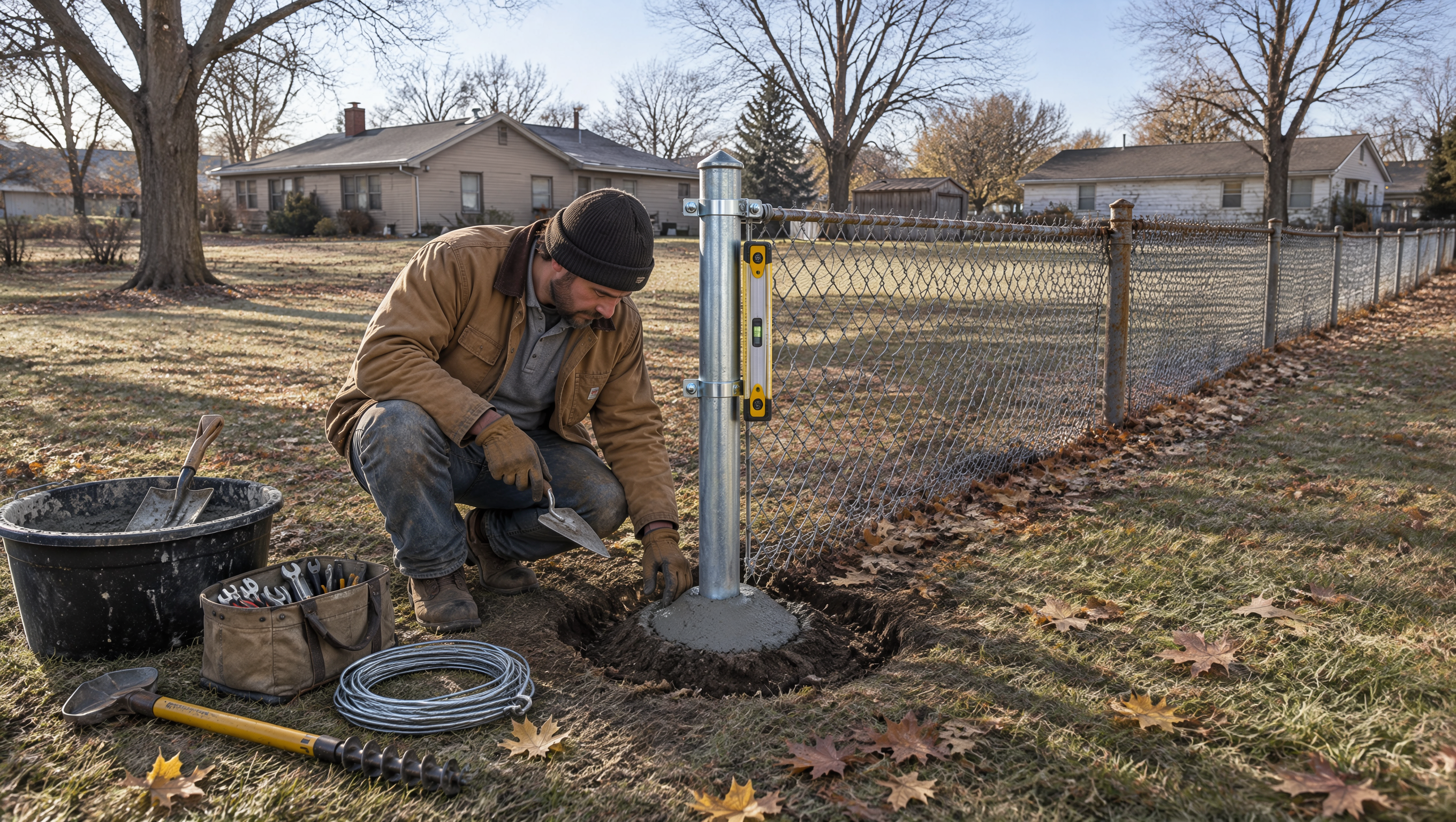
Chain link fence posts in South Beloit should be checked before repeated freezing and thawing make existing movement more noticeable. Leaning posts, loose footings, erosion, corrosion, and unstable gate posts can affect fabric tension, rail alignment, gate operation, and overall perimeter security. Repairing the structural problem first helps prevent repeated fence adjustments later.
Why Fence Post Stability Matters
Chain link fencing depends on stable posts to keep the entire system aligned.
When a post begins moving, nearby components can also shift.
Problems may show up as:
Sagging chain link
Bent or separated rails
Loose tension hardware
Gate misalignment
Ground-level gaps
The visible problem is not always the actual cause.
For example, loose chain link may appear to need tightening, but if the terminal post is moving, retensioning the fabric may only provide a temporary improvement.
Post stability should be checked before other adjustments are made.
Look for Early Signs of Post Movement
A post does not need to be severely leaning before it deserves attention.
Walk the fence line and look for:
Posts that no longer sit straight
Gaps around concrete footings
Soil pulling away from the base
Exposed concrete
Movement when the surrounding fence shifts
New sagging between posts
Compare each post with nearby sections.
Small changes are often easier to identify when viewing several posts from a distance.
If multiple posts lean in the same direction, the issue may involve drainage, soil movement, or repeated impact rather than one isolated failure.
Freeze-Thaw Conditions Can Expose Existing Weaknesses
South Beloit can experience periods when temperatures move above and below freezing.
When soil around fence footings contains moisture, changing conditions can make existing instability more noticeable.
A post that is already slightly loose may begin:
Leaning farther
Moving at the footing
Pulling on nearby fabric
Changing gate alignment
Freeze-thaw conditions are not the only reason posts move.
Poor drainage, erosion, corrosion, vehicle impact, and damaged footings can all contribute.
The important step is identifying the underlying cause before winter conditions make the problem harder to manage.
Inspect Drainage Around the Post Base
Water around posts deserves attention.
After rain, inspect for:
Standing water
Mud
Erosion
Runoff from pavement
Low areas
Exposed footing edges
Commercial properties may have large paved surfaces that direct water toward perimeter fencing.
If the same posts repeatedly move after wet weather, drainage may be part of the problem.
Major drainage correction may require separate work, but the condition should still be identified during fence repair.
Resetting a post without considering recurring water may allow the same instability to return.
Terminal Posts Need Extra Attention
Terminal posts help maintain chain link tension across longer fence runs.
When one begins shifting, the effects may spread well beyond the post itself.
Look for:
Fabric pulling toward the post
Loose tension bands
Sagging mesh
Rail separation
Footing movement
A terminal post should be stabilized before chain link fabric is retensioned.
Otherwise, tightening the fence against an unstable support may simply put more stress on the same weak point.
This is one reason terminal post repair can be more important than addressing a small cosmetic issue elsewhere.
Corner Posts Affect More Than One Direction
Corner posts also carry significant structural responsibility.
A moving corner post can affect two fence runs at the same time.
Inspect both sides for:
Loose fabric
Rail movement
Uneven tension
Leaning
Damaged fittings
If the corner post shifts, tightening one side of the fence without correcting the support may pull the other side out of alignment.
The repair should restore the post first, then address tension and rail alignment around both connected sections.
Gate Posts Carry Additional Stress
Gate posts deserve even closer inspection because they support repeated movement and additional weight.
Check for:
Leaning
Cracks around the footing
Soil separation
Corrosion
Vehicle impact
Gate sag
A moving gate post can affect:
Hinge position
Ground clearance
Latch alignment
Frame angle
A gate that suddenly begins dragging may not have a hinge problem at all.
The support post may have shifted enough to lower one side of the entrance.
Repeatedly adjusting the latch or hinges will not solve the issue if the post continues moving.
Check Line Posts for Localized Damage
Line posts usually support smaller sections of the fence.
A single bent or leaning line post may be a localized repair if the surrounding structure remains sound.
Common causes include:
Vehicle contact
Equipment impact
Soil movement
Corrosion
Storm debris
If one post is damaged while nearby posts remain stable, sectional repair may be straightforward.
If several line posts are moving together, investigate the site condition before treating them as separate problems.
Patterns often reveal more than one isolated damaged component.
Watch for Corrosion Near Ground Level
Post bases are especially important because moisture tends to remain near the ground.
Inspect for:
Flaking metal
Thinning steel
Holes
Rust around the footing
Weak connections
Surface rust may not mean the post has lost structural strength.
More advanced corrosion can reduce stability even when the post still appears upright.
If the metal is badly weakened, straightening or resetting the post may not be enough.
Replacement may provide a more dependable repair.
Do Not Tighten Fabric Before Stabilizing Posts
Loose chain link is often the first visible problem after posts begin shifting.
However, the correct repair order matters.
First:
Identify unstable posts.
Repair or replace the structural support.
Check rails and fittings.
Retension usable fabric.
If the fabric is tightened before the post is stabilized, the same section may sag again.
The mesh may also place additional pressure on a weak terminal or corner post.
Strong chain link fabric can often remain in service once the structural problem is corrected.
Check Rails and Hardware After Post Repair
Post movement can place stress on nearby components.
After addressing the post, inspect:
Top rails
Rail sleeves
Tie wires
Tension bands
Brace bands
Bolts
A moving post may bend a rail or loosen fittings.
Those components should be corrected before the fence is considered fully repaired.
A stable post with loose hardware can still leave the surrounding chain link uneven or vulnerable.
Treat the repaired post as part of the entire fence system rather than a standalone component.
Review Ground-Level Gaps
A shifting post may create gaps along the bottom edge of the fence.
These openings can affect perimeter control around:
Outdoor storage
Equipment areas
Rear property lines
Restricted sections
Check whether the gap is caused by:
Loose fabric
Soil erosion
Post movement
Grade changes
Some sections may need fabric retensioning after the post is repaired.
Others may require attention to the surrounding grade.
A recurring gap often signals that the ground condition deserves further review.
Inspect Vehicle-Impact Areas
Commercial fence posts near active traffic are more likely to receive impact damage.
Focus on areas around:
Delivery entrances
Loading zones
Parking lot corners
Dumpster areas
Equipment routes
Snowplow paths
Look for fresh scrapes, bending, disturbed footings, or posts pushed out of alignment.
If the same location is repeatedly damaged, consider whether the layout contributes to the problem.
Wider gates, bollards, wheel stops, or additional turning clearance may help reduce future repairs.
Decide When Repair Is Enough
Post repair may be appropriate when:
One or two posts are unstable
Surrounding rails remain usable
Chain link fabric is still strong
Corrosion is limited
The footing issue is localized
Replacement may make more sense when a post is badly bent, severely corroded, or structurally weakened.
If multiple posts, rails, and fabric sections are failing together, sectional fence replacement may provide a stronger solution than repeated individual repairs.
The condition of the surrounding fence should guide the decision.
Stabilize the Fence Before Winter Conditions Get Worse
Chain link fence post repair is about more than making a leaning post look straight again.
Stable posts support fabric tension, rails, gates, and the overall security of the perimeter.
Rockford Fence provides commercial chain link fence repair, fence post repair, gate repair, installation, replacement, security fencing, dumpster enclosures, and other commercial fence solutions.
Contact Rockford Fence for chain link fence post repair in South Beloit, IL. The team can inspect unstable posts and surrounding fence sections and recommend practical repairs before freeze-thaw conditions make existing movement harder to manage.
