Chain Link Fence Repair Before November in Rockford, IL: Common Weak Points
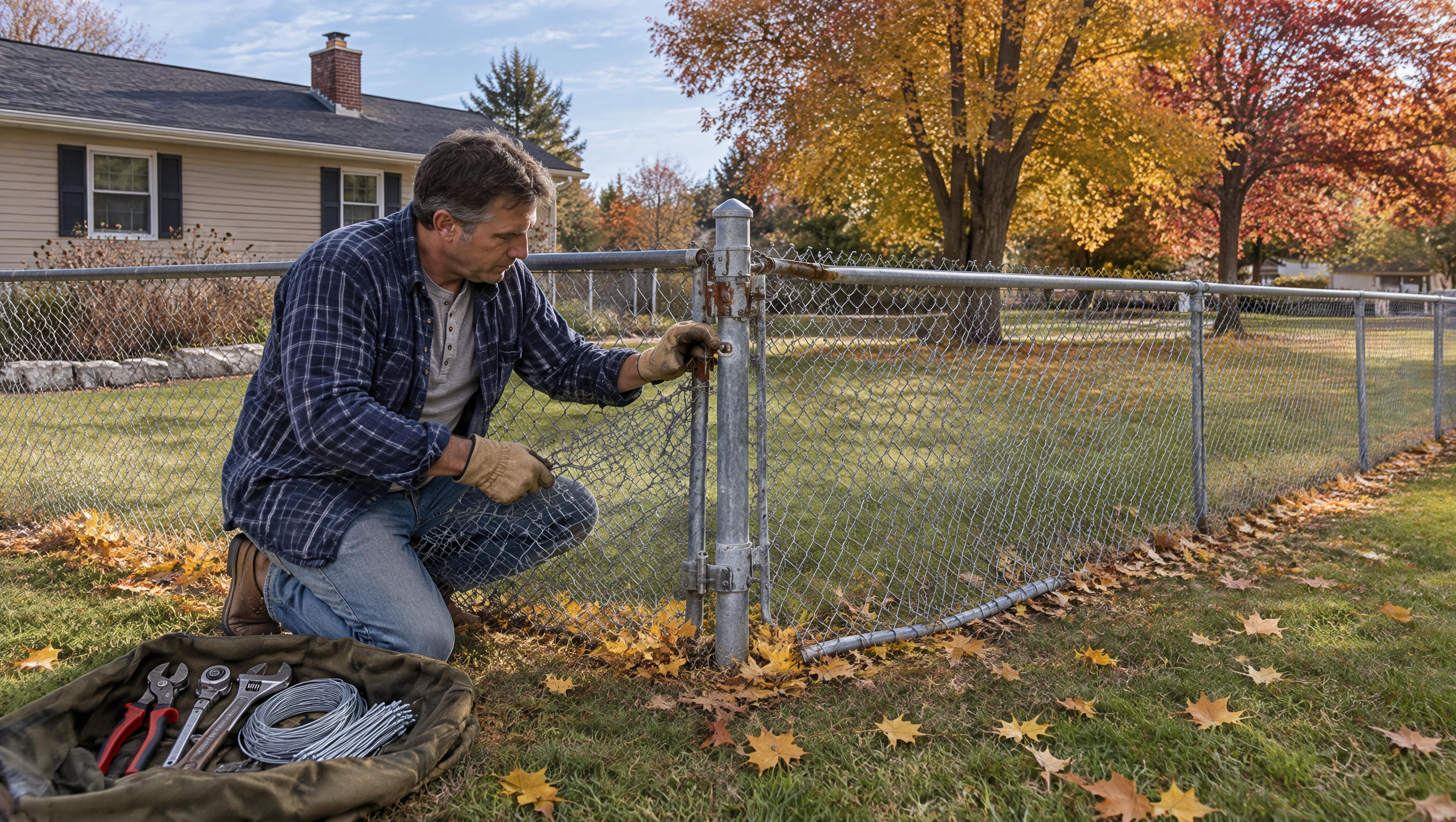
Chain link fence repair in Rockford should focus on weak points that can become more difficult to manage as colder weather settles in. Posts, top rails, fabric, tension hardware, gate connections, corrosion, drainage, and vehicle-impact areas all deserve attention. Even if November has already begun, these same checks remain useful before heavier winter conditions arrive.
Start With the Parts That Hold the Fence Together
Chain link fencing depends on several connected components working as one system.
The fabric is only part of the structure.
A commercial chain link fence also relies on:
Line posts
Corner posts
Terminal posts
Top rails
Tension hardware
Tie wires
Gate posts
When one of these components begins failing, nearby sections may also lose alignment or tension.
A repair should therefore address the cause of the weakness, not only the most visible symptom.
Check Line Posts for Leaning or Movement
Line posts support the fence between stronger terminal and corner points.
Inspect them for:
Leaning
Bending
Loose soil
Exposed concrete
Corrosion near the base
A slightly leaning line post may not look serious at first.
Over time, however, it can allow the surrounding fabric or top rail to shift.
If several posts are leaning in the same area, drainage or soil movement may be contributing.
That pattern deserves more attention than treating each post as a separate problem.
Pay Extra Attention to Terminal Posts
Terminal posts help hold chain link fabric under tension.
When one begins moving, a much larger section may start sagging.
Look for:
Fabric pulling toward the post
Loose tension bands
Rails separating
Post movement near the footing
Uneven fence tension
The terminal post should be stabilized before loose fabric is retensioned.
Otherwise, the mesh may loosen again.
This is one of the most important weak points to catch early because a single failing terminal post can affect a long fence run.
Inspect Corner Posts Carefully
Corner posts also carry more stress than ordinary line posts.
If a corner post shifts, two fence directions may be affected at once.
Check both sides for:
Sagging fabric
Loose fittings
Rail movement
Leaning
Footing problems
A damaged corner can make the perimeter look uneven in several directions.
Early repair can help prevent a localized problem from spreading into multiple sections.
Look for Bent Top Rails
Top rails help keep the fence aligned.
They can bend after:
Vehicle impact
Falling branches
Equipment contact
Storm debris
Snowplow damage
A bent rail may also cause nearby fabric to sag.
Inspect:
Rail sleeves
Connections
Fittings
Adjacent fabric
If the surrounding posts remain stable, a damaged rail section can often be replaced without rebuilding a large portion of the fence.
Leaving it bent may allow more movement as winter conditions arrive.
Check Chain Link Fabric for Sagging or Tears
Chain link fabric should remain reasonably tight and connected to the supporting structure.
Look for:
Sagging mesh
Torn wires
Distorted openings
Loose bottom edges
Fabric pulling away from posts
Loose fabric does not automatically mean replacement is necessary.
If the mesh remains strong, it may often be retensioned after structural problems are corrected.
Fabric that is brittle, heavily corroded, badly stretched, or torn in multiple areas may be better suited for sectional replacement.
The key is determining whether the fabric itself is still sound.
Inspect Tie Wires and Tension Hardware
Smaller hardware can create larger problems when it fails.
Check:
Tie wires
Tension bars
Tension bands
Brace bands
Bolts
Rail fittings
Missing tie wires can allow the fabric to pull away from posts or rails.
Loose tension bands can reduce the stability of a terminal section.
These repairs are often smaller than replacing posts or rails, but they are still important because the hardware keeps the fence system connected.
Review Gate Connections
Commercial gates create additional stress around the chain link perimeter.
Inspect where the gate connects to the fence and support posts.
Common problems include:
Sagging
Loose hinges
Latch misalignment
Bent frames
Gate post movement
Roller problems on sliding gates
A gate that repeatedly needs adjustment may have a structural problem rather than a simple hardware issue.
Check whether the post is stable and whether the nearby fence section has also moved.
The gate and surrounding chain link should be evaluated together.
Watch for Ground-Level Gaps
Openings can develop beneath chain link fencing because of:
Erosion
Settlement
Loose fabric
Post movement
Animal activity
These gaps may be especially important around:
Outdoor storage
Equipment areas
Rear property lines
Service zones
The correct repair depends on the cause.
Some areas may need grade correction, while others require fabric retensioning or post repair.
If a gap keeps returning, the underlying soil or drainage problem should be investigated.
Check Drainage After Fall Rain
Drainage problems can weaken chain link fence posts.
After wet weather, inspect for:
Standing water
Mud
Erosion
Low spots
Runoff toward posts
Exposed footings
Rockford can experience freeze-thaw conditions, so wet or unstable ground can become more noticeable as colder weather continues.
If water repeatedly collects around the same posts, resetting them without addressing the surrounding condition may only provide a temporary solution.
Major drainage work may be separate from fence repair, but the issue should still be identified.
Look for Corrosion Near the Ground
Corrosion can develop around areas exposed to moisture and road salt.
Pay attention to:
Post bases
Gate frames
Rails
Tie wires
Bolts
Hinges
Welded connections
Minor surface rust may not mean the component has failed.
More serious warning signs include:
Flaking metal
Holes
Thinning posts
Brittle wire
Weak connections
Structural corrosion should receive more attention because weakened parts may not handle winter stress reliably.
Inspect Vehicle-Impact Areas
Commercial chain link fencing near active traffic often develops predictable weak points.
Focus on:
Delivery entrances
Loading zones
Parking lot corners
Dumpster enclosures
Equipment routes
Look for:
Bent posts
Scraped coatings
Dented rails
Disturbed footings
Loose fabric
If the same area is repeatedly damaged, another repair may not be enough.
The property may benefit from wider gate access, bollards, wheel stops, or improved turning clearance.
Reducing the cause of repeated impact can help protect the repaired fence.
Decide When Sectional Replacement Makes More Sense
Repair is often appropriate when damage is limited.
Examples include:
One bent rail
A loose terminal post
Several broken tie wires
One torn fabric section
Limited corrosion
Sectional replacement may be more practical when several connected components are failing in one area.
If multiple posts, rails, fittings, and fabric sections are deteriorated together, rebuilding that portion may provide a stronger result than repeated individual repairs.
The rest of the perimeter can remain in service if it is still structurally sound.
Address Weak Points Before Winter Conditions Get Heavier
Even though November has already begun, chain link repair can still focus on the same weak points that should have been addressed earlier in fall.
Posts, rails, fabric, hardware, gates, drainage, corrosion, and traffic areas all affect how well the perimeter performs through winter.
Rockford Fence provides commercial chain link fence repair, gate repair, installation, replacement, security fencing, dumpster enclosures, and other commercial fence solutions.
Contact Rockford Fence for chain link fence repair in Rockford, IL. The team can inspect weak sections and recommend practical repairs or sectional replacement based on the condition of the perimeter.
