Chain Link Fence Repair Before Winter in Dixon, IL: Security Weak Points to Address
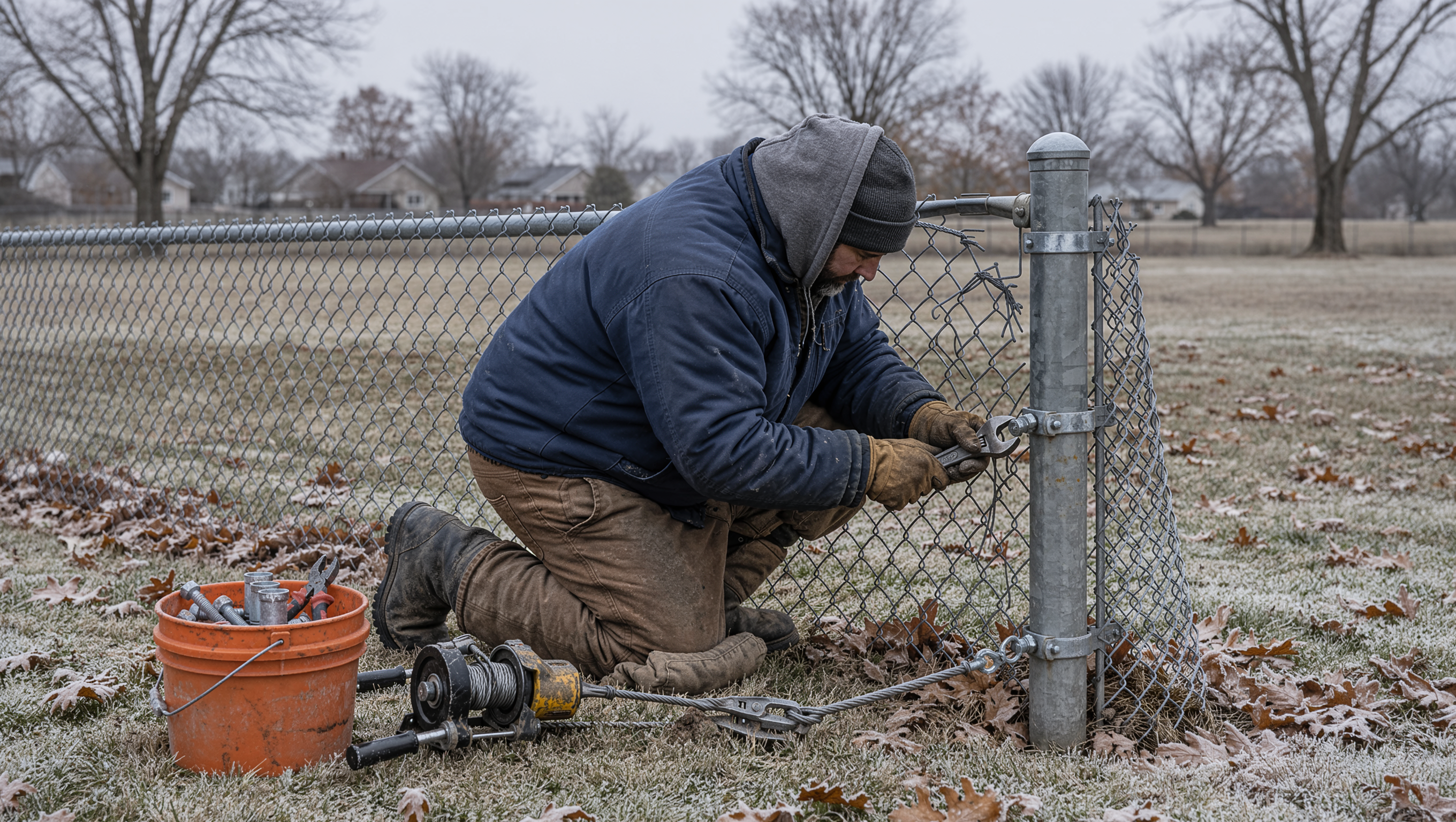
Commercial chain link fencing in Dixon should be inspected before winter for unstable posts, damaged fabric, loose tension hardware, bent rails, unsecured gates, and ground-level openings. Snow accumulation, strong winds, moisture, and freeze-thaw conditions can worsen existing structural problems. Addressing these security weak points early helps businesses maintain a dependable perimeter throughout winter.
Why Chain Link Fence Repairs Matter Before Winter
Chain link fencing provides a practical perimeter around warehouses, industrial facilities, equipment yards, parking areas, and commercial storage properties.
However, its effectiveness depends on the condition of the entire system.
A fence may appear functional from a distance while individual posts, fittings, or sections of fabric are gradually deteriorating.
Northern Illinois winter conditions can place additional stress on these weakened components. Snow accumulation may also conceal existing damage, making inspections more difficult.
Scheduling commercial chain link fence repairs before winter gives facility managers an opportunity to address security concerns while the affected areas remain accessible.
Identify Sections With the Greatest Security Importance
Begin by reviewing the areas where perimeter protection is most important.
These may include:
Outdoor inventory and material storage
Equipment yards
Restricted commercial areas
Delivery entrances
Employee parking areas
Rear property boundaries
Document visible damage and determine whether it affects structural stability, access control, or perimeter continuity.
Organizing repairs according to operational importance helps businesses allocate maintenance resources more effectively.
Inspect Fence Posts for Structural Movement
Stable posts are essential to maintaining chain link alignment and tension.
Walk the perimeter and look for leaning posts, exposed concrete, bent metal, soil separation, and corrosion near ground level.
Terminal and Corner Posts
Terminal and corner posts support tension across connected fence runs.
Movement at these locations can cause surrounding fabric to loosen or rails to shift.
Repairing an unstable terminal post should take priority over retensioning the chain link.
Line Posts
Line posts provide intermediate support throughout the perimeter.
A single damaged line post may require localized repair. Multiple leaning posts, however, could indicate broader drainage, footing, or soil stability concerns.
Gate Posts
Gate posts support additional weight and repeated movement.
Instability can affect both the surrounding fence and the ability of a gate to close securely.
Inspect these posts carefully, particularly near frequently used commercial entrances.
Repair Torn or Distorted Chain Link Fabric
Chain link fabric should remain securely attached and reasonably tensioned throughout the fence line.
Inspect for:
Torn or broken wire
Distorted mesh
Excessive sagging
Loose fabric edges
Sections separating from support posts
Minor damage may be repairable without replacing the entire fence run.
However, fabric that has become brittle, severely stretched, or structurally weakened by corrosion may require sectional replacement.
The surrounding posts, rails, and hardware should be evaluated before deciding whether the existing fabric can be reused.
Address Loose Tension Hardware and Fence Connections
Chain link fencing relies on several smaller components to maintain its structural integrity.
Tension bars, tension bands, brace bands, tie wires, bolts, and rail fittings should remain properly secured.
Missing tie wires can allow fabric to separate from supporting rails or posts. Damaged tension hardware can contribute to sagging near the ends of fence runs.
These issues may initially appear minor, but neglected connections can affect larger sections over time.
Replacing worn or damaged hardware before winter can help maintain proper alignment without requiring unnecessary replacement of otherwise sound fencing.
Check Top Rails for Impact Damage
Top rails help maintain consistent alignment along chain link fence sections.
Commercial properties may experience rail damage from delivery vehicles, equipment, falling branches, or previous snow-removal activity.
Look for bent rail sections, separated joints, damaged sleeves, and loose connections.
A damaged rail can affect nearby fabric even when the supporting posts remain relatively stable.
When damage is limited, replacing the affected rail and restoring the necessary connections may be sufficient.
If several structural components have shifted together, a more comprehensive sectional repair may be necessary.
Correct Ground-Level Openings Before Snow Accumulates
The lower edge of a commercial fence should be inspected while ground conditions remain visible.
Openings may develop because of soil erosion, settlement, post movement, or loose chain link fabric.
Repairing these areas requires identifying the underlying cause rather than simply covering the opening.
For example, a gap caused by erosion may require grade correction, while one resulting from structural movement may require post stabilization.
Snow accumulation can conceal these conditions during winter, making late fall a valuable opportunity to evaluate and correct them.
Make Sure Commercial Gates Close Securely
Gates are an essential part of a commercial chain link perimeter.
Inspect each entrance for alignment problems, damaged frames, worn hardware, and unreliable locking mechanisms.
Swing Gates
Check hinges, mounting connections, support posts, and ground clearance.
A gate that sags or drags may have worn hinges or structural movement affecting its alignment.
The supporting components should be repaired before final latch adjustments are made.
Sliding Gates
Inspect rollers, guides, stops, and tracks where applicable.
The entire travel path should remain clear of debris and stored materials.
Grinding, shaking, or unusual resistance may indicate mechanical problems requiring repair.
Automated gate operators, electrical components, and safety systems should be serviced by qualified personnel when necessary.
Inspect Metal Components for Advanced Corrosion
Moisture and deicing salts can contribute to deterioration around commercial fencing during colder months.
Pay particular attention to post bases, gate frames, lower fabric edges, welded connections, and hardware near paved surfaces.
Surface rust may be manageable with appropriate maintenance.
However, deep pitting, flaking metal, thinning posts, holes, and brittle wire can indicate more serious deterioration.
Structural components that have lost significant strength should be evaluated for replacement before they are exposed to additional winter conditions.
Evaluate Drainage Around Unstable Fence Sections
Dixon properties can experience changing soil conditions as temperatures move above and below freezing.
Areas with recurring moisture deserve particular attention.
Inspect for:
Standing water around footings
Runoff from paved surfaces
Erosion beneath the fence
Exposed concrete
Soft or disturbed soil
Freeze-thaw conditions can worsen existing instability around susceptible footings.
If a fence section repeatedly develops leaning posts or loose fabric, drainage may be contributing to the problem.
Major drainage improvements may require separate work, but identifying these conditions can help guide a more durable fence repair.
Review Fence Sections Near Vehicle Routes
Commercial chain link fencing near active traffic may experience repeated accidental contact.
Inspect areas around loading docks, delivery lanes, parking lot corners, dumpster enclosures, and equipment routes.
Bent posts, damaged rails, distorted fabric, and disturbed footings may indicate previous impacts.
If the same section has required several repairs, consider whether additional turning clearance, revised traffic routing, wheel stops, or appropriately positioned bollards could help protect the fence.
Addressing recurring causes of damage can be more practical than repeatedly repairing the same components.
Prevent Additional Damage From Snow Removal
Snow-removal operations should be coordinated with the commercial fence layout.
Avoid routinely pushing heavy snow against chain link fabric, posts, rails, or gates.
Accumulated snow can place additional pressure on weakened sections and interfere with gate movement.
Facility managers should establish designated snow-storage areas and communicate fence locations to snow-removal crews.
Keeping entrances and fence boundaries clear can also make periodic winter inspections easier.
Determine Whether Repair or Sectional Replacement Is Needed
Not every damaged chain link fence requires complete replacement.
Localized repairs may be suitable when surrounding posts, rails, fabric, and hardware remain structurally sound.
Sectional replacement may be more appropriate when multiple posts are unstable, corrosion is widespread, or several connected components have suffered extensive damage.
The decision should consider the condition of the entire affected section, its security function, and the likelihood of recurring maintenance problems.
Schedule Chain Link Fence Repair in Dixon Before Winter
Maintaining a dependable commercial perimeter requires more than correcting visible damage. Posts, fabric, rails, hardware, gates, and surrounding ground conditions must work together.
Rockford Fence provides commercial chain link fence repair, fence installation, replacement, security fencing, gate services, and dumpster enclosure solutions.
Contact Rockford Fence for chain link fence repair in Dixon, IL. A professional evaluation can help identify structural weaknesses, recommend appropriate repairs, and prepare your commercial perimeter for the demands of winter.
