Chain Link Fence Repair in DeKalb, IL: What to Fix Before Freeze-Thaw Weather
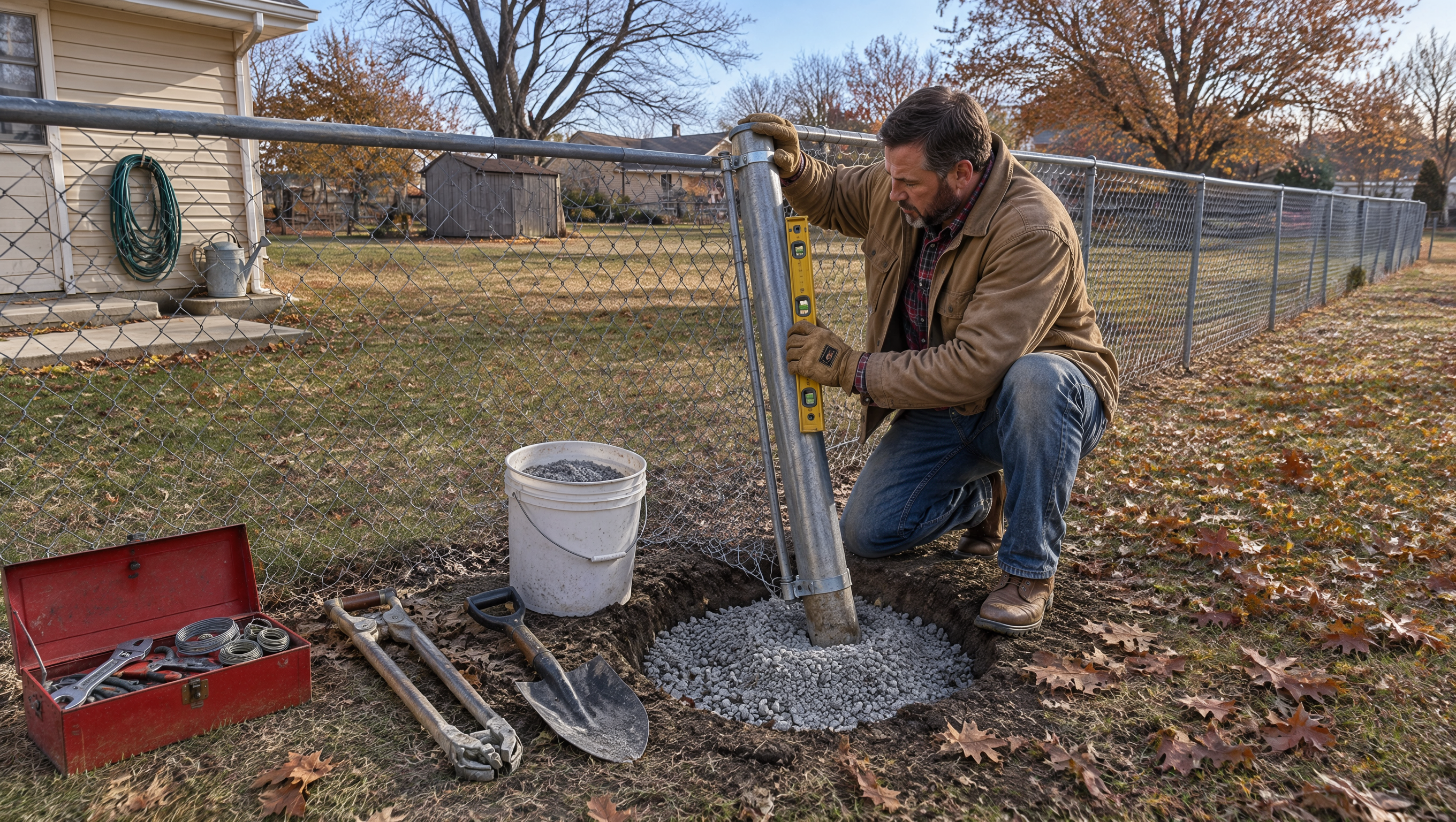
Chain link fence repair in DeKalb should focus on weak posts, loose fabric, bent rails, gate alignment, corrosion, drainage, and ground-level gaps before repeated freezing and thawing affect the perimeter. Small structural problems can become more noticeable when wet soil freezes, expands, thaws, and shifts around fence footings.
Start With the Posts
Posts are the first place to look when a chain link fence begins leaning or losing tension.
Inspect:
Line posts
Corner posts
Terminal posts
Gate posts
Look for movement at the base, exposed concrete, leaning, bending, corrosion, or soil pulling away from the footing.
A single loose line post may affect only a short section.
A shifting terminal or corner post can affect a much longer run because those posts help maintain chain link tension.
If several posts are moving in the same area, the issue may involve drainage or soil instability rather than individual post damage.
Watch for Soil Movement Around Footings
Freeze-thaw weather can make existing ground problems more noticeable.
Water in the soil can freeze, thaw, and repeatedly change the conditions around fence footings.
Check for:
Soft soil
Erosion
Standing water
Exposed footing edges
Gaps around posts
If a footing is already unstable before colder weather becomes consistent, the post may continue shifting.
Repair should focus on restoring structural stability before fabric or rails are adjusted.
Otherwise, the same alignment problem may return.
Inspect Drainage Along the Fence Line
Drainage is easy to overlook during fence repair.
After fall rain, walk the perimeter and check where water collects.
Pay attention to:
Low areas
Runoff from pavement
Mud around posts
Eroded soil
Water pooling near gates
DeKalb commercial properties often have parking lots, loading areas, and paved surfaces that can direct water toward fence lines.
If several nearby posts lean in the same direction, repeated water exposure may be contributing.
Major drainage correction may require separate work, but it should still be identified during the fence repair process.
Check Chain Link Fabric for Lost Tension
Chain link fabric should remain reasonably tight and securely attached.
Look for:
Sagging
Loose bottom edges
Torn wire
Distorted mesh
Fabric separating from posts
Loose fabric may be caused by the mesh itself, but it can also result from shifting terminal posts, bent rails, or failed tension hardware.
If the fabric remains strong, it may often be retensioned after the structural problem is repaired.
Fabric that is brittle, badly stretched, or heavily corroded may need sectional replacement instead.
Inspect Tension Bars and Bands
Tension hardware helps hold chain link fabric securely at terminal and gate posts.
Check:
Tension bars
Tension bands
Brace bands
Bolts
Connections
Loose or damaged hardware can allow the fabric to pull away from the post.
This may create sagging even when the mesh itself is still usable.
Hardware repairs are often smaller than replacing posts or fabric, but they are still important because these components keep the fence under proper tension.
Look for Bent or Separated Top Rails
Top rails help keep the fence aligned from post to post.
They may become damaged by:
Vehicle impact
Equipment
Falling branches
Previous snowplow contact
Inspect for:
Bent sections
Loose sleeves
Separated connections
Missing fittings
A damaged rail can allow nearby fabric to shift or sag.
If the surrounding posts remain stable, replacing only the damaged rail section may be enough.
Leaving a bent rail in place can put additional stress on the surrounding fence as winter conditions develop.
Check Tie Wires Before They Break Further
Tie wires secure the fabric to posts and rails.
Missing or broken ties can allow sections of chain link to pull away from the structure.
Inspect the entire fence line, especially around:
Corners
Gates
Impact areas
Sections with loose fabric
A few damaged ties may be a straightforward repair.
However, if tie wires are failing throughout one area, inspect for corrosion or larger alignment problems that may be placing additional stress on the fabric.
Inspect Gate Posts and Gate Alignment
Commercial gates often show fence movement earlier than the rest of the perimeter.
Open and close each gate several times.
Watch for:
Sagging
Dragging
Latch misalignment
Uneven gaps
Difficulty locking
Gate posts leaning
A gate that has to be lifted or pushed sideways to close is showing an alignment issue.
The latch may not be the real problem.
Check the support post, hinges, and frame before making repeated adjustments.
Freeze-thaw movement around a gate post can quickly affect entrance reliability.
Review Sliding Gate Components
Sliding gates require a clear, stable travel path.
Inspect:
Rollers
Guides
Stops
Tracks where applicable
Gate frame alignment
Remove mud, gravel, leaves, and debris before colder weather causes these materials to freeze in place.
A sliding gate that already grinds, shakes, or hesitates should be repaired before winter.
If the path is clear but movement remains uneven, worn rollers or misalignment may be the cause.
Look for Ground-Level Gaps
Ground movement can create openings beneath chain link fencing.
Check for:
Erosion
Settlement
Loose bottom fabric
Animal activity
Post movement
Ground-level gaps can be especially important around equipment yards, outdoor storage, and restricted areas.
The correct repair depends on why the gap formed.
Some sections may need fabric retensioning, while others require post stabilization or grade correction.
A recurring opening often points to a site condition that should be addressed rather than repeatedly patched.
Check Corrosion Near the Base of the Fence
Moisture tends to collect near ground level, making post bases and lower hardware important inspection points.
Look for corrosion on:
Posts
Rails
Gate frames
Tie wires
Tension hardware
Bolts
Surface rust does not always mean the component has failed.
More serious signs include:
Flaking metal
Thinning posts
Holes
Brittle wire
Weak connections
Structural corrosion can reduce the strength of the fence and may make freeze-thaw movement more difficult for weakened components to tolerate.
Inspect Vehicle-Impact Areas
Commercial chain link fencing near active traffic should receive extra attention.
Focus on:
Delivery entrances
Loading zones
Parking lot corners
Dumpster areas
Equipment routes
Snowplow paths
Look for bent posts, scratched coatings, disturbed footings, damaged rails, or loose fabric.
A small impact may affect several connected components.
If the same section is repeatedly damaged, the property may need wider access, bollards, wheel stops, or improved turning clearance rather than another identical repair.
Decide Between Repair and Sectional Replacement
Repair is often practical when damage is limited to:
One or two posts
A bent rail
Loose hardware
A localized fabric problem
One gate issue
Sectional replacement may make more sense when several connected components are failing together.
For example, a section with multiple leaning posts, brittle fabric, corrosion, and damaged rails may not benefit from repeated small repairs.
The surrounding fence can remain in place if it is still structurally sound.
Prioritize Structural Problems Before Cosmetic Ones
Not every issue needs immediate attention.
Higher-priority repairs usually include:
Unstable posts
Moving terminal or gate posts
Torn chain link
Structural corrosion
Bent rails affecting alignment
Gates that do not close or lock
Minor scratches or cosmetic wear can often be monitored.
Before freeze-thaw weather becomes more severe, businesses should focus on the problems most likely to affect security, access, or structural stability.
Prepare Your DeKalb Chain Link Fence for Colder Weather
Chain link fence repair before freeze-thaw conditions should focus on the structure supporting the perimeter.
Posts, footings, drainage, fabric tension, rails, gate alignment, hardware, and corrosion should all be reviewed before colder weather makes existing weaknesses more noticeable.
Rockford Fence provides commercial chain link fence repair, gate repair, installation, replacement, security fencing, dumpster enclosures, and other commercial fence solutions.
Contact Rockford Fence for chain link fence repair in DeKalb, IL. The team can inspect weak sections and recommend practical repairs or sectional replacement based on the condition of the fence.
