Chain Link Fence Repair in Loves Park, IL: Securing Business Properties Before Winter
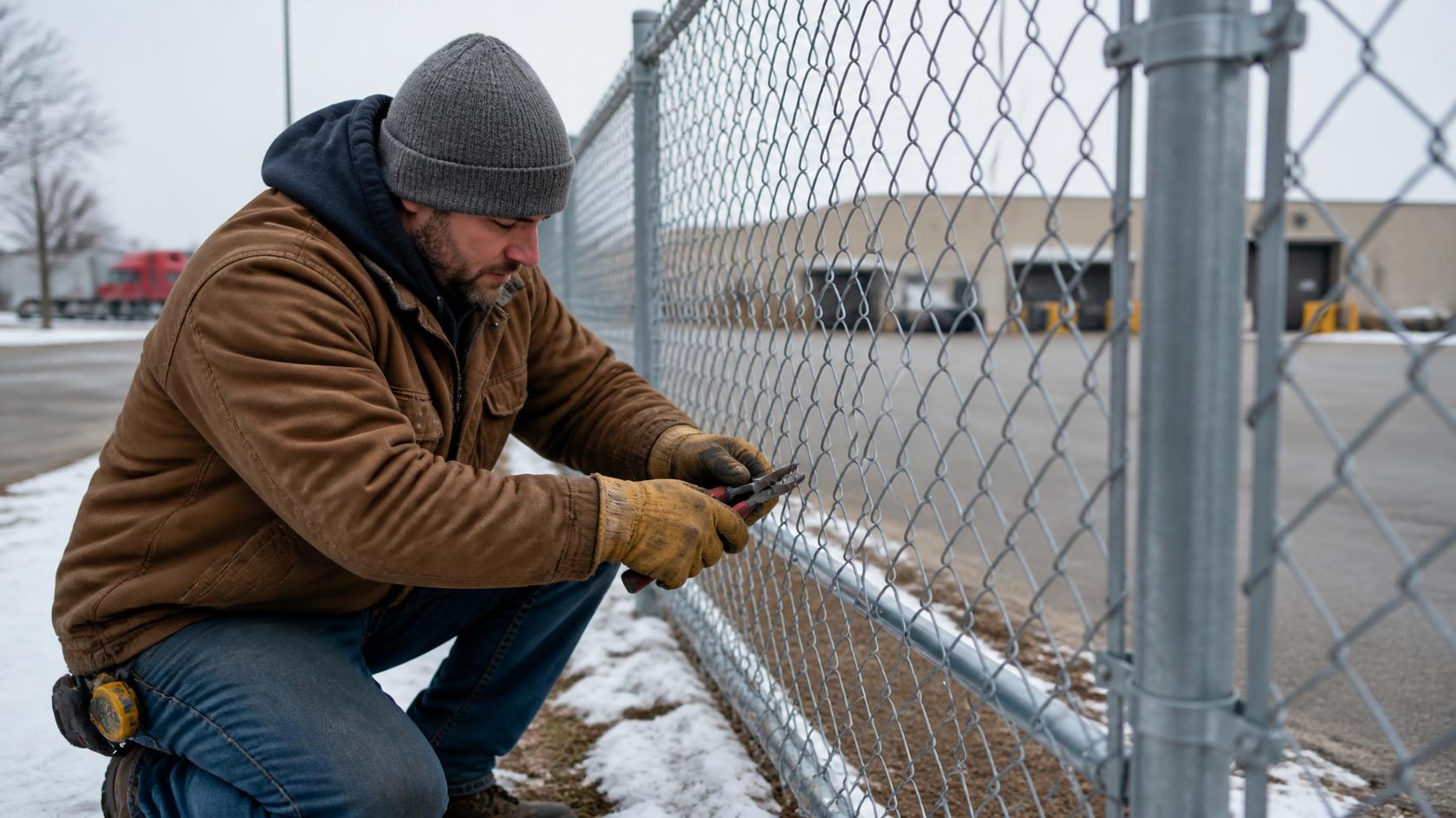
Chain link fences around commercial properties should be inspected before winter for loose fabric, leaning posts, bent rails, gate problems, rust, ground-level gaps, and drainage issues. Loves Park business owners and property managers can reduce winter access and security problems by repairing weak sections before snow, ice, and freeze-thaw conditions add more stress.
Why Pre-Winter Chain Link Repair Matters
Commercial chain link fencing often protects areas that stay active throughout winter.
That may include:
Equipment yards
Outdoor storage
Parking areas
Loading zones
Service entrances
Dumpster enclosures
Vehicle gates
A damaged fence may still appear usable in fall, but winter conditions can make existing weaknesses worse.
Snow can press against loose mesh, frozen ground can change post alignment, and ice can interfere with gates. Repairing known problems before colder weather arrives can help keep the perimeter more dependable.
Walk the Entire Fence Line
Start with a complete perimeter inspection.
Do not focus only on the main entrance. Check corners, rear property lines, storage areas, and sections near parking lots or delivery routes.
Look for:
Sagging chain link fabric
Leaning posts
Bent top rails
Broken tie wires
Loose tension bands
Torn mesh
Rust
Openings near the ground
Pay extra attention to sections that have been repaired before or are located near active vehicle traffic.
Repair Loose or Sagging Chain Link Fabric
Chain link fabric should remain reasonably tight between terminal posts.
Sagging can develop because of:
Broken tie wires
Loose tension bands
Moving posts
Bent rails
Vehicle impacts
Snow pressure
If the fabric is still strong, it may be possible to retension it after the supporting problem is repaired.
Avoid simply pulling loose mesh tighter against a leaning post. The structural issue should be corrected first.
Brittle, heavily rusted, or badly distorted fabric may require sectional replacement.
Check Posts for Stability
Posts are one of the most important parts of a commercial chain link fence.
Inspect line posts, corner posts, terminal posts, and gate posts for:
Leaning
Movement near the footing
Exposed concrete
Corrosion
Impact damage
Soil erosion
Loves Park properties can experience freeze-thaw cycles that affect soil around posts.
A post that is already loose in fall may shift farther once wet ground freezes and thaws repeatedly.
Structurally sound posts may sometimes be reset. Badly bent, deeply corroded, or unstable posts may need replacement.
Look Closely at Gate Posts
Gate posts deserve extra attention because they carry more weight and movement than standard line posts.
A shifting gate post can cause:
Sagging
Latch misalignment
Dragging
Difficulty locking
Frame stress
If a commercial gate repeatedly needs adjustment, inspect the posts before replacing or moving the latch hardware.
Fixing the support problem can help prevent the same alignment issue from returning.
Inspect Gates Before Snow Arrives
Commercial gates need to operate reliably during winter.
Open and close each gate several times.
Check for:
Dragging
Sagging
Loose hinges
Bent frames
Misaligned latches
Damaged locks
Difficult movement
A gate that barely clears the ground in fall may become harder to use after snow or ice accumulates.
For sliding gates, inspect rollers, guides, and the full travel path.
Remove gravel, mud, leaves, and debris before freezing temperatures arrive.
Replace Bent or Damaged Rails
Top rails help keep chain link fabric supported and aligned.
Bent rails can result from:
Falling branches
Delivery vehicles
Landscaping equipment
Snowplows
Previous snow pressure
One damaged rail can often be replaced without rebuilding the entire fence.
Check the fittings and fabric around the damaged rail because the same impact may have loosened nearby components.
Repairing the rail before winter can help prevent additional sagging.
Check Tie Wires and Fence Hardware
Small hardware helps hold the entire system together.
Inspect:
Tie wires
Tension bands
Brace bands
Tension bars
Rail sleeves
Bolts
Gate hardware
Broken ties or loose bands can allow mesh to pull away from the frame.
Replacing these smaller parts in fall can help keep fence sections stable during winter wind and snow.
Address Rust and Corrosion
Metal components should be checked before winter moisture and road salt exposure increase.
Look closely at:
Post bases
Gate frames
Hinges
Latches
Tie wires
Tension hardware
Bolts
Minor surface rust may be manageable when the metal remains structurally strong.
More serious signs include flaking metal, thinning posts, brittle wire, and hardware that breaks during adjustment.
If corrosion affects multiple structural components, sectional replacement may be more practical than repeated spot repairs.
Fix Ground-Level Gaps
Openings beneath a commercial fence can reduce perimeter control.
Gaps may develop from:
Soil erosion
Poor grading
Loose fabric
Animal activity
Seasonal ground movement
Possible repairs may include restoring the grade, retensioning the fabric, or adding suitable bottom support.
If the same gap keeps returning, investigate drainage or soil movement instead of repeatedly filling the opening.
Check Drainage Before Freeze-Thaw Conditions Begin
Water around fence posts can contribute to repeated movement.
Walk the fence line after rain and look for:
Standing water
Mud
Low spots
Erosion
Exposed footings
Runoff toward posts
Wet soil followed by freezing temperatures can make unstable areas worse.
If drainage contributed to earlier fence problems, correcting the water issue should be part of the repair plan.
Inspect High-Traffic Areas for Impact Damage
Commercial chain link fencing often runs close to vehicle and equipment routes.
Check sections near:
Delivery entrances
Parking areas
Loading zones
Forklift routes
Dumpster enclosures
Snowplow routes
Look for dents, bent posts, loose fabric, damaged gates, and scraped coatings.
If the same area is repeatedly struck, consider wider gate openings, bollards, wheel stops, or changes to traffic flow.
Preventing repeated impacts can be just as important as repairing the fence.
Plan for Snow Storage
Snow management can affect how well the fence holds up through winter.
Avoid repeatedly piling heavy snow directly against:
Chain link fabric
Gates
Posts
Dumpster enclosures
Snow pressure can stretch mesh, bend rails, and place additional force on posts.
Make sure gates also have enough clearance to open after plowing.
Planning snow storage areas before winter begins can reduce unnecessary fence damage.
Prioritize Security-Related Repairs
Some problems should be handled before cosmetic issues.
Prioritize:
Gates that do not close or lock
Unstable gate posts
Torn chain link fabric
Large perimeter gaps
Bent vehicle entrances
Loose sections near storage areas
Damaged hardware around restricted spaces
These issues can affect how reliably the fence controls access to the property.
Repair or Replace the Damaged Section?
Repair may make sense when:
Damage is localized
Most posts remain stable
Fabric is still strong
One rail or gate needs work
Corrosion is limited
Sectional replacement may be appropriate when one area is badly damaged but the surrounding fence remains dependable.
More extensive replacement may be worth considering when multiple posts are unstable, fabric is brittle, corrosion is widespread, or repeated repairs affect large sections.
Secure Your Loves Park Property Before Winter
A commercial chain link fence should enter winter with stable posts, properly tensioned fabric, working gates, secure hardware, and clear ground around the fence line.
Inspecting these areas in fall gives property owners time to correct weak points before snow, ice, and freezing temperatures make repairs more difficult.
Rockford Fence provides commercial chain link fence repair, fence installation, replacement, security fencing, gates, dumpster enclosures, and other commercial fence solutions.
Contact Rockford Fence for a chain link fence inspection in Loves Park, IL. The team can identify damaged sections and recommend practical repairs or replacement options before winter conditions arrive.
