Chain Link Fence Repair in Clinton, WI: When to Repair or Replace
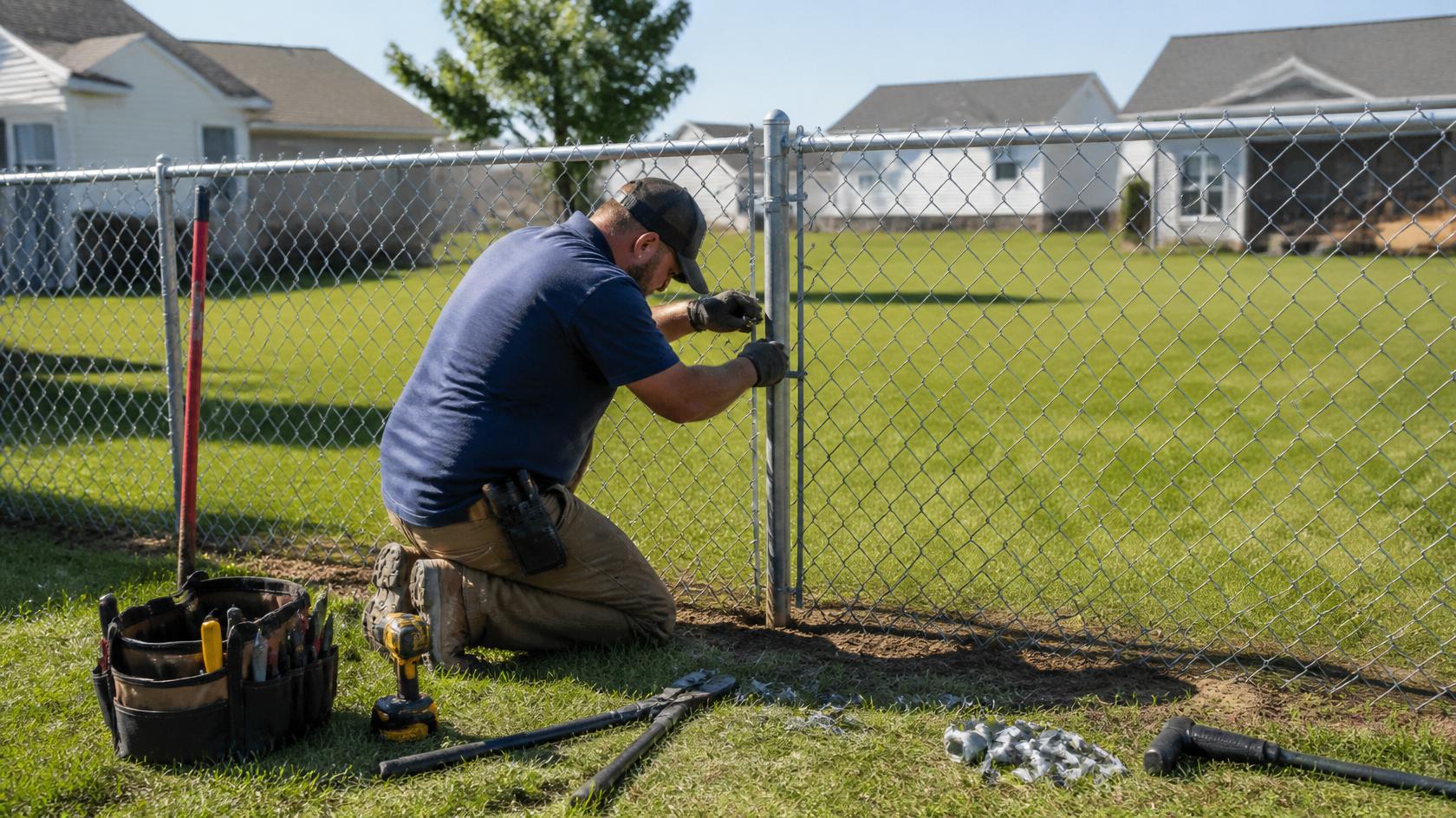
Chain link fence repair usually makes sense when damage is limited to a few posts, rails, fittings, or sections of fabric. Clinton property owners should consider replacement when corrosion is widespread, multiple posts are unstable, the mesh has become brittle, gates repeatedly fail, or repairs are needed throughout the perimeter.
Start With the Overall Condition of the Fence
One damaged section does not automatically mean the entire chain link fence needs replacement.
Chain link systems are often repairable because individual components can be replaced or adjusted without removing the full perimeter.
A repair may be enough when the fence has:
One leaning post
A bent top rail
Loose fabric
Broken tie wires
A misaligned gate
Limited rust
Localized storm damage
Replacement becomes more practical when these problems appear across multiple sections.
The best decision depends on whether the remaining fence still has enough structural strength to support repairs.
When Loose Chain Link Fabric Can Be Repaired
Sagging fabric is a common chain link problem.
Possible causes include:
Broken tie wires
Loose tension bands
Shifting posts
Bent rails
Snow pressure
Fallen branches
Vehicle impacts
If the fabric remains strong and flexible, it can often be retensioned after the supporting structure is corrected.
Broken ties and fittings can also be replaced.
The posts and rails should be inspected before tightening the mesh. Retensioning fabric against a leaning post or damaged rail may only create additional stress.
When Chain Link Fabric Should Be Replaced
Repair becomes less practical when the mesh itself has deteriorated.
Replacement may be needed when the fabric is:
Brittle
Heavily rusted
Torn in several places
Badly stretched
Distorted across a large section
Breaking during adjustment
A localized damaged section may still allow for sectional replacement.
If deterioration extends throughout the perimeter, replacing the complete fence may provide a more dependable result.
Evaluate Leaning Fence Posts
Posts provide the structural support for the chain link system.
A single leaning post may sometimes be reset when the metal remains strong and the main issue is movement in the footing or surrounding soil.
Common causes of post movement include:
Saturated soil
Erosion
Freeze-thaw cycles
Weak footings
Vehicle impacts
Corrosion
A post should generally be replaced when it is badly bent, deeply corroded, cracked, or severely unstable.
If several posts are failing at the same time, full or sectional fence replacement deserves stronger consideration.
Check Drainage Before Repairing Posts
Repeated post movement can point to a drainage problem.
After rain or snowmelt, look for:
Standing water
Mud
Soil erosion
Exposed concrete
Low areas
Runoff beneath the fence
Wisconsin freeze-thaw cycles can make saturated soil especially difficult on fence footings.
Resetting a post without addressing recurring erosion or water buildup may only provide a temporary fix.
Drainage should be considered whether the fence is repaired or replaced.
Decide What to Do With Bent Rails
Top rails help maintain alignment and support the chain link fabric.
A single rail damaged by a branch, snow load, or impact can usually be replaced without rebuilding the entire fence.
Repair may make sense when:
Adjacent posts remain stable
The fabric is still usable
Damage is limited to one rail
Connections remain secure
If several rails are bent or corroded, the problem may indicate broader deterioration.
At that point, sectional or complete replacement may be more practical.
Inspect Fittings and Hardware
Small fittings can often be replaced relatively easily.
Check:
Tie wires
Tension bands
Brace bands
Tension bars
Rail sleeves
Bolts
Post caps
A few failed fittings usually support a repair approach.
However, widespread hardware corrosion can be a sign that the rest of the fence should also be evaluated closely.
New fittings may not provide much benefit if the posts, rails, and fabric they attach to are already weak.
Use Gate Condition as a Clue
Gate problems can help reveal the overall condition of the fence.
Watch for:
Sagging
Dragging
Loose hinges
Misaligned latches
Bent frames
Leaning gate posts
A gate that only needs a hinge adjustment or latch repair may not justify replacement.
Repeated gate problems are different.
If the supporting posts continue shifting or the frame is badly deteriorated, replacing the gate or surrounding section may offer a better long-term solution.
Know When Sliding Gate Repair Is Enough
Commercial properties may use sliding chain link gates.
Repair may be practical when the problem involves:
Worn rollers
Damaged guides
Debris in the operating path
Minor alignment issues
More extensive replacement may be needed when the gate frame is badly bent, terminal posts are unstable, or repeated damage keeps returning.
Commercial properties should also consider whether the existing entrance is wide enough for current traffic.
Consider Rust and Corrosion Carefully
Minor surface rust does not necessarily mean the fence needs replacement.
Inspect how deep the corrosion has become.
Repair may still be practical when rust affects isolated hardware or small areas while the underlying metal remains strong.
Replacement deserves consideration when you find:
Flaking metal
Thinning posts
Brittle fabric
Deep rust around connections
Multiple corroded rails
Hardware breaking during adjustment
Widespread corrosion usually reduces the value of continued spot repairs.
Factor in Clinton Weather
Wisconsin weather can influence whether damage stays isolated or continues spreading.
Freeze-Thaw Cycles
Seasonal ground movement can shift posts and gate alignment.
Snow and Ice
Snow piled against fencing can stretch mesh, bend rails, and place pressure on posts.
Heavy Rain
Saturated soil can weaken support around footings and create erosion beneath the fence.
Storms
Falling branches and wind can damage rails, fabric, and gates.
If weather has affected only one area, repair may be enough. Repeated weather damage across an older fence may make replacement more practical.
Residential Repair vs Replacement
Clinton homeowners may use chain link fencing for backyards, pets, gardens, and property boundaries.
Repair often makes sense when the fence still provides reliable containment and only a few components need attention.
Replacement may be worth considering when:
Pet escape gaps keep returning
Several posts are unstable
Mesh is brittle
Gates frequently fail
The fence no longer fits the property's needs
Commercial Repair vs Replacement
Commercial chain link fencing may protect parking lots, equipment yards, storage areas, utilities, and dumpster enclosures.
Repair may be practical after isolated vehicle or equipment damage.
Replacement may make more sense when:
Several perimeter sections are weak
Corrosion is widespread
Vehicle gates repeatedly fail
The entrance is poorly sized
Security requirements have changed
Replacement can also provide an opportunity to improve gate width, traffic flow, and protection around high-impact areas.
When Sectional Replacement Makes Sense
The decision is not always between a small repair and complete replacement.
Sectional replacement can work well when one area has major damage but the rest of the fence remains sound.
For example, a run with several damaged posts, rails, and fabric may be replaced while stronger neighboring sections stay in place.
This approach can be useful after localized storm or vehicle damage.
How to Decide
Repair is usually worth considering when:
Most posts remain stable
Fabric is still strong
Rust is limited
Gate problems are isolated
Damage affects only one or two sections
Replacement may be better when:
Multiple posts are unstable
Corrosion is widespread
Fabric is brittle
Several rails are failing
Gates repeatedly need repair
Damage affects much of the perimeter
The condition of the complete system should guide the decision.
Plan Chain Link Fence Repair or Replacement in Clinton
Chain link fencing is often highly repairable, but there comes a point when repeated fixes no longer provide enough value. Looking at the posts, rails, fabric, hardware, gates, drainage, and overall level of deterioration can help determine the right approach.
Rockford Fence provides residential and commercial chain link fence repair, installation, replacement, security fencing, gates, dumpster enclosures, and commercial fence solutions.
Contact Rockford Fence to schedule a chain link fence inspection in Clinton, WI. The team can evaluate the existing fence and recommend repair, sectional replacement, or full replacement based on its condition.
