Chain Link Fence Repair in South Beloit, IL: What Can Be Fixed?
Most chain link fence damage — torn mesh, bent posts, sagging gates, broken hardware — can be repaired without replacing the entire fence. This guide helps South Beloit property owners identify what's actually wrong, what can realistically be fixed, and when the damage is significant enough to warrant a full replacement. Rockford Fence handles chain link fence repair and replacement throughout South Beloit and the surrounding region.
Chain Link Is Durable — But Not Indestructible
Chain link fencing has earned its reputation as one of the most practical, long-lasting fence options available. A properly installed galvanized chain link fence can last 20–30 years with relatively little maintenance. For residential yards, commercial perimeters, and industrial properties throughout South Beloit and Winnebago County, it's a workhorse material that handles northern Illinois winters without demanding constant attention.
But durable doesn't mean immune to damage. Wind storms, vehicle contact, corrosion, frost heave, and general wear over time all take a toll. The good news is that chain link is also one of the most repairable fence materials available — its modular, component-based construction means that damaged sections can often be addressed without touching the rest of the fence.
The key is knowing how to read the damage and understanding which problems are contained repairs versus signs of a larger structural issue.
The Most Common Chain Link Fence Problems in South Beloit
South Beloit sits along the Wisconsin-Illinois state line in a climate zone that delivers genuine four-season stress on outdoor structures. These are the most frequent chain link issues we encounter in this area:
Torn or cut mesh — from vehicle contact, vandalism, or falling debris
Bent or leaning posts — caused by vehicle impact, frost heave, or soil erosion
Sagging mesh — from tension loss, broken tension bands, or a failing top rail
Damaged or misaligned gates — one of the most common repair calls regardless of fence age
Rust and corrosion — accelerated by road salt, moisture, and aging galvanized coating
Broken or missing hardware — tension bands, brace bands, rail ends, and tie wires that fail over time
Bent or broken top rail — from snow load, falling branches, or impact
Each of these has a different repair path — and a different threshold where repair stops making sense and replacement becomes the better answer.
What Can Be Repaired
Torn or Damaged Mesh
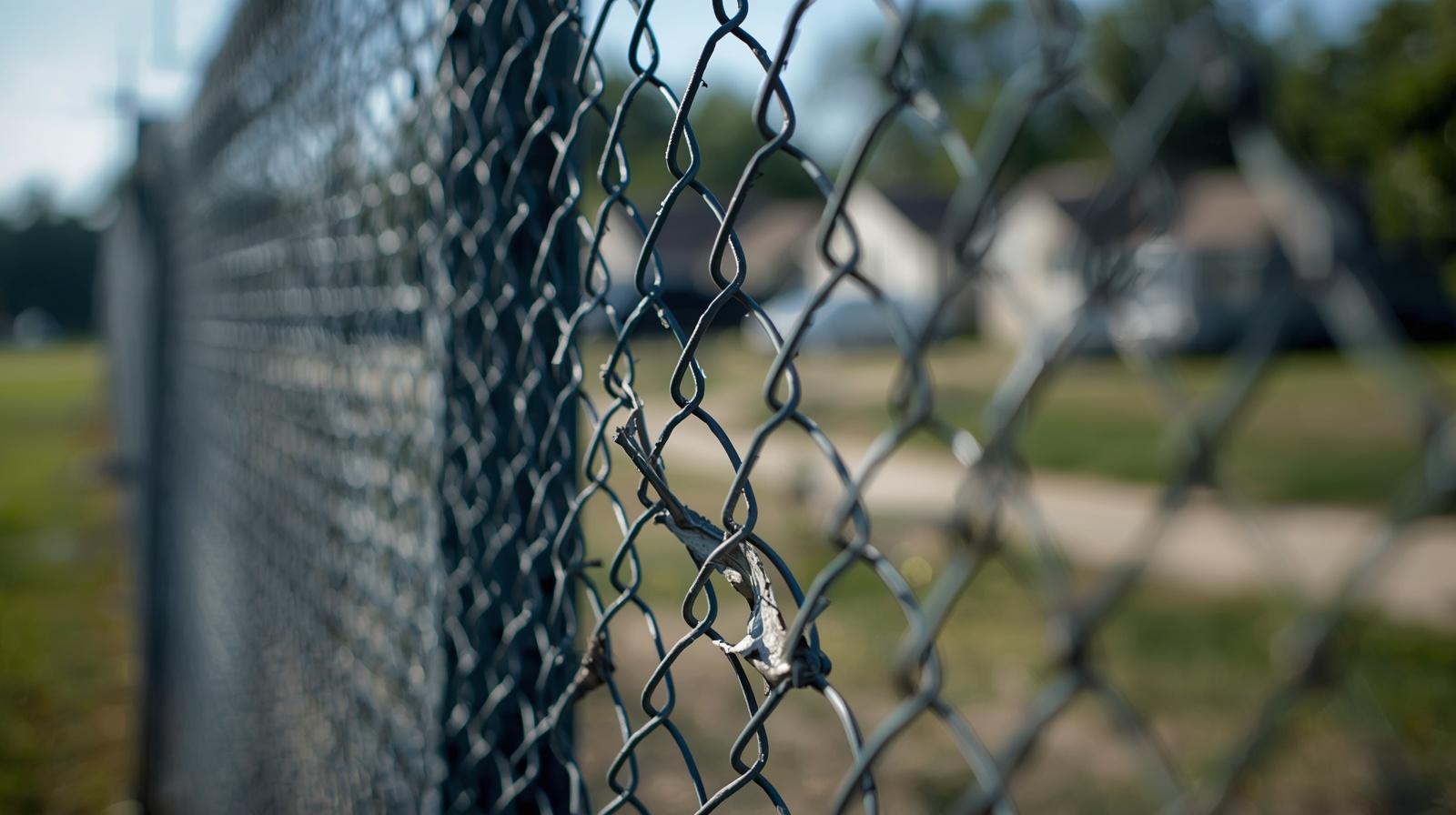
A section of torn, cut, or bent chain link mesh can be replaced without disturbing the surrounding fence. The damaged portion is cut out and a new section of matching mesh is woven in or attached with hog rings and tie wires. For the repair to look and perform cleanly, the replacement mesh should match the original in gauge, mesh size, and coating — galvanized to galvanized, vinyl-coated to vinyl-coated.
Mesh repairs are practical when the damage is limited to a defined section. A fence with widespread mesh damage across multiple panels — from years of rust, repeated vandalism, or storm damage — is a different calculation.
Bent or Leaning Posts
Whether a post can be repaired depends entirely on why it's leaning and what condition it's in.
A post that has shifted due to frost heave — pushed up or tilted by ground movement over the winter — can often be reset. The post is excavated, the footing inspected, and the post re-plumbed and re-set in fresh concrete below the frost line. If the post itself is structurally sound, this is a clean, cost-effective fix.
A post that has been bent by vehicle impact is a different story. If the bend is significant, the post is compromised and should be replaced. Attempting to straighten a bent steel post in place typically results in metal fatigue and a post that will fail again under far less stress.
A post that is rusted through at or below grade needs to be replaced — no surface treatment will restore structural integrity to corroded steel at the base.
Sagging Mesh
Sagging is usually a tension problem, a top rail problem, or both. If the tension wire along the bottom of the fence has broken or come loose, the mesh loses its lower anchor and begins to billow inward or sag toward the ground. Reattaching or replacing the tension wire typically resolves this.
If the top rail has bent, corroded, or pulled away from the line posts, the mesh loses its upper support and sags downward. Top rail replacement is a straightforward repair — the mesh is temporarily detached, the damaged rail section is swapped out, and the mesh is re-tensioned.
A fence that sags across a large span, or where multiple rails and tension components have failed simultaneously, may indicate age-related deterioration across the whole system rather than isolated damage.
Hardware Replacement
Tension bands, brace bands, rail end cups, post caps, tie wires, and hog rings are all replaceable components. Hardware failures are common on aging fences, particularly after Illinois winters that stress every connection point through repeated freeze-thaw cycling.
Replacing worn or broken hardware is often the most cost-effective repair on an otherwise solid fence. A fence that latches inconsistently, has a gate that won't stay closed, or has mesh that's pulling away from posts may simply need new hardware rather than a structural overhaul.
Gate Repairs
Gates are the hardest-working part of any fence system and the most frequent source of repair calls. Common gate issues and their fixes:
Sagging gate: Usually a hinge problem or a gate post that has shifted. If the post is plumb and the frame is sound, new heavy-duty hinges and hardware adjustment can restore function. If the gate post has leaned or the concrete footing has failed, the post needs to be reset.
Gate won't latch: Often a simple alignment issue — the latch fork and receiver have shifted out of alignment as the gate or post has moved. Adjustment or new hardware typically resolves this.
Bent gate frame: A gate frame that has been bent by vehicle impact or repeated stress is a replacement item. Attempting to straighten a welded steel frame rarely produces a result that functions cleanly long-term.
Broken hinges: Hinges are hardware items — replaceable. Heavy-duty commercial hinges are the right upgrade on gates that see frequent daily use.
When Repair Doesn't Make Sense
Chain link is repairable — but there are conditions where continuing to repair an aging fence is the wrong economic decision.
Widespread rust and corrosion. Galvanized chain link resists rust for decades, but the coating eventually fails. When rust has spread across the mesh, posts, and rails throughout a fence line, the fence is at end of life. Patching sections of a heavily corroded fence is a short-term fix on a structure that will continue failing elsewhere.
Multiple failing posts across the fence line. One or two posts that need resetting is a targeted repair. Four or five posts that are leaning, rusted at grade, or heaved across a fence line indicate systemic deterioration — or an original installation that didn't meet frost depth requirements.
Accumulated repair costs approaching replacement cost. If a fence has needed repeated repairs over recent seasons and is being quoted for another significant fix, it's worth running a side-by-side cost comparison. A fence that will need continued attention is often a worse investment than a new installation that starts a fresh maintenance clock.
Mesh gauge no longer adequate for current security needs. An older residential-gauge fence on a property that now requires commercial security performance isn't a repair question — it's a specification question. Upgrading to a heavier-gauge system is a replacement project.
A Practical Repair-vs-Replace Rule of Thumb
If the repair cost is under 30% of the full replacement cost and the remaining fence has meaningful life left, repair is the clear choice.
If the repair cost is 50% or more of the replacement cost — or if the underlying structure is compromised in multiple locations — replacement typically delivers better long-term value and eliminates the cycle of recurring repairs.
When you're not sure which side of that line you're on, a professional assessment is the fastest way to get clarity.
South Beloit's Climate and What It Does to Chain Link
South Beloit sits in a climate zone where fencing faces real seasonal stress. A few specific factors accelerate chain link wear in this area:
Road salt. Properties near roads and parking areas are exposed to salt-laden spray every winter. Salt accelerates the breakdown of galvanized coatings and drives rust on exposed steel. Vinyl-coated chain link provides an additional barrier but isn't immune to damage at cut ends and attachment points.
Frost heave. The frost line in this region reaches 42 inches. Posts set above that depth — or in footings that have deteriorated over time — are vulnerable to heaving. A fence line with multiple leaning posts after a hard winter is almost always a frost depth problem, not a storm damage problem.
Spring storms. High winds in Illinois spring storm seasons put significant lateral load on fence panels. Heavier-gauge mesh and proper tensioning handle this better than lighter residential-grade installations.
Knowing these factors helps property owners understand why certain repairs recur — and whether addressing the root cause is part of the repair plan.
Commercial Chain Link Repair in South Beloit
For commercial properties, property managers, and facility managers in the South Beloit area, a damaged chain link perimeter isn't just a maintenance issue — it's a security gap. A torn mesh section, a gate that won't latch, or a leaning post at a vehicle entry point all create real liability and access control problems.
Rockford Fence responds to commercial fence repair needs throughout the region and can assess whether a targeted repair or a section replacement is the right path forward for your property and your timeline.
Contact Rockford Fence for Chain Link Fence Repair in South Beloit
Whether you're dealing with storm damage, a sagging gate, rusted mesh, or posts that shifted over the winter, Rockford Fence can assess the damage and give you a straight answer on what needs to be done. We serve residential and commercial properties throughout South Beloit, IL and the surrounding communities in Illinois and Wisconsin.
Visit rockfordfence.net or call us today to schedule your repair assessment.
