
Commercial Chain Link Fencing in Oregon, IL: Practical Uses & Benefits
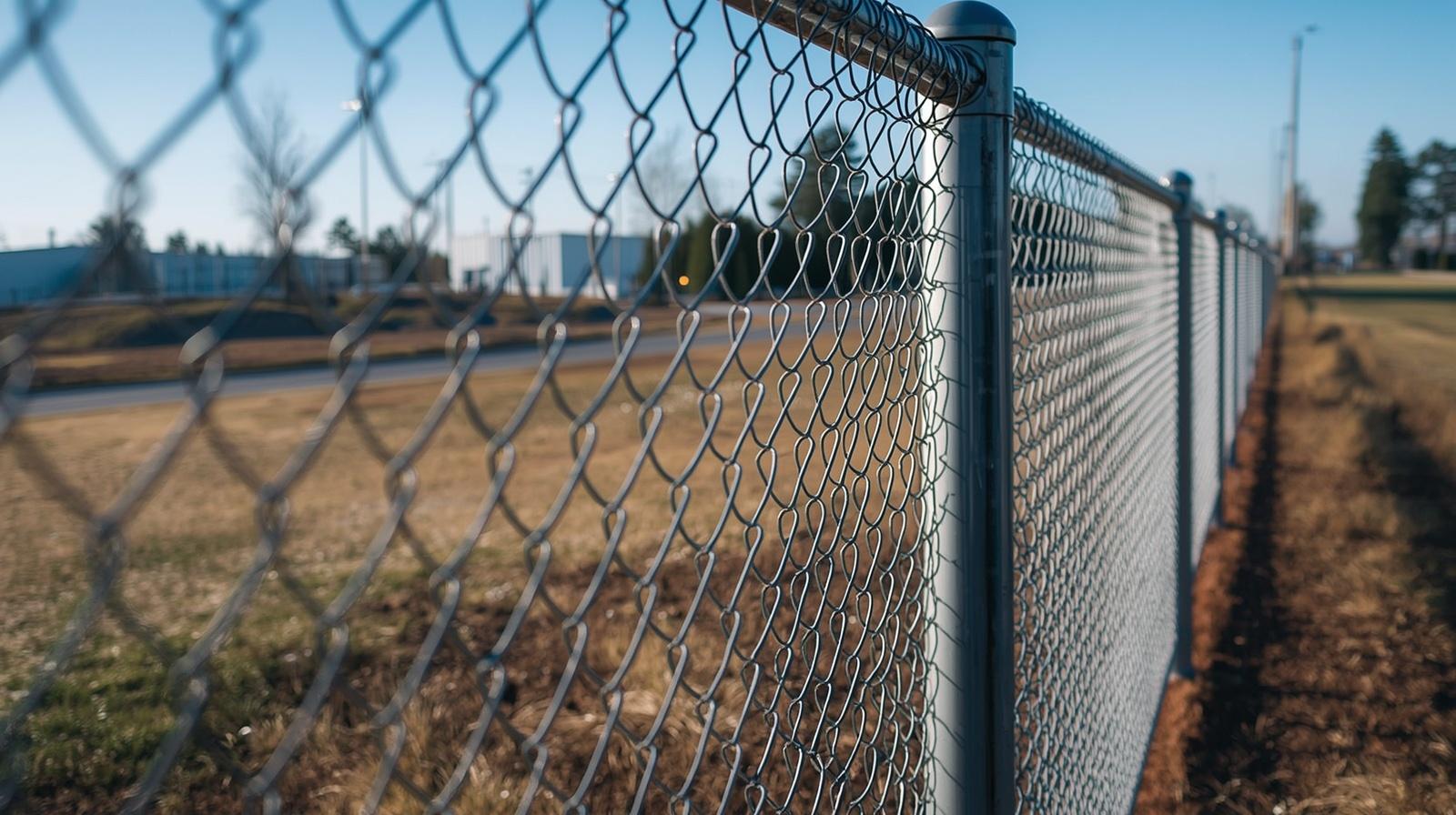
Chain link fencing is one of the most practical and cost-effective perimeter solutions for commercial properties in Oregon, IL — and it's more versatile than most property owners give it credit for. This guide covers the real-world applications, material specifications, and long-term benefits of commercial chain link in Ogle County. Rockford Fence installs and repairs commercial chain link fencing throughout Oregon and the surrounding northern Illinois region.
Why Chain Link Remains the Commercial Standard in Small-Market Illinois Communities
Oregon, IL is the kind of community where commercial properties have to be practical. Ogle County businesses — agricultural operations, light industrial facilities, municipal properties, retail sites, and rural commercial parcels — don't have the budget or the appetite for fencing that looks impressive but underdelivers on function.
Chain link has held its position as the dominant commercial fence material in markets like Oregon for straightforward reasons: it works, it lasts, and it doesn't demand constant attention to keep doing its job. A properly installed commercial chain link fence in northern Illinois can perform reliably for 20–30 years with minimal maintenance — which is exactly the kind of return on investment that makes sense for a Ogle County business owner or property manager.
That said, not all chain link is the same. The difference between a residential-grade chain link fence and a true commercial installation is significant — in gauge, post size, configuration, and long-term performance. Understanding those differences is what leads to an installation that actually matches the demands of the property.
What Makes Commercial Chain Link Different
The chain link you see on residential backyards throughout Oregon's neighborhoods is not the same product that belongs on a commercial perimeter. Commercial chain link is defined by heavier specifications across every component:
Mesh gauge. Residential chain link typically uses 11-gauge wire. Commercial security applications use 9-gauge or 6-gauge, which is substantially harder to cut, bend, or deform. The lower the gauge number, the heavier and stronger the wire.
Post dimensions. Residential line posts are typically 1-5/8" in diameter. Commercial line posts run 2-3/8" or 2-7/8". Corner posts, end posts, and gate posts on commercial installations typically spec at 4" diameter or larger — sized to handle the load of heavier mesh, taller fence heights, and gate systems.
Post depth. Commercial posts need to be set below the frost line, which in the Oregon, IL area reaches 42 inches or deeper. Inadequate post depth is the most common cause of early commercial fence failure — posts that heave over winter and pull the fence out of alignment.
Height. Commercial chain link starts at 6 feet and runs to 8, 10, or 12 feet depending on the security requirement. Taller installations are common on industrial properties, storage yards, and any site where a 6-foot fence doesn't adequately deter unauthorized access.
Coating. Galvanized chain link is the standard commercial finish — a zinc coating that resists rust and corrosion through Illinois's wet springs, road salt exposure, and freeze-thaw cycling. Vinyl-coated chain link adds an additional layer of protection and is common on properties where appearance matters alongside function.
Topping options. Barbed wire extensions — typically three-strand or more above the top rail — are standard on many commercial and industrial chain link installations in Ogle County. Razor wire is used for higher-security applications.
Practical Commercial Applications in Oregon, IL
Chain link's versatility is one of its underappreciated strengths. It serves a wider range of commercial applications than any other single fence material, and it scales from modest perimeter work to full industrial security installations.
Agricultural and Rural Commercial Properties
Ogle County has a strong agricultural base, and chain link is a practical choice for farm-adjacent commercial operations — grain storage facilities, agricultural supply yards, rural equipment dealers, and similar properties where containment, security, and durability over large areas matter more than aesthetics. Chain link handles the exposure of open rural terrain — including the wind loads that come with it — better than most materials.
Equipment and Vehicle Storage Yards
Contractors, utility companies, fleet operators, and equipment rental businesses throughout the Oregon area use chain link to secure outdoor storage yards. Heavy-gauge mesh deters theft and vandalism on high-value equipment. Combined with a properly spec'd slide gate and access control hardware, chain link creates a functional and reliable security perimeter for assets stored outdoors overnight.
Municipal and Government Properties
Parks departments, public works yards, water treatment facilities, and other municipal properties in Oregon and Ogle County rely on chain link for perimeter security and access control. It's cost-effective over the large areas municipal properties often cover, it's familiar to maintenance staff, and replacement components are readily available when repairs are needed.
Light Industrial and Manufacturing Facilities
For light industrial properties on Oregon's commercial corridors, a heavy-gauge chain link perimeter with a secure vehicle gate and pedestrian access points provides a professional, functional security boundary. The open mesh allows security cameras to monitor outside the fence line — a meaningful advantage over solid panel systems.
Construction Sites
Temporary chain link fencing — installed for the duration of a construction project and removed on completion — is standard practice for construction site security and liability management throughout the region. Properly installed temporary chain link keeps unauthorized persons off active sites, satisfies insurance and bonding requirements, and can be relocated as site phasing changes.
Utility and Infrastructure Sites
Substations, pump stations, lift stations, and other utility infrastructure properties use chain link almost universally. The material's durability, low maintenance requirement, and resistance to weather and vandalism make it a natural fit for unmanned infrastructure sites that need reliable long-term perimeter protection without ongoing attention.
Commercial Parking and Vehicle Areas
Chain link defines and secures commercial parking areas, vehicle storage lots, and rental car staging areas efficiently. Combined with vehicle-rated slide gates and loop detector systems, it can manage vehicle access automatically without staffing the entry point.
Access Control and Gate Systems for Commercial Chain Link
A commercial chain link fence is only as effective as the access points built into it. Gate selection and hardware specification deserve as much attention as the fence itself.
Slide Gates
Slide gates are the standard for commercial vehicle entries on chain link installations. They roll parallel to the fence line, don't require swing clearance, and handle high daily traffic volume reliably. For Oregon commercial properties dealing with Illinois winters, cantilever slide gates — which operate on a bottom rail rather than a ground track — eliminate the maintenance problems that ground tracks accumulate from snow, ice, gravel, and debris.
Swing Gates
Single and double-leaf swing gates work well for lower-traffic vehicle entries and pedestrian access points where swing clearance is available. Simpler mechanically than slide systems, with fewer components requiring maintenance over the fence's lifetime.
Pedestrian Gates
Pedestrian access points on commercial security perimeters should be self-closing and self-latching as a baseline. A pedestrian gate that stays propped open or fails to latch reliably is a recurring access control problem — particularly on commercial sites where staff turnover means not every person using the gate treats it consistently.
Access Control Hardware
Commercial chain link gate systems are increasingly paired with access control hardware: keypad entry, proximity card readers, intercom systems with camera integration, and automatic gate operators. Matching the access control specification to how the gate will actually be used — frequency, user type, security level — is as important as the gate itself.
Privacy Slats and Screening Options
Standard chain link provides security without visual privacy. For commercial properties where screening sightlines is also a goal — blocking views to storage areas, loading docks, waste management areas, or simply maintaining a cleaner streetside appearance — privacy slats are a practical addition.
Privacy slats are woven vertically through the chain link mesh and are available in aluminum, vinyl, and polypropylene. Coverage typically runs 75–95% depending on slat style and weave density. Slats are replaceable individually as they fade or break over time, without requiring any work on the fence framework itself.
For applications requiring full visual screening — dumpster enclosures, waste management areas, or commercial properties with strict municipal aesthetic requirements — solid panel inserts or a dedicated wood or steel enclosure may be a more appropriate solution than slats.
Long-Term Value of Commercial Chain Link
The economics of commercial chain link are straightforward and hard to argue with for properties where the application fits.
Low upfront cost relative to alternatives. Per linear foot, commercial chain link costs significantly less than ornamental steel, aluminum, or wood privacy fencing. Over long perimeter runs — common on commercial and industrial properties — that difference compounds.
Minimal maintenance requirement. Galvanized chain link does not need painting, sealing, or staining. Periodic inspections and hardware checks are the primary ongoing maintenance tasks. A fence that doesn't need regular attention is a fence that property managers don't have to budget for year after year.
Long lifespan. A properly installed, commercial-grade galvanized chain link fence in northern Illinois typically lasts 20–30 years. Vinyl-coated installations often push beyond that range with the added protection the coating provides.
Repairability. Chain link is one of the most repairable fence materials available. Damaged mesh sections can be replaced without touching the surrounding structure. Post replacements are straightforward. Hardware is standardized and readily available. A chain link fence that takes storm damage or vehicle impact can almost always be repaired rather than replaced — which matters for commercial property budgeting.
Scalability. Chain link scales from a 100-foot storage yard perimeter to a multi-acre industrial installation without a change in approach. The same material and installation method that works on a small commercial lot works on a large facility perimeter.
Ogle County Climate Considerations
Oregon's location in Ogle County means commercial fencing faces real seasonal stress. A few factors specific to this area:
Wind exposure. The Rock River Valley and surrounding open terrain can channel significant wind. Taller commercial chain link installations should be designed with post spacing and gauge specifications that account for sustained lateral wind load — particularly if barbed wire or razor wire extensions add surface area at the top of the fence.
Frost heave. The 42-inch frost line in this region makes post depth non-negotiable on commercial installations. Posts set above frost depth will heave and shift, particularly through the hard freeze and thaw cycles that Oregon typically sees between November and March.
Road salt. Commercial properties near Ogle County roads and highways are exposed to salt-laden spray throughout the winter months. Vinyl-coated chain link provides meaningful additional protection over standard galvanized mesh in high-salt exposure environments.
Serving Commercial Properties Throughout Oregon and Ogle County
Rockford Fence installs, repairs, and replaces commercial chain link fencing for businesses, property managers, municipalities, and agricultural operators throughout Oregon, IL and surrounding Ogle County communities. Every commercial project begins with a site assessment — we evaluate the property, the security requirements, the site conditions, and the budget before recommending a specification.
We don't apply a single standard spec to every commercial job. The right fence for a rural equipment yard is not the same fence as the right fence for a light industrial facility on a commercial corridor, and we build accordingly.
Contact Rockford Fence for Commercial Chain Link Fencing in Oregon
If you own or manage a commercial property in Oregon, IL and need a practical, durable fencing solution, Rockford Fence is ready to help. We serve Ogle County and the broader northern Illinois region and bring the same installation standards to every commercial project regardless of size.
Visit rockfordfence.net or call us today to schedule your commercial fencing consultation.
