
Commercial Fence Contractor in Clinton, WI: Questions to Ask Before Hiring
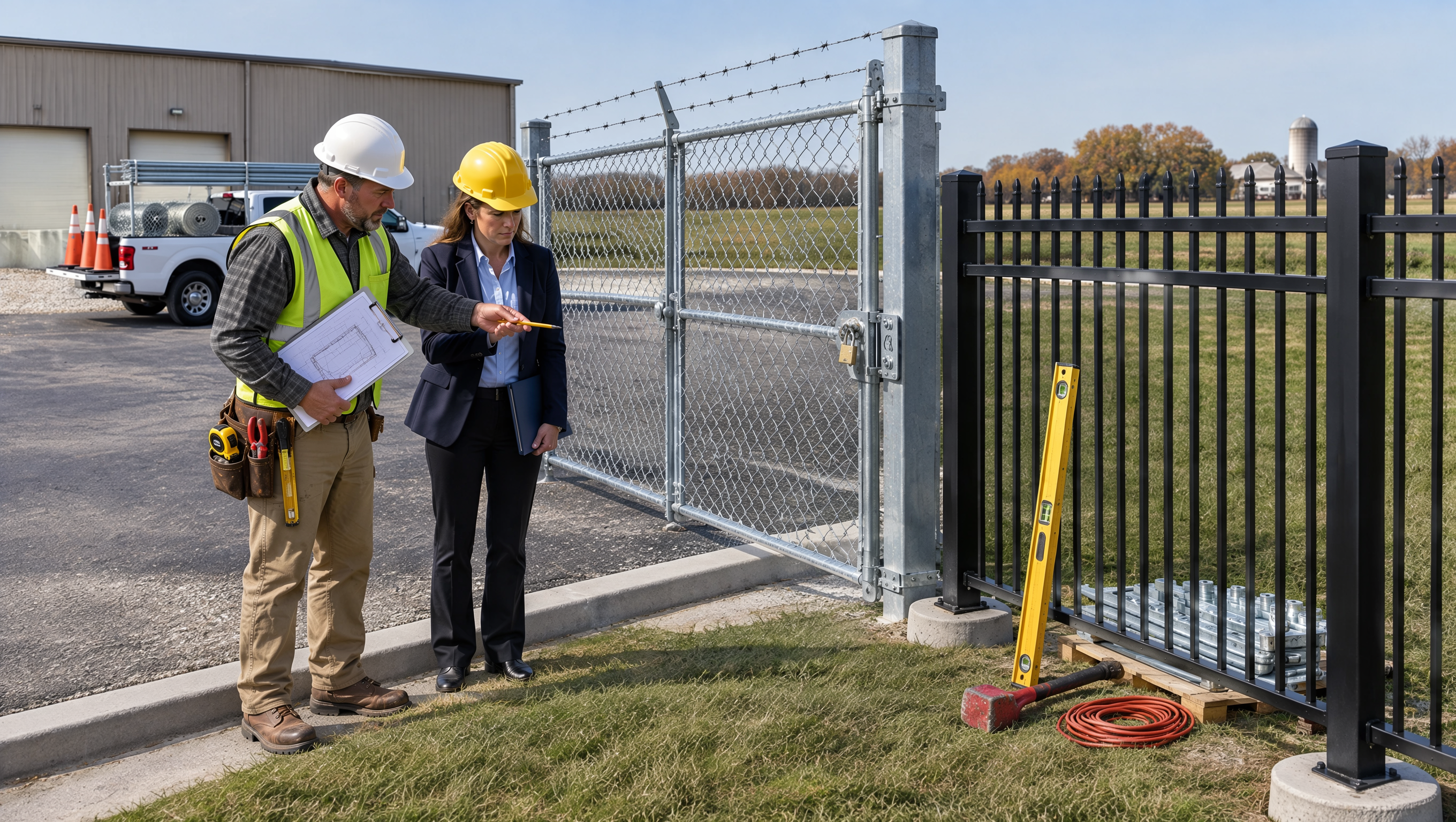
Before hiring a commercial fence contractor in Clinton, WI, businesses should ask about project scope, materials, gates, demolition, site preparation, access planning, drainage, cleanup, and how unexpected conditions are handled. The goal is to understand exactly what is included and whether the proposed fence will fit the property’s security, traffic, and operational needs.
Start With Experience Relevant to Your Property
Not every commercial fence project is the same.
A small enclosure around a dumpster has different requirements from a large perimeter with vehicle gates, outdoor storage, loading areas, and multiple access points.
Ask whether the contractor regularly handles projects involving:
Commercial chain link
Security fencing
Vehicle gates
Pedestrian gates
Fence replacement
Repair and sectional replacement
Dumpster enclosures
The important point is whether the contractor understands the type of property and access needs involved in the project.
A commercial site often requires more coordination than a simple straight fence line.
What Exactly Is Included in the Quote?
One of the most important questions is also one of the simplest.
Ask what the estimate actually covers.
A detailed scope may identify:
Total fence footage
Fence material
Fence height
Posts
Rails
Gates
Hardware
Installation labor
Cleanup
If the project involves replacing an existing fence, the quote should also explain whether demolition and disposal are included.
A single total without enough detail makes it difficult to compare contractors fairly.
Are Materials and Specifications Clearly Defined?
The proposal should identify what type of fence will be installed.
For chain link, that may include details about:
Fabric
Posts
Rails
Coating or finish
Fittings
Gate construction
For ornamental systems, the proposal should make the panel and post specifications clear enough to understand what is being installed.
Two quotes can look similar while using different materials or component specifications.
Make sure you are comparing the same project rather than only comparing the final numbers.
How Will the Gate Layout Be Planned?
Commercial gates can have a major effect on how a property functions.
Ask how the contractor determines:
Gate width
Gate location
Swing or sliding configuration
Pedestrian access
Vehicle clearance
The entrance should work for the largest vehicles that regularly use the property.
That might include delivery trucks, trailers, service vehicles, equipment, or snowplows.
A gate that is technically wide enough may still create problems if trucks do not have enough turning room.
Traffic flow should be part of the planning process.
Will Vehicle Movement Be Considered?
Commercial fence layout should account for how vehicles move through the site.
Ask whether the contractor will review:
Loading zones
Parking areas
Delivery routes
Dumpster access
Equipment paths
Snowplow routes
Repeated damage around gates and corners may indicate that the existing fence layout does not fit current operations.
If the contractor is replacing a damaged fence, ask whether the new design should change anything rather than simply recreating the old layout.
Sometimes additional clearance, wider gates, bollards, or wheel stops can help protect vulnerable areas.
Who Handles Existing Fence Removal?
Replacement projects often require significant demolition.
Ask whether removal includes:
Old fabric or panels
Rails
Posts
Gates
Concrete footings
Hauling
Disposal
Posts installed through asphalt or concrete may require additional work.
Large terminal or gate post footings may also take more effort to remove than ordinary line posts.
The removal scope should be clear before the project begins so there are no surprises once demolition starts.
How Will Pavement and Concrete Be Handled?
Commercial fencing frequently runs through parking lots, sidewalks, driveways, and loading areas.
Ask whether installation requires:
Asphalt cutting
Concrete cutting
Excavation
Surface restoration
Do not assume pavement restoration is automatically included.
If posts are being removed from one location and installed in another, the old openings may also need to be addressed.
A clear answer helps businesses understand the full project instead of only the fence installation itself.
Will the Site Be Checked for Drainage Problems?
Fence posts depend on stable ground.
Ask whether the contractor will look for:
Standing water
Erosion
Low spots
Soft soil
Exposed footings
Areas with repeated post movement
Clinton properties can experience freeze-thaw conditions, so drainage and wet soil can be important factors.
If several existing posts lean in the same area, simply replacing them without considering the ground condition may lead to similar problems later.
Major drainage work may fall outside the contractor’s scope, but the issue should still be identified.
How Will Business Access Be Maintained?
Commercial properties often need to remain operational during fence work.
Ask how the project will affect:
Deliveries
Employee parking
Customer access
Equipment routes
Waste removal
Main gates
If the property has only one primary entrance, the project may need to be completed in stages.
A clear work sequence can help keep important access points open while demolition and installation are underway.
This is especially important for replacement projects where the old gate may need to be removed before the new one is ready.
What Site Preparation Is Required?
Ask what needs to happen before the crew arrives.
The fence line may need to be cleared of:
Stored materials
Pallets
Equipment
Branches
Vegetation
Temporary obstacles
The contractor should explain what preparation they handle and what the property manager needs to complete.
This avoids delays caused by discovering that crews cannot access post locations or move materials through the site.
What Happens if Unexpected Conditions Are Found?
Commercial properties can reveal surprises during demolition or excavation.
Possible examples include:
Old concrete
Buried footing material
Unstable soil
Unexpected pavement thickness
Drainage issues
Ask how these conditions are handled.
Property managers should understand when additional approval may be needed and how changes to the project scope will be communicated.
Clear expectations before installation help avoid confusion if site conditions differ from what was visible during the first inspection.
How Will Cleanup Be Handled?
A commercial fence project is not complete when the last post is installed.
Ask whether cleanup includes:
Old fence removal
Construction debris
Excess materials
Work-area cleanup
Final gate adjustments
If demolition is part of the project, confirm that removed materials will actually be hauled away.
A clear definition of completion makes the final walkthrough much easier.
What Should Be Checked During the Final Walkthrough?
Before the project is closed out, inspect the finished fence with the contractor.
Review:
Post alignment
Fence tension
Gate movement
Latch operation
Ground clearance
Hardware
Cleanup
Commercial gates deserve extra attention because small alignment issues can become more noticeable with daily use.
Any concern found during the walkthrough should be discussed before the project is considered finished.
Ask About Winter Performance
A commercial fence in Clinton also needs to function through snow and freezing weather.
Ask how the planned layout works with:
Snowplow routes
Snow-storage areas
Swing gate clearance
Sliding gate travel paths
Winter vehicle access
Snowbanks can reduce usable entrance width and increase the chance of vehicles striking gate posts.
Heavy snow should also not be routinely pushed against fence sections.
A contractor should understand how the property operates throughout the year, not only on installation day.
Choose a Contractor Based on the Whole Project
Hiring a commercial fence contractor should involve more than comparing the lowest estimate.
Businesses should understand the proposed materials, gate layout, demolition, site conditions, access plan, cleanup, and project scope before making a decision.
Rockford Fence provides commercial fence installation, repair, replacement, chain link fencing, security fencing, gates, dumpster enclosures, and other commercial fence solutions.
Contact Rockford Fence to discuss a commercial fence project in Clinton, WI. A site evaluation can help define the layout, access needs, materials, and work required before installation begins.
