Commercial Fence Maintenance in Marengo, IL: Protecting Gates and Perimeters
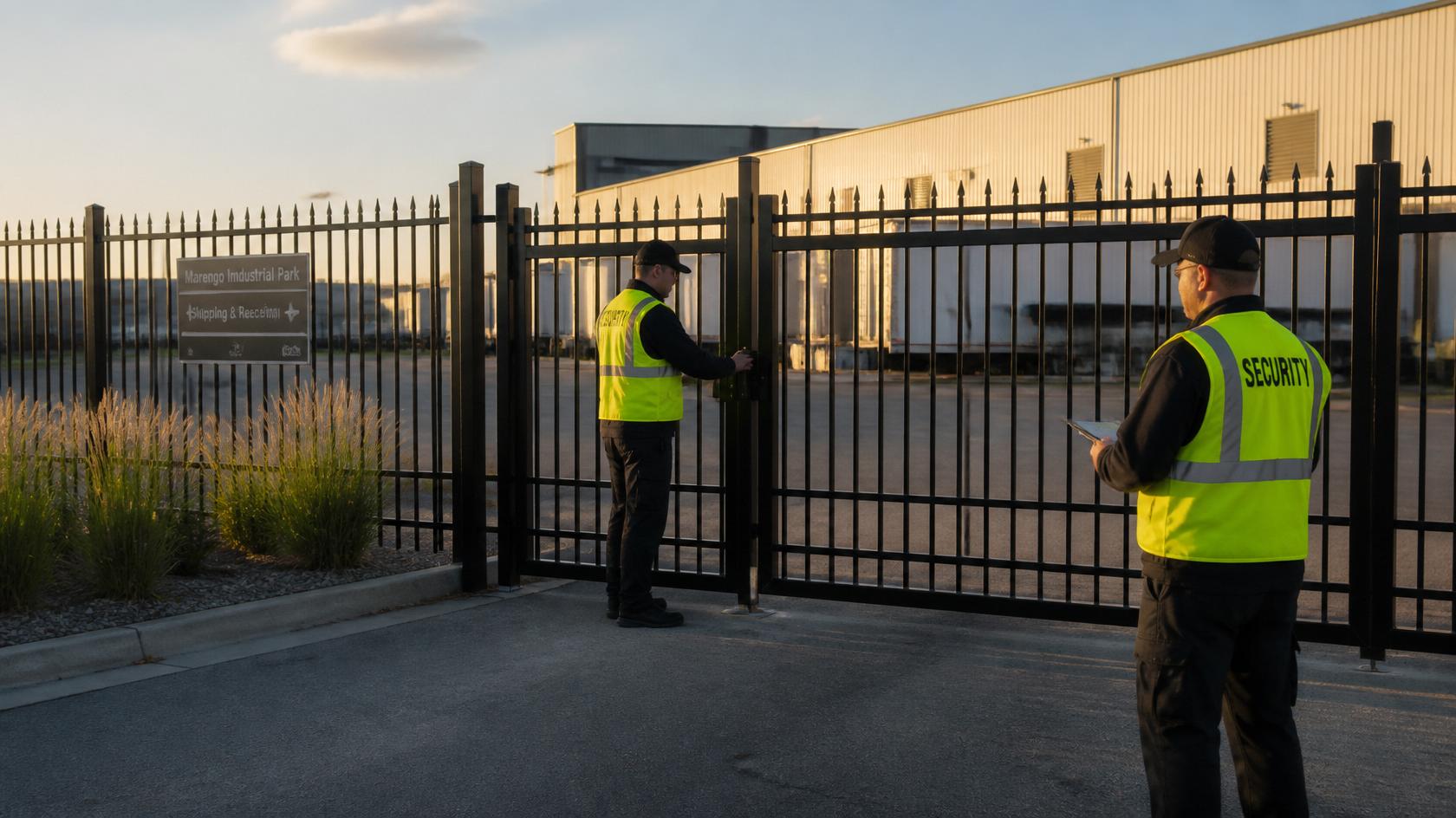
Routine commercial fence maintenance helps Marengo businesses protect gates, perimeter fencing, equipment areas, and access points. Regular inspections can catch loose hardware, leaning posts, rust, gate problems, and storm damage before they lead to larger repairs or security concerns.
Why Commercial Fence Maintenance Matters
A commercial fence may protect warehouses, parking areas, loading zones, outdoor inventory, utility equipment, dumpster enclosures, and restricted parts of a property.
When the fence begins to weaken, the problem can affect security, safety, access, and daily operations. A damaged gate may slow deliveries. Loose chain link fabric may create an entry point. A leaning post can place pressure on nearby rails and panels.
Commercial properties in Marengo also face snow, ice, rain, wind, freeze-thaw cycles, and seasonal soil movement. These conditions can gradually weaken posts, gates, fittings, and footings.
Routine maintenance helps property managers address small concerns before they spread across the perimeter.
Inspect the Entire Fence Perimeter
Commercial fence inspections should cover the complete property rather than only the main entrance.
Damage is often found in less visible areas, including rear lot lines, drainage areas, loading zones, and sections near neighboring properties.
During an inspection, look for:
Leaning or loose posts
Sagging chain link fabric
Bent rails or panels
Missing fasteners
Broken tie wires
Rusted fittings
Gaps beneath the fence
Vegetation growing through the fence
Damage from vehicles or equipment
Openings near corners and terminal posts
Pay special attention to sections near roads, driveways, parking lots, and delivery routes. These areas experience a greater risk of impact damage.
Check Fence Posts for Movement
Posts support the full fence system. When a post shifts, nearby fabric, rails, panels, and gates may move out of alignment.
Common causes of post movement include:
Saturated soil
Poor drainage
Freeze-thaw cycles
Strong wind
Snow piled against the fence
Vehicle or equipment impact
Deteriorated concrete footings
Freeze-thaw movement is an important concern in northern Illinois. Water in the soil freezes and expands, then contracts as temperatures rise. Repeated movement can loosen footings or push posts upward.
A slightly shifted post may be reset if it remains structurally sound. Bent, rusted, cracked, or severely unstable posts usually need replacement.
Ignoring one leaning post can place additional strain on a much larger section.
Maintain Chain Link Fence Fabric
Chain link fencing is commonly used around warehouses, storage yards, parking areas, and commercial facilities because it is durable and practical.
However, the fabric can loosen, stretch, tear, or separate from the frame.
Inspect for:
Sagging mesh
Broken tie wires
Loose tension bands
Damaged tension bars
Sharp wire ends
Gaps near the ground
Bent or stretched sections
Corrosion near fittings
Loose fabric may be restretched and secured when the mesh remains in good condition.
Torn, heavily bent, or rusted sections may need replacement. In many cases, only the damaged section must be removed rather than the entire fence line.
Protect Commercial Gates
Gates are among the most important parts of a commercial fence because they control daily access.
They also receive more movement and stress than standard fence sections.
Check Gate Alignment
A commercial gate should open smoothly, close completely, and align with its latch or locking system.
Dragging or sagging gates may result from:
Loose hinges
Worn rollers
A bent frame
A leaning gate post
Frost movement
Pavement changes
Soil buildup
Vehicle impact
Forcing a gate that is dragging can damage the frame, hinges, rollers, latch, or operator.
Early adjustment may prevent a larger repair.
Inspect Hinges, Rollers, and Tracks
Swing gates depend on strong hinges and stable posts. Sliding gates require properly aligned rollers, guides, tracks, and frames.
Look for:
Loose bolts
Cracked welds
Rust
Worn rollers
Grinding or squeaking
Shaking during movement
Debris in tracks
Uneven gate travel
Keep sliding gate tracks clear of gravel, leaves, snow, and ice. Moving hardware should be lubricated when appropriate.
Test Locks and Latches
A gate that closes but does not latch securely is still a security weakness.
Check:
Manual latches
Drop rods
Padlocks
Locking brackets
Keypads
Card readers
Sensors
Gate operators
Misalignment may be caused by a shifting post, loose hinge, or bent frame rather than the latch itself.
The full gate system should be checked before replacing individual hardware.
Watch for Rust and Corrosion
Metal fencing is built for outdoor exposure, but protective coatings can wear, chip, or become scratched.
Rust often begins around:
Gate hinges
Latches
Bolts
Tie wires
Tension bands
Welded joints
Bottom rails
Cut metal edges
Areas near standing water
Sections exposed to road salt
Minor surface rust may be cleaned and treated if the metal remains strong.
Deep corrosion, flaking metal, thinning posts, or brittle fittings usually require component replacement.
Areas near parking lots and roads should be checked more often because salt and moisture can accelerate corrosion.
Manage Snow and Ice Around the Fence
Snow should not be repeatedly pushed against perimeter fencing, gates, or dumpster enclosures.
Heavy piles can bend chain link fabric, move posts, damage lower rails, and interfere with gate operation.
Commercial property managers should:
Mark fence corners before winter
Identify gate posts for snowplow crews
Keep snow away from sliding gate tracks
Avoid blocking gate swing paths
Remove ice near latches and hinges
Check for damage after major snow events
Snowplows and loaders can also strike fence posts when property boundaries are difficult to see.
Clear markers and driver awareness can help prevent avoidable impacts.
Improve Drainage Along the Perimeter
Standing water can soften soil around posts and contribute to leaning. It may also accelerate corrosion near the bottom of metal fencing.
Inspect drainage after heavy rain or melting snow.
Watch for:
Water pooling around posts
Erosion beneath the fence
Exposed concrete footings
Mud around gate entrances
Downspouts draining toward the fence
Repeated gaps beneath chain link fabric
Correcting drainage can be an important part of a lasting fence repair.
Resetting a post without addressing recurring water accumulation may only provide a temporary solution.
Control Vegetation Near the Fence
Weeds, vines, shrubs, and tree branches can hide damage and place pressure on commercial fencing.
Vines may pull on chain link fabric, hold moisture against metal, and make it harder to inspect fittings.
Tree branches may bend rails or damage panels during storms.
Keep vegetation trimmed and remove plants growing through the fence. Avoid storing landscaping materials, pallets, firewood, or equipment directly against the perimeter.
Clear access also makes future inspections and repairs easier.
Focus on High-Traffic Areas
Commercial fence damage often occurs near:
Loading docks
Driveways
Parking spaces
Delivery entrances
Dumpster enclosures
Equipment storage areas
Snowplow routes
Forklift paths
Repeated damage in one location may indicate that the layout needs improvement.
Possible solutions include:
Wider gates
Protective bollards
Wheel stops
Better lighting
Clear traffic markings
Stronger gate posts
Revised delivery routes
Redesigning a high-impact area may be more cost-effective than repairing the same section repeatedly.
When Commercial Fence Repair Is Appropriate
Repair is generally practical when damage is limited and most of the fence remains structurally sound.
Repair may be suitable when:
One or two posts have shifted
A single rail or panel is bent
One section of chain link fabric is loose
Several fittings are rusted
A gate needs adjustment
Hinges, rollers, or latches need replacement
The remaining perimeter is stable
Targeted repairs can restore security and extend the useful life of the fence.
When Fence Replacement Makes More Sense
Replacement may provide better long-term value when problems affect multiple areas.
Consider replacement when:
Many posts are leaning
Corrosion is widespread
Fence fabric is brittle or damaged throughout
Gates repeatedly fail
Several panels or rails need repair
The layout no longer supports property access
The fence does not meet current security needs
Repair costs continue to increase
Replacement also creates an opportunity to improve fence height, gate width, material strength, access control, or perimeter layout.
Create a Commercial Fence Maintenance Schedule
A simple maintenance schedule can help facility managers track fence conditions throughout the year.
Inspect the fence:
After severe storms
After winter snow removal
During spring thaw
Before winter
After vehicle or equipment impacts
When gate movement changes
Document damaged areas, completed repairs, and recurring problems.
Photos can help track changes in leaning posts, rust, gate alignment, and drainage conditions.
Protect Your Marengo Commercial Property
A commercial fence should provide reliable perimeter protection and secure access throughout the year. Loose fabric, leaning posts, damaged gates, rust, and drainage problems should be addressed before they become larger repairs.
Rockford Fence provides commercial fence installation, repair, replacement, chain link fencing, ornamental fencing, security fencing, gates, dumpster enclosures, and commercial fence solutions.
Contact Rockford Fence to schedule a commercial fence inspection in Marengo, IL. The team can evaluate your gates and perimeter fencing and recommend practical maintenance, repair, or replacement options.
