Commercial Fence Maintenance in South Beloit, IL: How to Protect Your Investment
Commercial fence maintenance in South Beloit, IL helps protect your property, reduce repair costs, and extend the life of your fence. Regular inspections can catch leaning posts, rust, loose chain link fabric, gate problems, storm damage, and winter-related wear before they become larger issues. For business owners and property managers, maintaining a fence is an important part of protecting security, access, and long-term property value.
Why Commercial Fence Maintenance Matters in South Beloit, IL
A commercial fence is an investment in security, access control, organization, and property appearance. For business owners, facility managers, property managers, and commercial property owners in South Beloit, fencing often protects important areas such as parking lots, equipment yards, storage spaces, dumpster enclosures, utility zones, and service entrances.
When a fence is ignored, small issues can become expensive problems. A loose gate latch can turn into a damaged gate. A leaning post can pull nearby sections out of alignment. Rusted hardware can weaken security. Storm damage can leave the property exposed.
South Beloit properties also face Midwest weather throughout the year. Wind, snow, ice, rain, freeze-thaw cycles, rust, storm damage, and snow removal equipment can all affect commercial fencing. Regular maintenance helps keep the fence functional, safe, and professional-looking.
Start With Routine Fence Inspections
The best way to protect a commercial fence is to inspect it regularly. A quick walk along the fence line can help identify early signs of damage.
During an inspection, look for:
Leaning or loose posts
Rust on metal fencing or hardware
Loose chain link fabric
Bent rails
Broken boards or panels
Sagging gates
Damaged hinges or latches
Gaps along the fence line
Storm debris
Damage from vehicles or equipment
Commercial properties should be checked after severe weather, after winter, and during regular property maintenance. High-use areas, especially gates, should be inspected more often.
Maintain Fence Posts
Fence posts support the entire fence system. If posts weaken, the fence may begin to lean, sag, or lose tension.
In South Beloit, freeze-thaw cycles can shift soil around posts. When moisture in the ground freezes, expands, thaws, and shifts, posts may loosen over time. Heavy wind, snow piles, poor drainage, and vehicle impact can make the problem worse.
Property owners should watch for posts that are:
Leaning
Moving at the base
Rusted near the ground
Rotted if made of wood
Cracked or damaged
Pulling away from rails or fabric
If one or two posts are damaged, repair may be enough. If several posts are failing, fence replacement may be more practical.
Check Chain Link Fencing
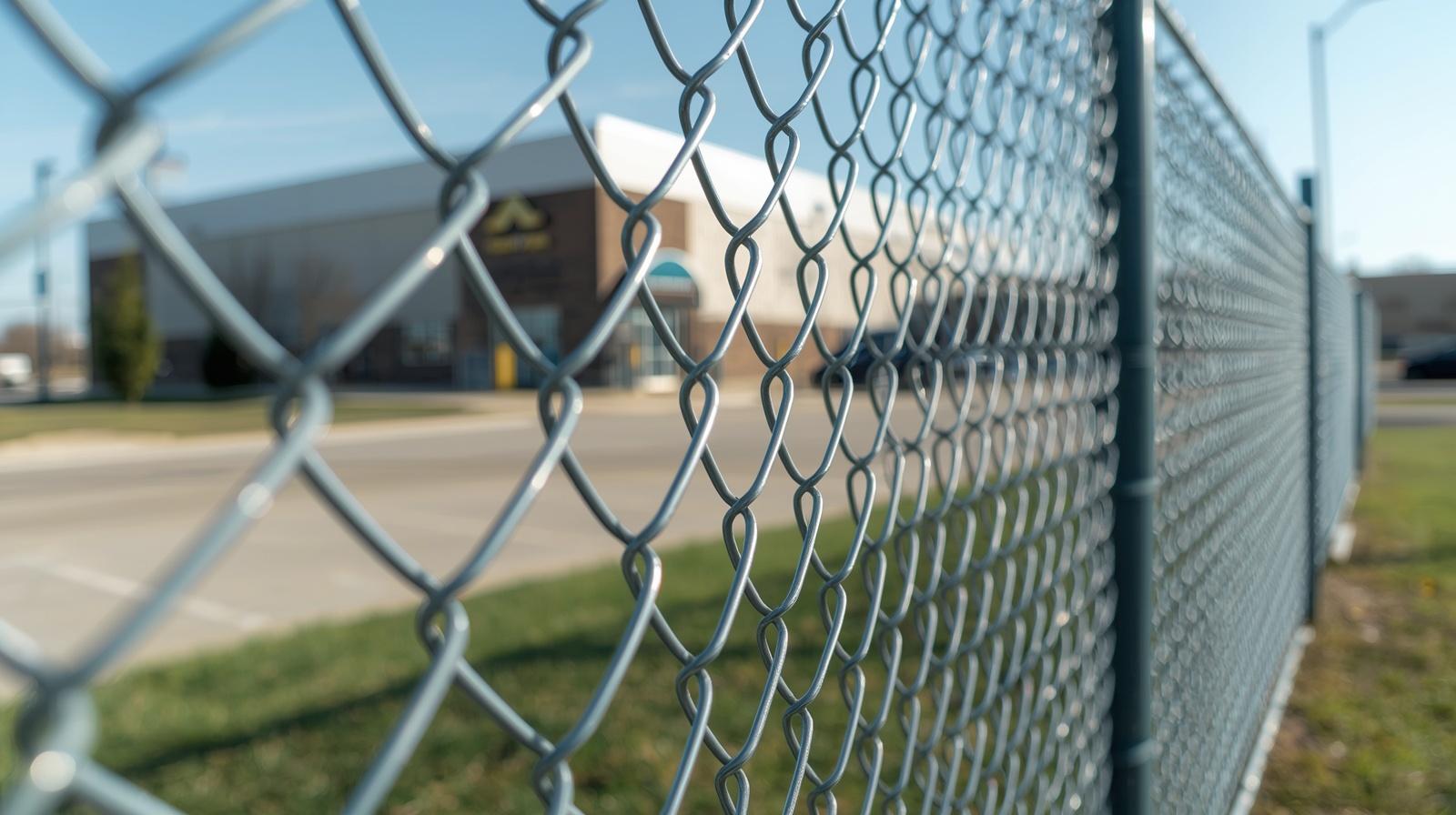
Chain link fencing is common for commercial properties because it is durable, visible, and cost-effective. It is often used around storage yards, parking areas, equipment spaces, utility zones, and commercial back lots.
Even though chain link is practical, it still needs maintenance.
Common chain link issues include:
Loose fabric
Missing ties
Bent top rail
Rusted fittings
Damaged tension wire
Leaning posts
Gaps under the fence
Vehicle or equipment impact damage
Loose chain link fabric should be repaired before it spreads. For commercial properties, a damaged chain link section can create a weak point in the fence line and reduce security.
Watch for Rust and Corrosion
Rust is one of the most common maintenance concerns for metal fencing and gate hardware. It can affect chain link fencing, ornamental fencing, hinges, latches, posts, fittings, and bolts.
Minor rust may be handled with targeted repair or hardware replacement. Widespread rust can weaken the fence and may eventually require replacement.
Check for rust on:
Gate hinges
Latches
Chain link fittings
Metal posts
Ornamental fence sections
Tension bands
Bolts and fasteners
Areas where coatings are chipped or damaged
Rain, snow, ice, and road salt exposure can all make rust worse. Catching rust early can help prevent larger repair needs.
Keep Gates Working Properly
Commercial gates often need more maintenance than the rest of the fence. Gates move frequently, carry weight, and are used by employees, vendors, service providers, delivery drivers, and maintenance crews.
Common commercial gate problems include:
Sagging
Dragging on the ground
Loose hinges
Broken latches
Rusted hardware
Bent frames
Misalignment
Posts shifting after freeze-thaw cycles
Damage from trucks or equipment
A gate that does not close securely can affect property security. A gate that drags or sticks can become difficult to use and may damage nearby posts or fence sections.
Commercial gates should be checked often, especially before and after winter. Snow and ice buildup can make gate problems worse, and forcing a stuck gate can damage the hinges, latch, or frame.
Clear Debris and Manage Landscaping
Debris and overgrowth can damage fencing over time. Branches, vines, weeds, leaves, and trash can trap moisture, hide rust, and place pressure on fence sections.
To protect the fence, property owners should:
Trim branches near fence lines
Remove vines from chain link fencing
Clear leaves and debris near posts
Keep heavy growth away from gates
Remove storm debris quickly
Watch for roots affecting post stability
For commercial properties, keeping the fence line clear also makes inspections easier and improves the overall appearance of the site.
Prepare for Winter Conditions
Winter maintenance is especially important in South Beloit. Snow, ice, and freeze-thaw cycles can damage posts, gates, hardware, and panels.
Before winter, property owners should:
Check gates for proper clearance
Repair loose hinges or latches
Inspect posts for movement
Look for rusted hardware
Clear debris from the fence line
Make sure gates can open without obstruction
During winter, avoid piling heavy snow against fence sections when possible. Snow pressure can bend chain link fabric, push panels out of alignment, and stress posts. Snow removal equipment should also be used carefully near fences and gates.
Inspect After Storms
Strong winds, heavy rain, ice, and falling branches can cause sudden fence damage. After a storm, property owners should check the fence line for visible problems.
Look for:
Leaning posts
Broken rails
Loose chain link fabric
Bent gate frames
Damaged panels
Fallen branches
Loose hardware
Gaps near the ground
Areas where the fence has shifted
Storm damage should be addressed quickly, especially if the fence protects equipment, parking areas, storage spaces, or restricted zones.
Maintain Dumpster Enclosures and Service Area Fencing
Dumpster enclosures and service area fences often take extra wear. Gates may be opened frequently by service trucks, employees, and maintenance crews. These areas may also be exposed to impact, moisture, and heavy use.
Maintenance should include checking:
Gate hinges
Latches
Post stability
Clearance for service trucks
Broken boards or panels
Chain link fabric
Rusted hardware
Damage from containers or vehicles
A damaged dumpster enclosure can make a property look poorly maintained and create access issues for waste service providers.
Repair vs. Replacement: When Maintenance Is Not Enough
Maintenance helps extend the life of a fence, but some problems may require repair or replacement.
When Fence Repair May Be Enough
Fence repair may be practical when:
One or two posts are leaning
A gate needs new hinges or latches
Chain link fabric is loose in one area
A rail is bent
Rust is minor
Storm damage is isolated
A dumpster enclosure gate needs adjustment
The fence still provides enough security
Timely repairs can help prevent more expensive damage later.
When Fence Replacement May Be Better
Fence replacement may be the better option when:
Multiple posts are leaning
Gates keep failing
Rust is widespread
Wood sections are rotting
Chain link fabric is loose or damaged throughout
The fence no longer provides enough security
Repairs are becoming frequent
The layout no longer works for the property
For commercial properties, repeated fence problems can affect security, access, appearance, and daily operations. Replacement may provide better long-term value.
Create a Simple Maintenance Schedule
Commercial fence maintenance does not need to be complicated. A simple schedule can help property owners stay ahead of problems.
A practical schedule may include:
Monthly gate checks
Seasonal fence line inspections
Post-winter inspection
Storm damage checks after severe weather
Rust and hardware checks twice a year
Dumpster enclosure inspections during routine property maintenance
The more a gate or fence section is used, the more often it should be checked.
Contact Rockford Fence for Commercial Fence Maintenance in South Beloit, IL
If your commercial fence has leaning posts, rust, loose chain link fabric, gate problems, storm damage, or worn hardware, Rockford Fence can help you decide whether maintenance, repair, or replacement is the right next step.
Rockford Fence provides commercial fencing, fence installation, fence repair, fence replacement, chain link fencing, wood fencing, ornamental fencing, security fencing, gates, dumpster enclosures, and commercial fence solutions for residential and commercial properties.
Contact Rockford Fence for commercial fence maintenance, repair, or replacement in South Beloit, IL and nearby areas.
