Commercial Fence Options in Lake Geneva, WI: Security, Access & Appearance
Commercial fence options in Lake Geneva, WI should be chosen based on security needs, access control, appearance, durability, and daily property use. Chain link, ornamental, wood, gates, dumpster enclosures, and security fencing can all serve different purposes for business properties. The best fence should protect the site, support traffic flow, look appropriate for the property, and hold up against Midwest weather.
Why Commercial Fence Planning Matters in Lake Geneva, WI
For business owners, property managers, facility managers, and commercial property owners in Lake Geneva, fencing is more than a boundary. A commercial fence can help secure outdoor areas, control access, improve appearance, guide traffic, and organize service spaces.
Commercial fencing may be used around:
Parking lots
Storage yards
Equipment areas
Apartment and multi-family properties
Retail and office properties
Utility spaces
Dumpster enclosures
Service entrances
Hospitality and lake-area business properties
Commercial back lots
Because Lake Geneva has a mix of commercial, residential, visitor-facing, and seasonal properties, appearance often matters along with function. A fence may need to protect the property while still fitting the surrounding area and maintaining curb appeal.
Wisconsin weather should also be part of the plan. Wind, snow, ice, rain, freeze-thaw cycles, rust, storm damage, leaning posts, and gate wear can all affect fence performance over time.
Start With the Main Goal of the Fence
Before choosing a fence material, property owners should think about what the fence needs to do. A fence for a storage yard may need stronger security. A fence near a customer entrance may need a cleaner appearance. A dumpster enclosure may need screening and durable gates.
Common commercial fence goals include:
Improving security
Controlling vehicle access
Protecting equipment or inventory
Defining property boundaries
Guiding customers, employees, or vendors
Screening dumpsters or utility areas
Improving curb appeal
Replacing an older or damaged fence
Reducing maintenance problems
The best commercial fence option should match how the property is used every day.
Chain Link Fencing for Practical Security
Chain link fencing is one of the most common commercial fence options because it is durable, visible, and practical for larger areas.
Best Uses for Chain Link Fencing
Chain link fencing works well for:
Storage yards
Equipment areas
Parking lots
Utility spaces
Service zones
Commercial back lots
Construction areas
Fleet vehicle spaces
Restricted access areas
For many Lake Geneva business properties, chain link fencing provides a strong balance of security, visibility, and budget-conscious coverage. It creates a clear boundary while still allowing visibility across the site.
Chain Link Security Upgrades
Commercial chain link fencing can be upgraded depending on the property’s needs.
Options may include:
Taller fence heights
Heavier gauge fabric
Stronger posts
Top rail
Lockable gates
Privacy slats
Commercial-grade hinges and latches
Chain link fencing can also be repaired in sections, which may help reduce long-term maintenance costs when damage is limited.
Ornamental Fencing for Appearance and Security
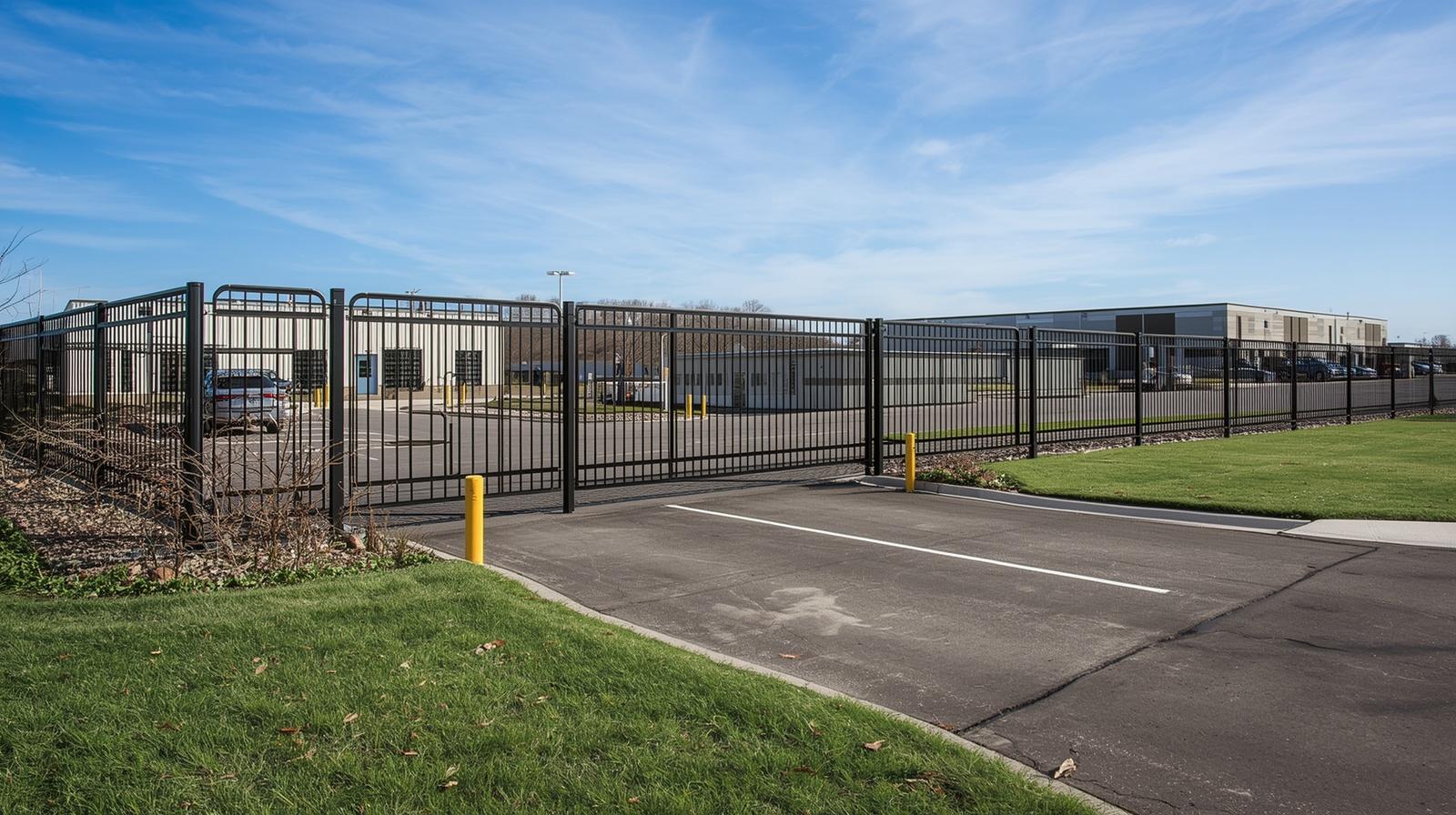
Ornamental fencing is a strong option when appearance matters. It provides boundary control and security while offering a cleaner, more polished look than standard industrial fencing.
Best Uses for Ornamental Fencing
Ornamental fencing may be a good fit for:
Office buildings
Retail properties
Apartment communities
Hotels or hospitality properties
Schools
Churches
Municipal properties
Customer-facing entrances
Public-facing commercial areas
In Lake Geneva, where many properties are visible to residents, visitors, customers, and tenants, ornamental fencing can help a business maintain a professional appearance while still improving access control.
Benefits of Ornamental Fencing
Ornamental fencing can provide:
Clean curb appeal
Strong boundary control
Good visibility
Durable metal construction
Compatibility with gates
A more finished appearance
This type of fence is often a good choice for areas where the fence will be seen from the street, sidewalk, parking lot, or customer entrance.
Wood Fencing for Privacy and Screening
Wood fencing can be useful when privacy or visual screening is the main goal. It may not be the best choice for every commercial security need, but it works well for certain spaces.
Best Uses for Wood Fencing
Wood fencing may be used around:
Dumpster enclosures
Service areas
Outdoor seating spaces
Utility areas
Mixed-use properties
Residential-style commercial properties
Areas that need visual separation
Wood can help block views of back-of-property areas and create a cleaner appearance for customers, tenants, or neighboring properties.
Wood Fence Maintenance Considerations
Wood fencing requires more maintenance than chain link or ornamental fencing. Wisconsin weather can cause wood to absorb moisture, warp, rot, crack, or loosen over time.
Common wood fence issues include:
Rot near posts
Loose boards
Warped panels
Broken rails
Gate sagging
Storm damage
Leaning sections after freeze-thaw cycles
Wood can be a good option for screening, but property owners should plan for inspections and repairs over time.
Commercial Gates and Access Control
Gates are one of the most important parts of any commercial fence system. A fence can be strong and attractive, but if the gate is poorly placed or difficult to use, the property may still have access problems.
Vehicle Gates
Vehicle gates should be planned around how cars, trucks, service vehicles, and delivery drivers move through the property.
Vehicle gate planning should consider:
Gate width
Turning space
Delivery access
Emergency access
Parking lot layout
Snow removal
Locking needs
Frequency of use
A gate that is too narrow or poorly placed may be hit by vehicles or become a frequent repair issue.
Pedestrian Gates
Pedestrian gates may be needed for employees, tenants, customers, visitors, or maintenance staff. These gates should be placed where foot traffic naturally enters and exits.
For restricted areas, pedestrian gates may need stronger locks or latches. For public-facing areas, they should be secure but easy to use.
Common Gate Problems
Commercial gates often need service because they move frequently and carry weight.
Common issues include:
Sagging
Dragging
Broken hinges
Loose latches
Rusted hardware
Bent frames
Gate misalignment
Posts shifting after freeze-thaw cycles
Strong posts, durable hinges, and proper installation help reduce future gate repairs.
Dumpster Enclosures and Service Area Fencing
Dumpster enclosures are an important part of many commercial properties. They help keep waste areas organized and less visible from customer-facing spaces.
A good dumpster enclosure should include:
Strong posts
Durable gates
Proper clearance for service trucks
Hardware built for repeated use
Materials suited for weather exposure
A layout that allows easy access
Wood, chain link, or other commercial fencing materials may be used depending on appearance and durability needs. Since dumpster enclosure gates are often used frequently, hardware quality matters.
Midwest Weather and Long-Term Durability
Commercial fencing in Lake Geneva should be planned for Wisconsin weather. A fence that is not built for local conditions may develop problems sooner than expected.
Common weather-related fence problems include:
Leaning posts from freeze-thaw cycles
Rust on metal fencing or hardware
Loose chain link fabric
Bent rails after storms
Wood rot from moisture exposure
Gate misalignment after ground movement
Snow or ice buildup around gates
Damage from snow removal equipment
Storm damage from falling branches
Freeze-thaw cycles are especially important. When moisture in the ground freezes, expands, thaws, and shifts, fence posts can move. This can cause leaning sections and gates that no longer close properly.
Choosing the right material, using strong posts, and planning gates carefully can help reduce future repair needs.
Repair vs. Replacement for Commercial Fencing
Some commercial fences can be repaired. Others may need replacement if damage is widespread or the fence no longer meets the property’s needs.
When Fence Repair May Be Enough
Fence repair may be practical when:
One or two posts are leaning
A gate needs new hinges or latches
Chain link fabric is loose in one area
A rail is bent
Rust is minor
A wood section is damaged
Storm damage is isolated
The fence still provides enough security
When Fence Replacement May Be Better
Fence replacement may make more sense when:
Multiple posts are leaning
Gates keep failing
Rust is widespread
Wood sections are rotting
Chain link fabric is loose or damaged throughout
Repairs are becoming frequent
The fence no longer controls access
The layout no longer works for the property
The fence looks worn or unprofessional
For commercial properties, replacement may provide better long-term value when repeated repairs affect security, appearance, or daily operations.
Choosing the Right Commercial Fence Option
The best fence option depends on the property’s priorities.
Chain link fencing may be best for practical security, visibility, and large-area coverage. Ornamental fencing may be best when curb appeal and customer-facing appearance matter. Wood fencing may be best for screening and privacy. Gates and access control should be planned carefully with any material.
Before choosing a fence, property owners should ask:
What areas need to be secured?
Is visibility important?
Does the fence need to look polished?
Will trucks or service vehicles need access?
Are dumpster or utility areas visible?
Will snow removal affect the fence line?
How much maintenance is acceptable?
Is the current fence worth repairing?
A good commercial fence should support the property’s function, security, and appearance.
Contact Rockford Fence for Commercial Fencing in Lake Geneva, WI
If your Lake Geneva property needs better security, improved access, stronger gates, dumpster enclosure fencing, repair, or full fence replacement, Rockford Fence can help you choose a practical solution.
Rockford Fence provides residential fencing, commercial fencing, fence installation, fence repair, fence replacement, chain link fencing, wood fencing, ornamental fencing, security fencing, gates, dumpster enclosures, and commercial fence solutions.
Contact Rockford Fence for commercial fence installation, repair, or replacement in Lake Geneva, WI and nearby areas.
