
Commercial Fence Planning in Oregon, IL: Preparing for Winter Operations
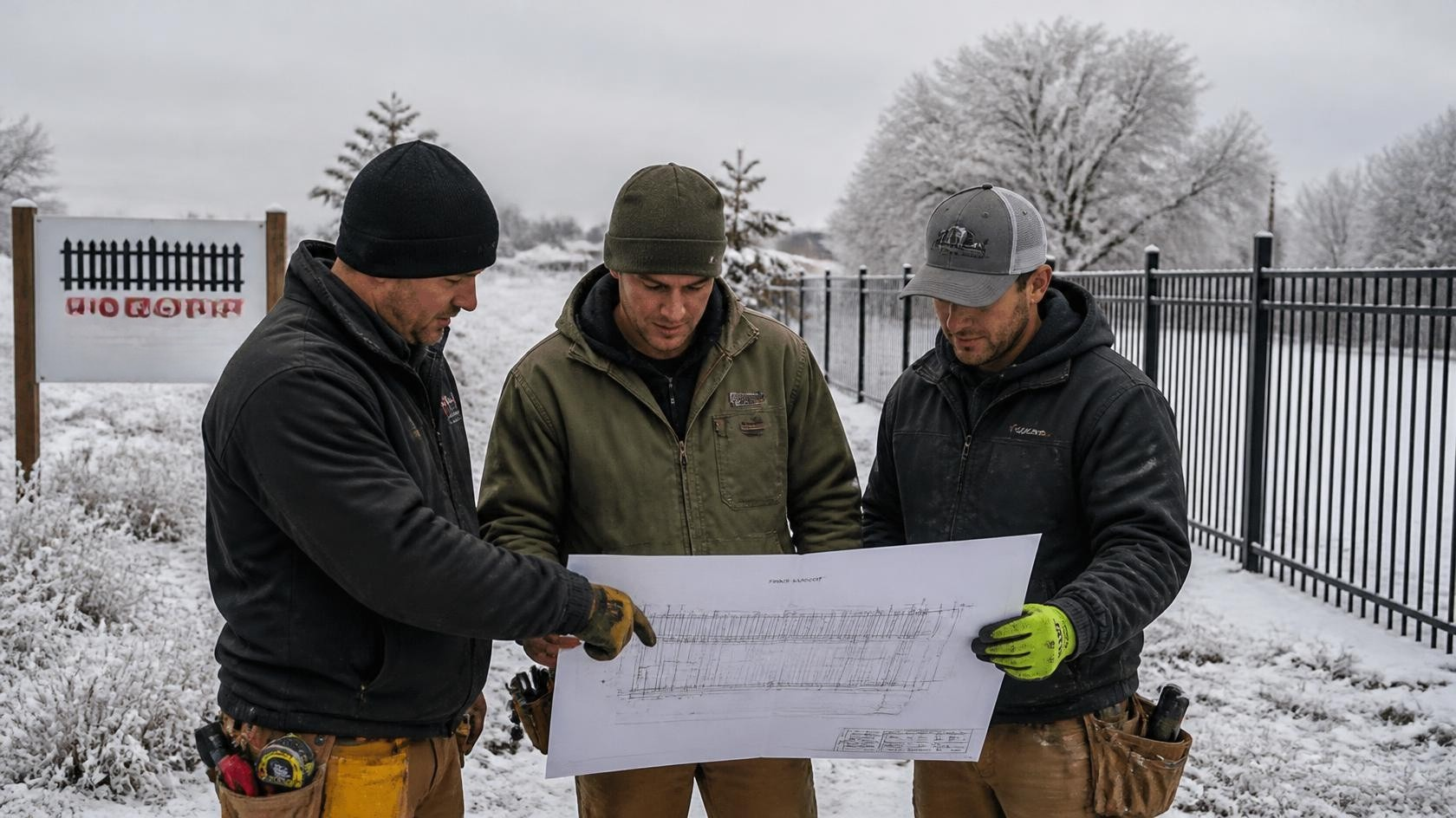
Commercial fence planning in Oregon should account for winter access, snow storage, gate clearance, drainage, vehicle traffic, and the condition of posts and hardware before cold weather arrives. Preparing these areas in fall can help businesses keep entrances usable and reduce fence damage once snow, ice, and freeze-thaw conditions begin.
Start With How the Property Operates in Winter
A commercial fence should support normal business operations throughout the year, not just during mild weather.
Before winter, review how employees, deliveries, equipment, and service vehicles move through the property.
Important areas may include:
Main vehicle entrances
Employee parking
Loading zones
Equipment yards
Outdoor storage
Dumpster enclosures
Pedestrian gates
Winter can change how these areas function.
Snowbanks may reduce available driving space, gates may lose clearance, and plow routes can bring equipment closer to posts and fence sections.
Planning should begin with the areas that the business cannot afford to have blocked.
Identify the Gates That Need Continuous Access
Some gates may only be used occasionally, while others are essential every day.
Determine which entrances serve:
Deliveries
Employees
Equipment
Waste removal
Service vehicles
Restricted areas
These gates should receive priority during fall inspections and repairs.
A gate that already drags or requires extra force to latch may become unreliable after snow and ice arrive.
Before winter, each important gate should open smoothly, close fully, and lock without needing to be lifted or pushed into position.
Review Swing Gate Clearance
Swing gates need enough room to move through their entire opening arc.
Check whether winter conditions could interfere with that space.
Potential problems include:
Snow piled in the swing path
Ice buildup beneath the gate
Gravel or soil heaving upward
Parked vehicles limiting clearance
Equipment stored near the entrance
A gate that barely clears the ground during fall may begin dragging once winter arrives.
If clearance is already limited, inspect the hinges, frame, and support posts before simply raising the gate.
Sagging or post movement may be the actual cause.
Keep Sliding Gate Paths Open
Sliding gates have different winter requirements.
The gate needs a clear path along the fence line from fully closed to fully open.
Before winter, remove:
Gravel
Leaves
Mud
Branches
Stored materials
Other debris
Inspect rollers, guides, stops, and tracks where applicable.
Snow should not be routinely stored where the gate needs to travel.
If a sliding gate already shakes, grinds, or hesitates, the problem should be addressed before frozen debris or packed snow adds more resistance.
Plan Snow Storage Before the First Storm
One of the most useful winter fence-planning steps is deciding where snow will go.
Avoid pushing heavy snow directly against:
Chain link fabric
Gates
Rails
Posts
Panels
Wet, compacted snow can place substantial pressure on fence sections.
Snow piles can also narrow gate openings and reduce turning room for trucks or trailers.
Property managers should coordinate snow-storage locations with the fence layout before winter rather than deciding after the first major snowfall.
Review Snowplow Routes
Plow routes should provide enough clearance around fence posts and gates.
Look closely at:
Parking lot corners
Driveway entrances
Loading zones
Dumpster areas
Narrow service lanes
These locations often bring equipment close to the perimeter.
If a post or gate has been struck during previous winters, consider whether the route can be adjusted.
Depending on the property, additional protection may include:
Bollards
Wheel stops
Better markings
More turning room
Reducing repeated impact risk can prevent repairs later in the season.
Check Posts Before Freeze-Thaw Conditions Increase
Fence posts are the foundation of the perimeter.
Inspect line, terminal, corner, and gate posts for:
Leaning
Movement near the footing
Exposed concrete
Soil erosion
Corrosion near the base
Previous impact damage
Oregon, Illinois properties can experience freeze-thaw conditions that affect wet or unstable soil.
If a post is already loose in fall, seasonal ground movement may make the problem more noticeable.
Gate and terminal posts deserve particular attention because small shifts can affect gate alignment or chain link tension.
Review Drainage Along the Fence Line
Water and winter conditions are closely connected.
After fall rain, inspect the fence line for:
Standing water
Mud
Low areas
Runoff
Erosion
Exposed footings
A section that remains wet may experience more soil movement during freezing and thawing.
If several posts lean in the same area, drainage may be contributing to the problem.
The fence contractor may not handle major drainage work, but the issue should still be identified before posts are repaired or replaced.
Ignoring the site condition can allow the same problem to return.
Check Chain Link Fabric and Rails
Commercial chain link fencing should remain reasonably tight and properly supported.
Inspect for:
Sagging fabric
Torn sections
Broken tie wires
Loose tension bands
Bent rails
Separated rail sleeves
Loose fabric should not automatically be retensioned before posts and rails are checked.
A shifting terminal post or bent rail may be causing the problem.
Once structural issues are corrected, usable chain link may often be retensioned.
Badly stretched, brittle, or heavily corroded fabric may require sectional replacement.
Inspect Hardware Before Cold Weather
Small hardware problems can turn into larger access issues during winter.
Check:
Hinges
Latches
Bolts
Tension hardware
Gate stops
Rollers
Welded connections
Look for looseness, wear, corrosion, or bent parts.
A latch that barely works in fall may become more difficult once the gate shifts slightly or ice forms around the entrance.
High-use components should be corrected before winter conditions make repairs more inconvenient.
Consider Road Salt Exposure
Fence sections near parking lots or roadways may receive more salt and moisture during winter.
Pay particular attention to:
Post bases
Gate frames
Lower hinges
Bolts
Tie wires
Roller hardware
Minor surface corrosion can often be monitored while the underlying metal remains strong.
More serious warning signs include flaking metal, thinning posts, brittle wire, or weakened connections.
Damaged protective coatings should also be noted because those areas may become more vulnerable during winter.
Review Ground-Level Gaps
Inspect the bottom of the perimeter before snow covers it.
Gaps may develop because of:
Erosion
Soil settlement
Loose fabric
Animal activity
Post movement
Large openings can weaken perimeter control around outdoor storage or equipment.
The correct repair depends on the cause.
Some areas may need fabric retensioning, while others may require grade correction or post stabilization.
Recurring gaps often indicate a drainage or soil issue rather than a fence-only problem.
Plan Repairs Around Business Priorities
If several problems are found, not all of them need equal urgency.
Prioritize:
Gates that do not close or lock
Unstable gate or terminal posts
Torn chain link
Bent vehicle entrances
Large perimeter gaps
Structural corrosion
Cosmetic wear can often wait.
Problems affecting security, access, or structural stability should receive attention first because they are more likely to interfere with winter operations.
Decide Whether Repair or Replacement Is More Practical
Repair may make sense when damage is localized and the surrounding fence remains sound.
Examples include:
One damaged rail
A loose gate
Limited corrosion
One unstable post
A small torn chain link section
Sectional replacement may be better when several connected components are failing in one area.
Full replacement may be considered when deterioration is widespread or the existing layout no longer fits current traffic and security needs.
Winter planning is a good time to make that distinction before repairs are repeatedly applied to a larger failing system.
Prepare Your Oregon Commercial Fence for Winter Operations
Commercial fence planning before winter should focus on keeping the perimeter secure while maintaining dependable access for vehicles, employees, and service operations.
Gates, posts, drainage, chain link, hardware, snow storage, and plow routes should all be reviewed before colder conditions arrive.
Rockford Fence provides commercial fence planning, installation, repair, replacement, chain link fencing, security fencing, gates, dumpster enclosures, and other commercial fence solutions.
Contact Rockford Fence to discuss commercial fence planning in Oregon, IL. The team can evaluate the perimeter and help identify repairs, access concerns, and winter-readiness improvements before snow and freezing conditions begin.
