
Commercial Fence Post Repair in Belvidere, IL: Why Stability Matters Before Freeze-Thaw
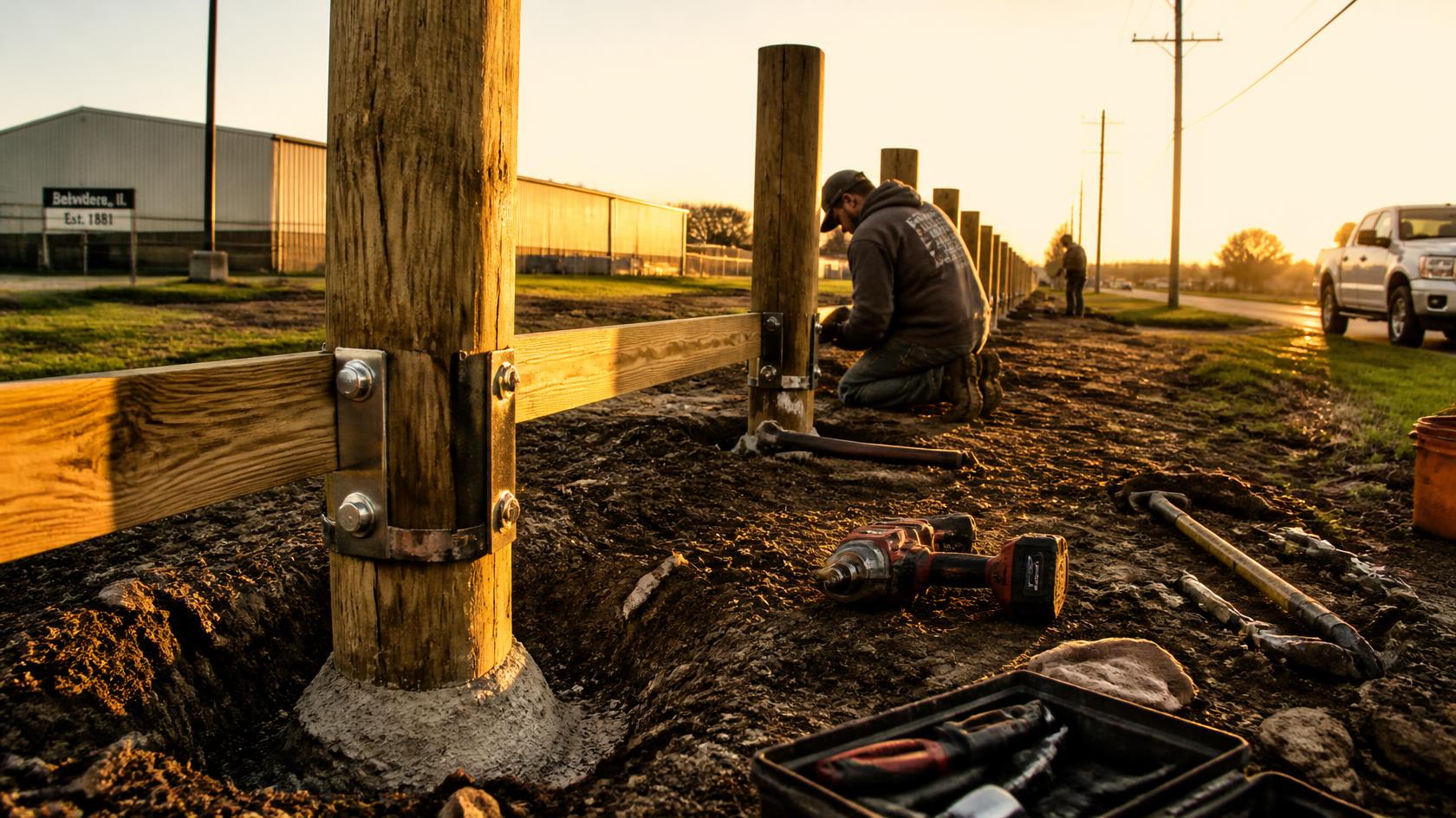
Commercial fence posts in Belvidere should be checked before repeated freezing and thawing begins. Leaning posts, loose footings, drainage problems, corrosion, and vehicle impacts can weaken the entire fence line, affect gate operation, and allow damage to spread into rails, fabric, or panels.
Fence Posts Carry More Than the Fence
Posts are the structural foundation of a commercial fence.
When one begins to move, nearby components may also lose alignment.
An unstable post can lead to:
Loose chain link fabric
Bent or separated rails
Sagging panels
Gate misalignment
Larger ground-level gaps
Stress on nearby hardware
This is why post repair should not be treated as a cosmetic issue.
A fence can still look mostly intact while its structural support is already beginning to fail.
Freeze-Thaw Conditions Can Expose Weak Footings
Belvidere properties experience seasonal temperature changes that can repeatedly freeze and thaw moisture in the soil.
If the ground around a fence post remains wet, seasonal movement may expose an already weakened footing.
Warning signs may include:
A post leaning farther after cold weather
Soil separating from the footing
Concrete becoming visible
New gaps around the post base
Fence sections shifting out of line
Freeze-thaw conditions do not always cause the original problem, but they can make existing weaknesses easier to see.
Addressing instability before winter can help prevent additional movement.
Pay Attention to Gate Posts First
Gate posts usually handle more load than standard line posts.
They support the gate while also dealing with repeated opening, closing, and vehicle traffic.
A shifting gate post can cause:
Dragging
Sagging
Latch misalignment
Difficulty locking
Uneven gate clearance
If a commercial gate needs constant adjustment, the post may be part of the problem.
Moving the latch or tightening the hinges repeatedly will not correct a footing that continues to shift.
Before freeze-thaw conditions become more frequent, gate posts should be checked carefully for movement and structural deterioration.
Terminal and Corner Posts Need Strong Support
Chain link fencing places significant tension on terminal and corner posts.
If one of these posts leans, a larger section of fence can begin losing tension.
Look for:
Sagging fabric near corners
Loose tension bands
Rails pulling away
Posts leaning toward the fence line
Concrete movement around the footing
Repairing the post first may allow surrounding chain link fabric and hardware to be retensioned.
Ignoring the post can allow a localized problem to spread across a longer section of perimeter.
Line Posts Can Reveal Broader Ground Problems
One loose line post may be an isolated repair.
Several leaning posts in the same area may point to a bigger issue.
Possible causes include:
Poor drainage
Erosion
Repeated vehicle pressure
Saturated soil
Weak previous footings
Snow pushed against the fence
When multiple posts move together, repairing them individually without checking the surrounding conditions may only provide a temporary solution.
The entire section should be evaluated before deciding how much repair work is needed.
Drainage Deserves Close Attention
Water is one of the most important conditions to review around fence posts.
Check for:
Standing water
Low spots
Mud
Runoff
Exposed footings
Washed-out soil
A post surrounded by saturated soil may become less stable as temperatures fluctuate.
Drainage problems should be identified before resetting or replacing posts.
The fence contractor may not handle major drainage improvements, but the source of recurring moisture should still be considered in the repair plan.
Otherwise, a new or reset post may face the same conditions that contributed to the original movement.
Corrosion Can Weaken Metal Posts From the Bottom Up
Metal commercial fence posts should be inspected near ground level, where moisture and road salt exposure may be greater.
Look for:
Flaking metal
Heavy rust
Thinning
Holes
Weak connections
Damage around welded areas
Minor surface rust does not always mean replacement is necessary.
More serious corrosion can reduce the strength of the post even if the upper section still appears straight.
If the base has lost structural strength, resetting the post may not be enough.
Replacement may be the better option.
Vehicle Impacts Should Not Be Overlooked
Fence posts near parking lots, loading areas, gates, and dumpster enclosures often face repeated contact from vehicles or equipment.
Damage may include:
Bent posts
Scraped coatings
Cracked concrete
Disturbed soil
Misaligned gates
Loose nearby rails
Sometimes the impact is obvious.
Other times, the post shifts only slightly but continues moving under fence tension.
If one area is repeatedly damaged, the repair plan should also consider why.
Wider clearance, bollards, wheel stops, or better traffic routing may reduce future repairs.
Snow Storage Can Add Pressure to Weak Posts
Commercial properties should review where snow will be stored before winter.
Heavy snow piled against fencing can place additional pressure on:
Posts
Chain link fabric
Rails
Gates
Panels
An already unstable post may lean farther when snow is repeatedly pushed against the fence.
Facility managers should identify safer snow-storage areas and make sure plow routes provide enough clearance around gate posts and perimeter sections.
Avoiding repeated snow pressure can help protect repaired posts through winter.
What Does Commercial Fence Post Repair Involve?
The repair depends on the condition of the post, footing, and surrounding fence.
Possible work may include:
Resetting a structurally sound post
Replacing a bent or corroded post
Correcting the footing
Reattaching rails or panels
Retensioning chain link fabric
Replacing damaged bands or fittings
Realigning a gate
A proper repair should address the post first before surrounding components are adjusted.
Otherwise, the fence may be aligned to a support that is still unstable.
When Can a Post Be Reset?
Resetting may be practical when:
The post itself remains structurally sound
Corrosion is limited
The surrounding fence is in good condition
Damage is localized
The post can be stabilized properly
The footing and ground conditions still need to be evaluated.
If the original problem came from erosion, saturated soil, or repeated impact, those factors should be considered before the post is put back into service.
When Replacement Makes More Sense
Replacement may be more appropriate when the post is:
Badly bent
Deeply corroded
Cracked or weakened
Structurally damaged
Attached to a failed footing
Gate posts may also require replacement when repeated movement has damaged both the post and surrounding hardware.
A new post can provide a stronger foundation for realigning the fence or gate.
The goal should be a stable repair rather than preserving a component that is already near the end of its useful condition.
Look Beyond the Post After the Repair
Once the post is stabilized, nearby fence components should be checked again.
Inspect:
Top rails
Chain link fabric
Panels
Tension hardware
Gate frames
Hinges
Latches
A leaning post may have placed stress on these components before the repair.
Correcting only the post may leave the surrounding fence loose or misaligned.
The final repair should restore the whole affected section, not just make the post stand straight again.
Prioritize Posts That Affect Access and Security
Not every leaning post has the same urgency.
Higher-priority repairs include:
Gate posts
Terminal posts
Corner posts
Posts near outdoor storage
Posts beside vehicle entrances
Posts supporting loose perimeter sections
These locations can affect access, gate operation, and perimeter control.
Addressing them before freeze-thaw conditions increase can help reduce the chance of larger winter repairs.
Prepare Belvidere Commercial Fencing for Winter
Stable posts help the entire commercial fence perform as intended.
Before winter, review leaning posts, footings, drainage, corrosion, gate supports, vehicle-impact areas, and snow-storage locations.
Rockford Fence provides commercial fence repair, post repair and replacement, chain link fencing, gates, security fencing, installation, replacement, dumpster enclosures, and other commercial fence solutions.
Contact Rockford Fence for commercial fence post repair in Belvidere, IL. The team can evaluate unstable posts and surrounding fence sections and recommend practical repairs before freeze-thaw conditions make existing movement more difficult to manage.
