
Commercial Fence Quote in Beloit, WI: Comparing Materials and Gate Options
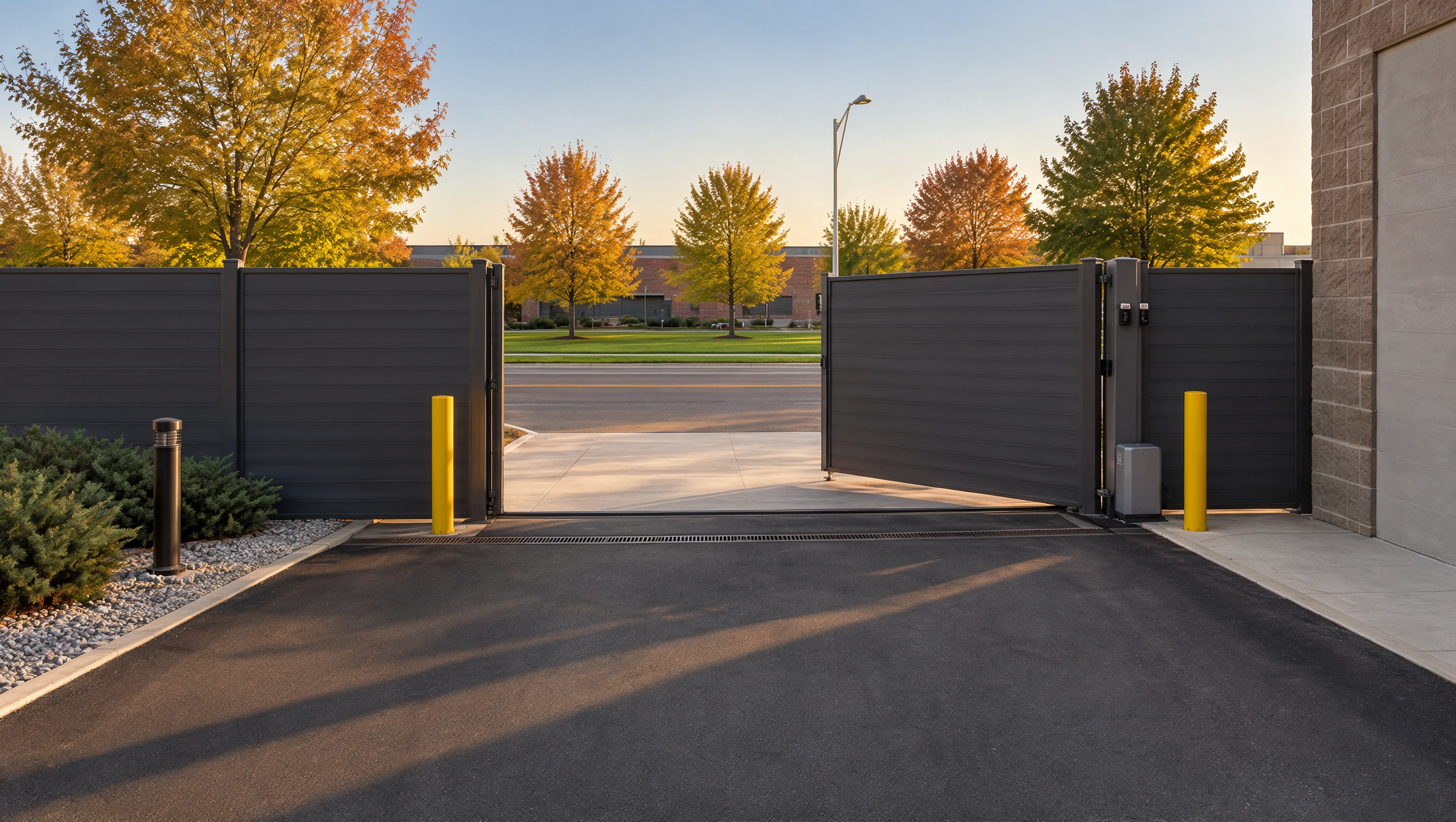
A commercial fence quote in Beloit should clearly show the material, fence height, total footage, post specifications, gate type, gate width, hardware, removal work, and site preparation included in the project. Comparing quotes becomes much easier when businesses understand how chain link, ornamental fencing, swing gates, sliding gates, and pedestrian access affect both security and daily operations.
Compare the Complete Scope, Not Just the Total
Two commercial fence quotes can have very different totals even when they cover the same property.
The difference may come from:
Fence material
Fence height
Post specifications
Gate sizes
Number of access points
Existing fence removal
Pavement work
Site preparation
Before choosing a proposal, confirm that each contractor is pricing a similar finished system.
A lower total is not necessarily a better value if important gates, removal work, or structural components are excluded.
The first step should always be understanding exactly what the quote includes.
Start With the Purpose of the Fence
Material decisions become easier when the property owner first defines what the fence needs to accomplish.
A commercial fence may be used for:
Perimeter security
Equipment storage
Outdoor inventory
Employee parking
Loading areas
Dumpster enclosures
Controlled vehicle access
Different areas of the same property may need different solutions.
For example, a rear storage yard may prioritize visibility and security, while a customer-facing entrance may place more emphasis on appearance.
A good quote should reflect how each section of the property is actually used.
Compare Chain Link for Practical Perimeter Control
Chain link remains a practical option for many commercial properties.
It can work well around:
Warehouses
Storage yards
Equipment areas
Parking lots
Service areas
One advantage is visibility. Employees can see through the perimeter rather than creating a completely closed barrier.
When comparing chain link quotes, look beyond the word "chain link."
Review:
Fence height
Fabric specifications
Post layout
Top rails
Tension hardware
Gate construction
Two chain link proposals may look similar while using different structural specifications.
The entire system should be compared, not simply the fence material.
Consider Ornamental Fencing for Visible Areas
Ornamental fencing may be appropriate where businesses want perimeter control with a more finished appearance.
Common locations include:
Main entrances
Office frontage
Customer-facing property lines
Areas near building entrances
It can also be combined with other materials.
For example, a business may choose ornamental fencing along the front of the property and chain link around rear storage or service areas.
This can balance appearance, visibility, and practical perimeter needs without requiring every section to use the same material.
When comparing quotes, make sure each proposal covers the same sections and specifications.
Fence Height Should Match the Location
Commercial fencing does not always need one height around the entire site.
Before requesting a quote, review which areas need stronger perimeter control and which simply need a clear property boundary.
Fence height can influence:
Material quantities
Post requirements
Gate dimensions
Overall installation scope
Applicable local requirements should also be reviewed before final placement and height decisions are made.
Settling these details before the quote is finalized can reduce layout changes later.
Gate Options Can Change the Project Significantly
Gates often create some of the biggest differences between commercial fence proposals.
A property may require:
Pedestrian gates
Single swing gates
Double swing gates
Sliding gates
Wide vehicle entrances
The quote should identify each gate separately.
Check the width, location, hardware, and configuration.
A proposal that includes one basic gate should not be compared directly with another that provides several vehicle and pedestrian access points.
Gate planning should be treated as a major part of the project rather than an add-on after the fence layout is decided.
Compare Swing Gates Based on Available Space
Swing gates can work well where there is enough open space around the entrance.
They require room for the full gate arc.
Before selecting this option, consider:
Parked vehicles
Buildings
Equipment
Delivery routes
Snow-storage areas
A gate may have plenty of clearance during summer but become harder to operate if winter snow is routinely piled in its swing path.
Gate direction should also support traffic flow.
The quote should specify the gate width and configuration so businesses understand how much usable access the design provides.
Consider Sliding Gates for Busy Vehicle Entrances
Sliding gates move along the fence line rather than swinging into the driveway.
They can be useful where vehicle maneuvering space is limited.
However, sliding gates require enough clear fence line for their travel.
Businesses should consider:
Gate opening width
Available side clearance
Rollers or guides
Travel path
Snow-storage locations
The path should remain clear of equipment, stored materials, gravel, and snow.
When comparing a sliding gate with a swing gate, look at how each option fits the actual site rather than choosing based only on initial project cost.
Gate Width Should Match Real Traffic
One of the most important things to compare is usable gate width.
Consider the largest vehicles regularly entering the property, including:
Delivery trucks
Trailers
Service vehicles
Equipment
Waste-removal trucks
Snowplows
A gate can technically be wide enough for a vehicle while still creating difficult turning conditions.
If trucks approach from an angle, additional width may be useful.
Repeated contact with gate posts can lead to ongoing repair costs.
A properly planned entrance may cost more initially but reduce operational problems later.
Do Not Forget Pedestrian Access
Large vehicle gates should not automatically serve as the only entrance.
A dedicated pedestrian gate may provide a clearer route for employees or visitors.
Consider where people park and how they reach the building.
Pedestrian access should avoid unnecessary interaction with:
Trucks
Loading areas
Equipment
Busy vehicle lanes
If one contractor includes pedestrian gates and another does not, that difference should be considered when comparing the proposals.
Review Posts and Structural Components
The supporting structure matters as much as the visible fence.
A quote should clearly account for:
Line posts
Corner posts
Terminal posts
Gate posts
Rails and fittings
Gate posts generally carry more load and movement than ordinary line posts.
Terminal and corner posts also help maintain fence tension.
If one quote appears significantly lower, confirm that the post and support specifications are comparable.
Reducing structural components may lower the proposal total while changing how the completed fence performs.
Existing Fence Removal Should Be Clear
Replacement projects may involve more than installing new fencing.
The existing perimeter may require removal of:
Chain link fabric
Rails
Posts
Gates
Concrete footings
Ask whether removal, hauling, and disposal are included in the quote.
Also check whether pavement restoration is addressed if old posts are located in asphalt or concrete.
One contractor may include this work while another expects the property owner to arrange it separately.
Compare Site Preparation and Access Conditions
Installation conditions can also affect the project scope.
Potential issues include:
Vegetation
Stored materials
Tight equipment access
Concrete or asphalt
Drainage problems
Sloped ground
A clear quote should explain whether the fence line must be prepared before work begins.
Commercial properties should also plan installation around deliveries, employee parking, and other daily operations.
If the contractor needs access to an active loading zone or vehicle route, scheduling may be part of the project planning.
Ask About Exclusions Before Choosing
Exclusions help explain what the quoted price does not cover.
Depending on the project, these may include:
Major drainage correction
Electrical work
Gate automation
Access-control systems
Landscaping restoration
Extensive pavement repairs
Exclusions are not necessarily a problem.
They simply need to be understood before proposals are compared.
A detailed quote makes it easier to avoid unexpected work later.
Compare Fence and Gate Options Around the Whole Property
The strongest commercial fence quote is not simply the one with the smallest total.
It should provide a clear plan for materials, gates, posts, access points, site conditions, and the way the property operates.
Rockford Fence provides commercial fence installation, chain link fencing, security fencing, gate installation, repair, replacement, dumpster enclosures, and other commercial fence solutions.
Contact Rockford Fence for a commercial fence quote in Beloit, WI. A site evaluation can help compare material and gate options based on security needs, vehicle traffic, property layout, and daily access.
