
Commercial Fence Repair After Fall Wind in Freeport, IL: What to Inspect
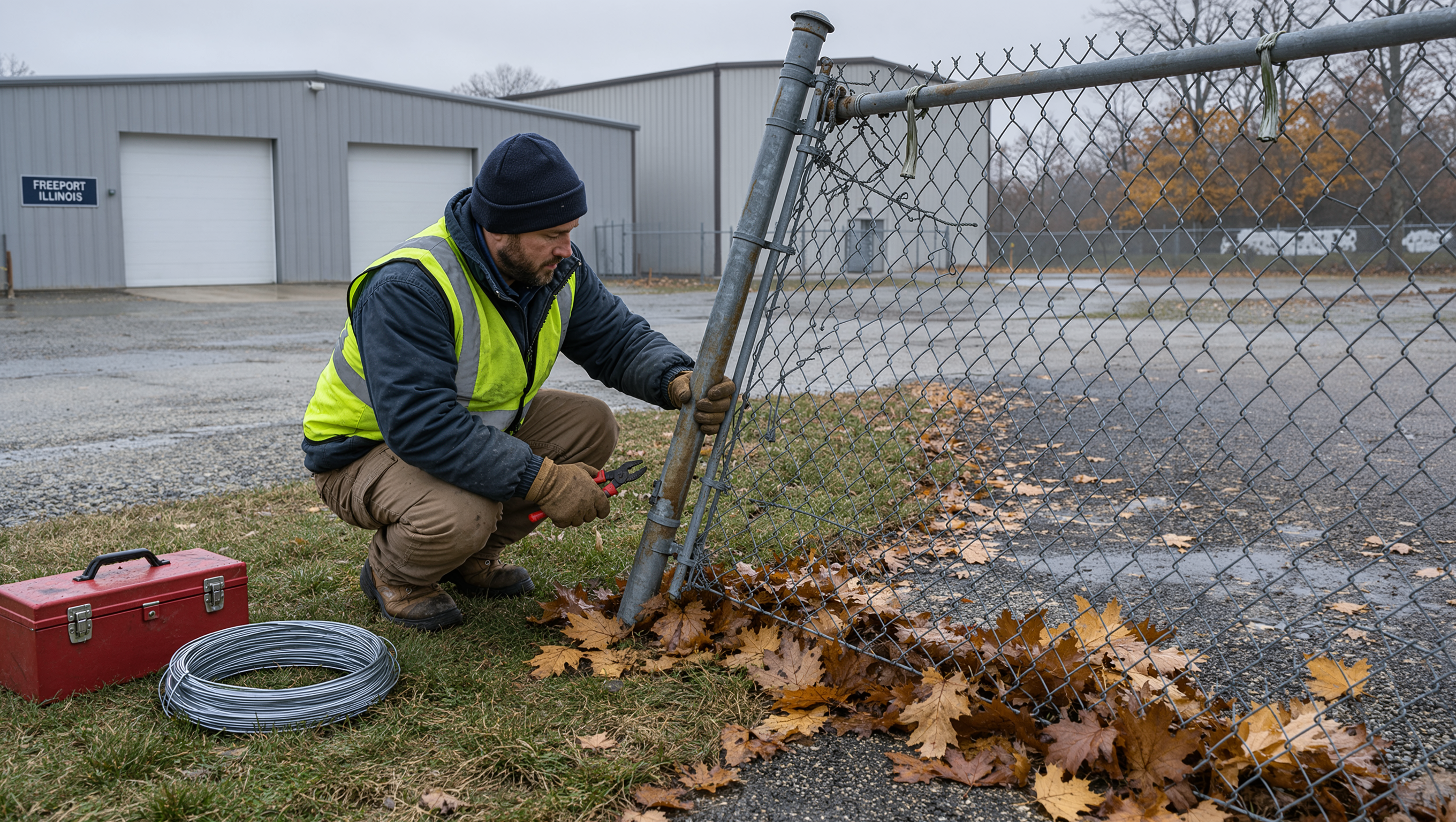
After strong fall wind in Freeport, commercial fencing should be checked for leaning posts, loosened chain link, bent rails, gate misalignment, damaged hardware, fallen branches, and weak areas near corners or open lots. Wind often exposes problems that were already developing, so a careful inspection can help businesses identify what needs immediate repair before colder weather and snow arrive.
Start With the Sections Most Exposed to Wind
Not every part of a commercial property experiences wind the same way.
Begin with fence sections near:
Open fields
Parking lots
Large driveways
Corners of buildings
Loading areas
Unprotected property lines
These areas may receive more direct wind or debris impact.
Look for changes that were not present before the storm.
A fence does not need to be completely down to have suffered damage. Even a slight lean, loose rail connection, or sagging section of chain link can indicate that the structure was stressed.
Facility managers should also check areas hidden behind buildings or storage where damage may be less obvious from the main entrance.
Look Down the Fence Line for New Movement
One of the easiest ways to spot wind-related damage is to look along the fence from one end.
A healthy fence should generally follow a consistent line.
Watch for:
Posts leaning in the same direction
Sudden dips in the top rail
Sections bowing inward or outward
Uneven fence height
Fabric pulling away from supports
Wind may not always create the problem from scratch.
It can reveal existing weaknesses in posts, footings, or connections.
If one section now looks different from the surrounding fence, inspect that area closely before attempting to retension or straighten anything.
Inspect Posts for Stability
Posts carry the structural load of the fence.
After a windy period, check line, terminal, corner, and gate posts for:
Leaning
Bending
Movement at the footing
Cracked or exposed concrete
Soil separation
Erosion
Impact from branches or debris
Corner and terminal posts deserve extra attention because they help maintain tension across longer runs.
If one of these shifts, nearby chain link may sag even if the fabric itself is not damaged.
Gate posts also need careful inspection because movement can affect both perimeter security and daily access.
Check for Soil and Footing Problems
Wind damage may be more noticeable where the ground was already weak.
Inspect around posts for:
Soft soil
Standing water
Erosion
Gaps around concrete
Exposed footings
Washout near paved areas
Freeport can experience wet fall conditions followed by freezing temperatures.
If a post is already loose in saturated soil, wind may increase movement.
That instability can become more noticeable during freeze-thaw conditions.
Repairing the fence without considering the surrounding soil may lead to the same problem returning later.
Inspect Chain Link Fabric for New Sagging
Strong wind can put additional pressure on chain link, especially if debris has struck the fence or if nearby posts have shifted.
Look for:
Sagging fabric
Torn wire
Stretched openings
Loose bottom edges
Fabric pulling away from posts
If the chain link itself remains in good condition, it may be possible to retension it after the structural support is repaired.
Do not tighten sagging fabric before checking the posts and rails.
If a terminal post is leaning, simply pulling the mesh tighter may add more stress without solving the cause.
Review Tie Wires and Tension Hardware
Wind can expose loose or failing hardware.
Inspect:
Tie wires
Tension bands
Tension bars
Brace bands
Bolts
Rail fittings
Missing or broken tie wires may allow chain link to flap or pull away from a rail.
Loose tension hardware can affect larger sections near the ends of a fence run.
These components are small, but they help the entire fence stay connected.
Replacing damaged hardware early can prevent more movement as winter weather adds additional stress.
Check Top Rails for Bends and Separation
Top rails help keep chain link fencing aligned between posts.
After fall wind, inspect for:
Bent rails
Separated sleeves
Loose connections
Missing fittings
Branch impact
Sections pulled out of alignment
A rail may be damaged by wind-blown debris even when the nearby posts remain stable.
If the surrounding structure is sound, one damaged rail section may often be repaired without replacing a larger portion of the fence.
Ignoring a bent rail can allow nearby fabric to sag further.
Look for Damage From Fallen Branches
Wind damage does not always come from wind pressure alone.
Branches and other debris can strike the perimeter.
Check under and around trees for:
Bent posts
Crushed top rails
Distorted chain link
Damaged ornamental sections
Loose hardware
Remove branches carefully before evaluating the fence.
Once the weight is off the structure, inspect whether the posts remain stable and whether the fabric or panels can return to normal alignment.
Some sections may only need localized repair, while heavier impact can require replacement of several connected components.
Test Every Gate After the Wind
A gate may fall out of alignment even if the surrounding fence looks mostly normal.
Open and close each gate several times.
Watch for:
Dragging
Sagging
Grinding
Difficulty latching
Uneven movement
Reduced ground clearance
A slightly shifted gate post can move the latch out of position.
Swing gates may also develop hinge problems after frame movement.
Sliding gates should be checked for roller, guide, or travel-path issues.
A gate that cannot close securely should receive higher priority than minor cosmetic fence damage.
Inspect Automated Gates Mechanically First
If a commercial property uses an automated gate, make sure the gate itself still moves freely.
Wind-related movement can create:
Poor alignment
Roller resistance
Binding hinges
Shifted posts
Obstructions in the travel path
The operator should not be expected to force a misaligned gate through resistance.
After mechanical issues are corrected, remaining problems with sensors, controls, wiring, or the operator may require qualified service.
Safety features should never be bypassed to keep a damaged gate operating.
Check Corners and Transition Points
Fence corners and transitions between different fence sections can be more vulnerable to stress.
Inspect where:
Fence direction changes
Chain link meets a gate
Fence connects to a building
Different materials meet
Height changes occur
These locations often carry concentrated tension.
A loose fitting or shifting post at a transition point can affect more than one section.
If wind has moved one of these structural points, repairing it early can help prevent larger alignment problems.
Look for Ground-Level Security Gaps
Post movement or fabric tension loss can create new openings near the bottom of the fence.
Inspect for:
Gaps under chain link
Fabric pulled upward
Erosion beneath the fence
Areas where the bottom edge is loose
These openings can reduce perimeter control around equipment, storage, or restricted areas.
The repair depends on the cause.
Loose fabric may need retensioning, while a leaning post or eroded grade may require more substantial work.
Snow can hide these gaps later, making fall a good time to identify them.
Review High-Traffic Areas for Combined Damage
Wind may also make existing vehicle-impact damage worse.
Inspect fencing near:
Loading docks
Delivery entrances
Parking lot corners
Dumpster enclosures
Equipment routes
A post already weakened by a previous vehicle impact may lean further after strong wind.
If the same area has been repaired several times, the site layout may need attention.
Wider access, bollards, wheel stops, or more turning clearance may help reduce repeated damage.
Decide What Needs Immediate Repair
Not every issue found after a windy day requires the same response.
Higher-priority repairs usually include:
Unstable terminal or gate posts
Gates that no longer close or lock
Torn chain link creating openings
Bent rails affecting alignment
Structural corrosion
Large ground-level gaps
Minor cosmetic damage can often be monitored.
If several connected components are damaged in one area, sectional replacement may be more practical than repairing each piece separately.
The goal is to restore structural stability and perimeter security before winter conditions arrive.
Prepare Your Freeport Fence After Fall Wind
Fall wind can expose weaknesses that might otherwise remain unnoticed until winter.
Posts, rails, chain link fabric, gates, hardware, soil conditions, and debris-impact areas should all be reviewed as part of the same fence system.
Rockford Fence provides commercial fence repair, chain link repair, gate service, installation, replacement, security fencing, dumpster enclosures, and other commercial fence solutions.
Contact Rockford Fence for commercial fence repair in Freeport, IL. The team can inspect wind-related damage and recommend practical repairs or sectional replacement before snow and freezing conditions make existing problems harder to manage.
