Commercial Fence Repair in Byron, IL: Securing Your Property Perimeter
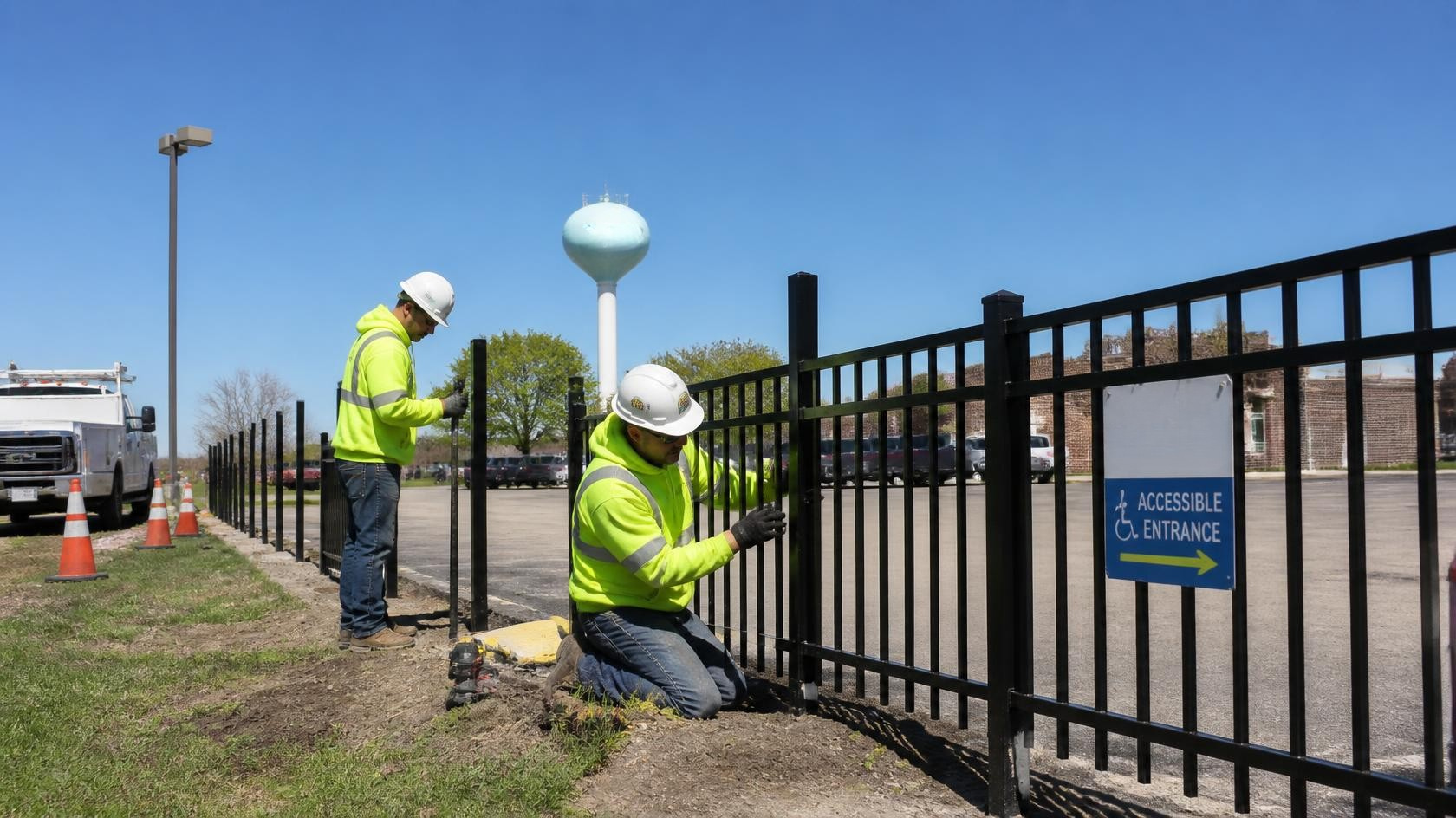
A commercial fence can lose security when posts lean, chain link loosens, gates stop latching, rails bend, or gaps develop along the perimeter. Byron property owners should address these issues early, especially around vehicle entrances, storage areas, parking lots, and other high-traffic sections.
Why Commercial Fence Repair Matters
Commercial fencing often serves several purposes at once.
It may define the property line, control access, protect equipment, separate parking areas, secure outdoor storage, or enclose service spaces.
Even relatively small damage can affect how well the perimeter functions.
Common problems include:
Leaning posts
Loose chain link fabric
Bent rails
Broken hardware
Damaged gates
Rust or corrosion
Openings beneath the fence
Vehicle impact damage
Regular inspections can help Byron business owners and property managers catch these problems before they spread.
Inspect the Entire Property Perimeter
Start by walking the complete fence line.
Pay particular attention to areas around:
Vehicle gates
Pedestrian entrances
Parking lots
Loading areas
Equipment yards
Outdoor storage
Dumpster enclosures
Look for changes in alignment, loose sections, damaged hardware, and new gaps.
High-traffic areas should be inspected more closely because they experience frequent vehicle and equipment movement.
Check Posts for Movement
Fence posts provide the structural support for the entire perimeter.
A leaning post may loosen chain link fabric, bend rails, or affect nearby gates.
Common causes include:
Vehicle impacts
Saturated soil
Erosion
Freeze-thaw movement
Weak footings
Corrosion
Heavy snow
Storm damage
A structurally sound post may sometimes be reset.
Bent, deeply corroded, or severely unstable posts usually need replacement.
Gate and terminal posts deserve extra attention because they often carry more tension and movement.
Repair Loose Chain Link Fabric
Chain link is commonly used for commercial perimeters because it provides visibility and practical boundary control.
Inspect for:
Sagging mesh
Broken tie wires
Loose tension bands
Torn fabric
Gaps beside posts
Openings along the bottom
Strong fabric can often be retensioned after the supporting structure is repaired.
Torn, badly distorted, or brittle mesh may require sectional replacement.
Do not simply tighten fabric against a leaning post or bent rail. The structural issue should be corrected first.
Check Rails and Fence Connections
Top rails and other structural connections help keep chain link fencing aligned.
Look for:
Bent rails
Loose rail sleeves
Damaged brace bands
Broken tension bands
Missing bolts
Rusted fittings
A single damaged rail can often be replaced without disturbing the rest of the fence.
Replacing small failed components early can keep nearby sections from becoming loose.
Make Gate Repair a Priority
Commercial gates are often the most heavily used parts of the fence.
A gate should open smoothly, close completely, and latch or lock securely.
Watch for:
Dragging
Sagging
Loose hinges
Misaligned latches
Bent frames
Leaning gate posts
Uneven movement
A gate that repeatedly goes out of alignment may have a structural problem with its posts or frame.
Moving the latch alone may only provide a temporary fix.
Maintain Sliding Gates
Larger commercial entrances may use sliding gates.
These gates depend on properly aligned rollers, guides, tracks, and frames.
Check for:
Grinding
Shaking
Uneven travel
Worn rollers
Damaged guides
Gates that stop before closing
Keep gravel, mud, snow, ice, and debris away from the gate path.
Repairing a small roller or guide problem early can help prevent additional frame damage.
Watch for Vehicle and Equipment Impacts
Commercial fences are often located near active traffic areas.
Damage may come from:
Delivery trucks
Trailers
Forklifts
Snowplows
Landscaping equipment
Waste-removal vehicles
Even a relatively minor impact can bend a post or shift a gate.
If one area is repeatedly damaged, consider whether the layout needs improvement.
Possible changes include:
Wider gates
Bollards
Wheel stops
Clearer traffic markings
Improved vehicle routes
Preventing repeated impacts may provide more value than repairing the same section again and again.
Inspect Parking and Loading Areas
Fence sections near parking lots and loading areas deserve additional attention.
Look for:
Bent terminal posts
Scraped coatings
Loose mesh
Damaged panels
Broken hardware
Gates affected by vehicle contact
If employees or delivery vehicles regularly operate close to the fence, early repairs can prevent a small bend or loose connection from becoming a larger perimeter problem.
Check Outdoor Storage Areas
Outdoor storage fencing should remain secure around the entire boundary.
Inspect for:
Gaps beneath the fence
Torn chain link
Loose sections
Damaged locks
Openings beside posts
Gates that do not close fully
These problems can weaken perimeter control even when most of the fence remains intact.
Watch for Rust and Corrosion
Metal fencing and gate components should be checked periodically.
Common areas include:
Post bases
Hinges
Latches
Bolts
Tie wires
Tension hardware
Welded connections
Minor surface rust may be manageable while the metal remains strong.
Deep corrosion, flaking metal, thinning posts, or brittle chain link fabric may require component replacement.
Moisture and road salt around parking areas can contribute to corrosion over time.
Manage Drainage Around Fence Posts
Water can weaken soil around commercial fence foundations.
Look for:
Standing water
Mud around posts
Soil erosion
Exposed concrete
Low areas
Runoff beneath the fence
Northern Illinois freeze-thaw cycles can worsen problems when saturated soil repeatedly freezes and thaws.
Drainage issues should be addressed along with post repairs so movement is less likely to return.
Prepare for Snow and Winter Damage
Winter conditions can affect both the perimeter and access points.
Avoid repeatedly piling snow against chain link fabric, panels, posts, or gates when practical.
Heavy snow can:
Stretch mesh
Bend rails
Shift posts
Block gate movement
Commercial properties should also clearly identify fence corners and gate posts for snow-removal crews.
When Commercial Fence Repair Makes Sense
Repair is often practical when:
One or two posts are damaged
One rail is bent
Chain link fabric remains strong
Gate hardware needs adjustment
Rust is limited
Impact damage affects one section
Targeted repair can restore perimeter security without replacing fencing that remains structurally sound.
When Replacement May Be Better
Replacement may make more sense when:
Multiple posts are unstable
Corrosion is widespread
Fabric is brittle
Several sections are damaged
Gates repeatedly fail
Vehicle impacts are extensive
The existing layout creates recurring problems
Replacement can also provide an opportunity to improve gate width, traffic flow, perimeter strength, and access.
Secure Your Commercial Property in Byron
Commercial fence repair should focus on keeping the complete perimeter dependable, from posts and rails to gates, hardware, and high-traffic sections.
Rockford Fence provides commercial fence repair, installation, replacement, chain link fencing, ornamental fencing, security fencing, gates, dumpster enclosures, and other commercial fence solutions.
Contact Rockford Fence to schedule a commercial fence inspection in Byron, IL. The team can identify damaged sections and recommend practical repair or replacement options based on the property's access, traffic, and security needs.
