
Commercial Fence Repair in Rochelle, IL: Weather Damage, Gates and Weak Sections
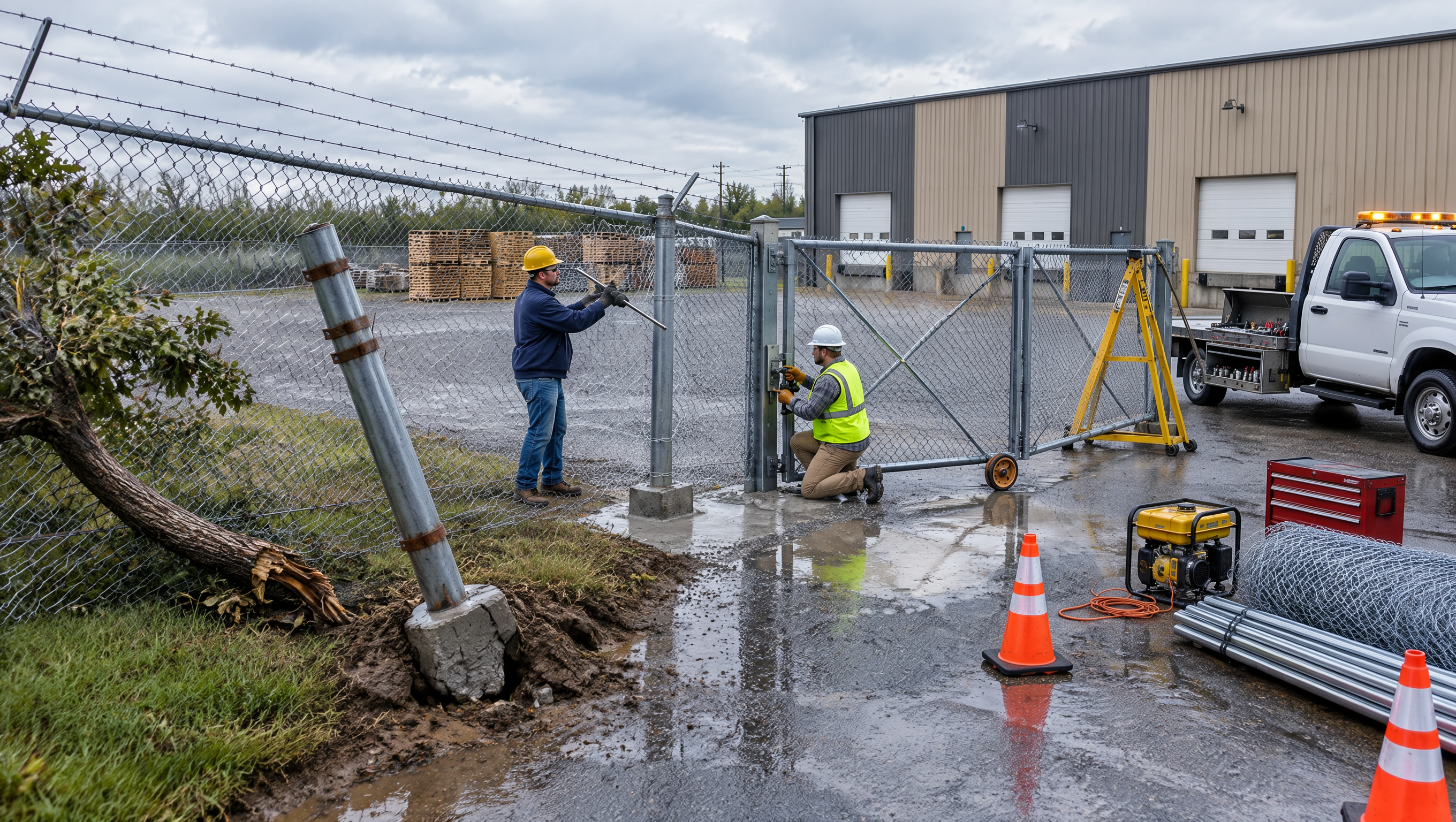
Commercial fence repair in Rochelle often involves a mix of weather exposure, gate wear, vehicle contact, drainage issues, and aging components. Businesses should inspect the perimeter as a complete system so damaged posts, rails, fabric, hardware, and access points are repaired before small weak sections develop into larger security or operational problems.
Weather Can Expose Problems That Were Already Developing
Commercial fencing deals with more than daily wear.
Strong wind, heavy rain, freeze-thaw cycles, falling branches, and winter snow can all place additional stress on posts, gates, rails, and fence fabric.
Weather damage may appear as:
Leaning posts
Bent top rails
Loose chain link
Shifted gates
Erosion around footings
Corrosion
Damaged hardware
Sometimes the weather creates the damage directly.
In other cases, it makes an older weakness easier to notice.
A post that already had movement may lean further after saturated soil. A gate with worn hinges may begin dragging after the supporting post shifts slightly.
That is why fence repairs should consider both the visible damage and what caused it.
Start With the Sections That Affect Security
Not every damaged area has the same priority.
Begin with sections protecting:
Outdoor storage
Equipment
Delivery areas
Rear property lines
Restricted spaces
Main vehicle entrances
A bent rail along a low-risk section may be less urgent than a gate that no longer locks.
Property managers can make repair decisions more efficiently by ranking each issue according to security, access, and structural risk.
Check Posts After Heavy Rain
Commercial fence posts depend on stable soil and secure footings.
Heavy rain can expose drainage problems around the fence line.
Look for:
Standing water
Erosion
Mud around posts
Exposed concrete
New leaning
Gaps forming around footings
If several posts begin moving in the same area, the problem may involve drainage rather than isolated post failure.
Rochelle properties can also experience freeze-thaw conditions later in the season, so wet soil around unstable posts deserves attention before colder temperatures arrive.
Repairing the post without recognizing recurring water problems may lead to more movement later.
Bent Rails Can Affect More Than Appearance
A bent top rail may seem like a minor problem, but rails help keep chain link fencing aligned.
Damage may come from:
Falling branches
Vehicle contact
Equipment
Snowplows
Storm debris
Check whether the bend has also caused nearby fabric to sag or fittings to loosen.
If the surrounding posts remain stable, a damaged rail section may often be replaced without rebuilding a large part of the perimeter.
Leaving the rail bent can allow the connected fence section to lose tension over time.
Loose Chain Link Should Be Traced Back to the Cause
Sagging chain link is usually a symptom, not the entire problem.
Before retensioning the fabric, inspect:
Terminal posts
Corner posts
Top rails
Tension bands
Tie wires
Ground conditions
A moving terminal post can cause a long section of chain link to loosen.
A bent rail can also change the position of the fabric.
Once the supporting structure is stable, usable mesh may often be retensioned.
Badly torn, brittle, or heavily corroded fabric may need sectional replacement instead.
Gate Problems Often Reveal Larger Weaknesses
Commercial gates are under more movement and load than fixed fence sections.
Common warning signs include:
Sagging
Dragging
Latch misalignment
Loose hinges
Bent frames
Uneven gaps
Difficulty locking
A gate that needs frequent adjustment may have a deeper problem.
Check the gate posts, frame, hinges, and ground conditions before repeatedly moving the latch.
If a support post has shifted, the entire opening may continue changing until the structural issue is repaired.
Sliding Gates Need Their Own Inspection
Sliding gates can develop problems that are different from swing gates.
Inspect:
Rollers
Guides
Stops
Tracks where applicable
Travel paths
Frame alignment
Mud, gravel, leaves, or storm debris can interfere with movement.
A gate that suddenly grinds, shakes, or hesitates should not simply be forced open.
Clear the travel path first, then check whether the rollers or guides have been damaged or shifted.
If the gate is automated, mechanical resistance should be corrected before assuming the operator itself is the only problem.
Vehicle Damage Can Spread Through Several Components
Commercial fencing near parking lots, loading areas, and service entrances is especially vulnerable to impact.
A single vehicle strike may affect:
Posts
Rails
Chain link fabric
Gate frames
Footings
Tension hardware
Fresh scrape marks or disturbed concrete may reveal damage that is not obvious from a distance.
If the same location is repeatedly hit, the problem may involve traffic flow.
Depending on the property, wider gates, bollards, wheel stops, or improved turning space may help reduce repeat repairs.
Look Closely at Corner and Terminal Posts
Corner and terminal posts deserve extra attention because they help carry fence tension.
Signs of trouble may include:
Leaning inward
Loose tension bands
Fabric pulling toward one end
Separated rails
Footing movement
When one of these posts shifts, a much larger section of the perimeter may begin sagging.
Stabilizing the post should come before retensioning the chain link.
Otherwise, the fabric may loosen again.
Corrosion Can Weaken Older Sections
Rust is not always a structural problem, but widespread corrosion can change repair decisions.
Inspect:
Post bases
Gate frames
Rails
Tie wires
Bolts
Welded connections
More serious warning signs include:
Flaking metal
Holes
Thinning posts
Brittle wire
Weak welds
A lightly rusted fitting may only need maintenance or replacement.
A section with corrosion across several structural components may be a better candidate for sectional replacement.
Ground-Level Gaps Should Not Be Ignored
Gaps can develop beneath commercial fencing because of:
Erosion
Settlement
Loose fabric
Post movement
Animal activity
Larger openings may weaken perimeter control around equipment or storage areas.
The correct repair depends on the cause.
Some areas may need grade correction, while others require fabric retensioning or post stabilization.
If the same gap returns repeatedly, the soil or drainage problem should be investigated rather than patched again.
Repair Weak Sections Before They Spread
Commercial fence repair is often most practical when damage remains localized.
Repair may make sense when:
One or two posts are unstable
A rail is bent
One gate needs adjustment
Chain link damage is limited
Corrosion is isolated
Sectional replacement may be better when several connected components are failing in the same area.
Full replacement becomes more reasonable when weak posts, damaged gates, corrosion, and loose fabric appear throughout the perimeter.
The condition of the surrounding fence should guide the decision.
Keep Rochelle Commercial Fencing Dependable
Weather damage, gate problems, and weak fence sections should be evaluated together rather than as unrelated issues.
Finding the underlying cause can help businesses make repairs that restore security, access, and structural stability instead of repeatedly correcting the same symptoms.
Rockford Fence provides commercial fence repair, chain link repair, gate repair, installation, replacement, security fencing, dumpster enclosures, and other commercial fence solutions.
Contact Rockford Fence for commercial fence repair in Rochelle, IL. The team can inspect damaged sections and recommend practical repair or replacement options based on the condition of the perimeter.
