
Commercial Fence Replacement Before Snow in Janesville, WI: What Businesses Should Know
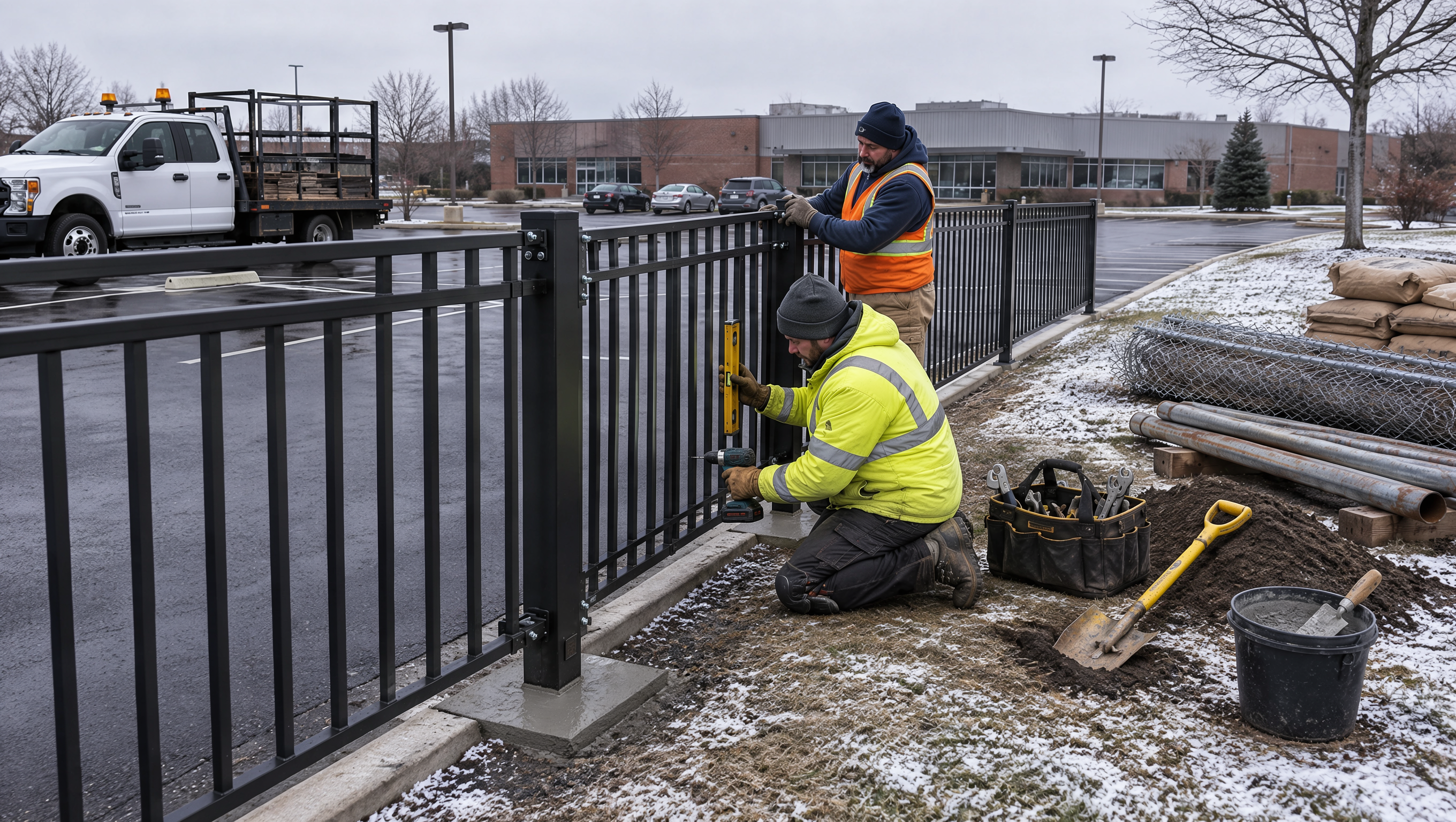
Commercial fence replacement in Janesville before winter should focus on structural condition, gate access, site preparation, drainage, pavement, and snow-removal needs. Businesses should determine whether the existing fence has widespread damage, whether gates still fit current traffic, and whether the site is ready for replacement before colder conditions make access and ground work more difficult.
Know When Replacement Makes More Sense Than Repair
Not every damaged commercial fence needs to be replaced.
Repair may still be practical when the problem is limited to:
One or two damaged posts
A bent rail
A localized fabric tear
Gate hardware
One isolated impact area
Replacement becomes more reasonable when deterioration is spread across a larger portion of the perimeter.
Warning signs include:
Multiple unstable posts
Widespread corrosion
Repeatedly sagging chain link
Brittle or badly stretched fabric
Several failing rails
Recurring gate problems
If the business keeps repairing different parts of the same aging fence, replacement may provide a more dependable solution.
Inspect the Entire Perimeter Before Deciding
A fence should be evaluated as one connected system.
Walk the full property line and inspect:
Line posts
Corner posts
Terminal posts
Top rails
Chain link fabric
Gates
Hardware
Footings
A section that looks weak from a distance may actually have one repairable component.
The opposite can also happen.
Loose fabric may appear to be the main problem, but the real cause could be several moving terminal posts or failing rails.
A complete inspection helps businesses avoid replacing usable sections unnecessarily while identifying areas that have reached the point where repair is no longer practical.
Plan Replacement Around Security Needs
Commercial fence replacement is an opportunity to review whether the existing perimeter still fits the property.
A fence installed years ago may not match the way the business operates today.
Consider whether the property now has:
More outdoor storage
Additional equipment
New loading areas
Increased truck traffic
Different employee access
Expanded parking
The replacement layout should address current security needs rather than automatically following the exact footprint and configuration of the old fence.
Some areas may need stronger perimeter control, while others may need better access.
Review Gate Width Before Rebuilding
Old gate openings are not always worth copying.
If delivery trucks or trailers regularly struggle to enter the property, replacement is the right time to reconsider the entrance.
Look at:
Vehicle width
Turning radius
Approach angle
Trailer movement
Snowplow access
A gate may technically fit a vehicle while still being too tight for practical daily use.
Repeated contact with gate posts can damage the new installation just as quickly as the old one.
Wider access, different gate placement, or another gate configuration may reduce future repairs.
Decide Between Swing and Sliding Gates
If gates are also being replaced, compare how different configurations will work through winter.
Swing gates require a clear opening arc.
Snow piles, parked vehicles, equipment, or uneven ground can interfere with that movement.
Sliding gates move along the fence line and may help preserve driveway space, but they need a clear travel path.
The area beside the fence should remain free of:
Snow
Gravel
Stored materials
Debris
The best option depends on the property layout and how much space is available around the entrance.
Account for Existing Fence Removal
Replacement work includes more than installing new materials.
The old fence may require removal of:
Fabric
Rails
Panels
Gates
Posts
Concrete footings
Businesses should confirm how demolition and disposal will be handled before work begins.
Some old footings may be located in pavement or close to active vehicle routes.
Removing them can require additional site work.
If the replacement is being completed before winter, planning removal carefully can help reduce disruption during a season when daylight and weather conditions are less predictable.
Check Drainage Before Installing New Posts
Drainage deserves attention before replacing a fence in the same location.
Look for:
Standing water
Erosion
Soft soil
Low areas
Runoff toward the fence line
Previous footing movement
Janesville can experience freeze-thaw conditions, so wet or unstable soil may contribute to post movement over time.
If several old posts leaned in the same area, simply installing new posts without considering the ground condition may allow the problem to return.
Major drainage correction may be separate from fence installation, but it should still be identified during planning.
Prepare Areas With Asphalt or Concrete
Commercial fence lines often cross or border paved surfaces.
Replacement may involve work around:
Parking lots
Driveways
Loading areas
Sidewalks
Old posts may need to be removed from concrete or asphalt.
New post locations may also require cutting and later restoration.
Businesses should understand which pavement-related work is included in the project and whether any areas need to remain open for employees, deliveries, or customers during installation.
Keep Business Access in Mind
Fence replacement can temporarily affect normal operations.
Before work starts, identify which areas must remain accessible.
These may include:
Main vehicle entrances
Loading docks
Employee parking
Dumpster areas
Service routes
If possible, plan work in sections so the entire perimeter is not disrupted at once.
Temporary access arrangements may also be needed when an important gate is being replaced.
Clear scheduling becomes especially useful before winter, when snow events can already complicate traffic patterns around a commercial property.
Plan for Snow Removal Before the New Fence Goes In
Snow removal should influence the replacement layout.
Review where plows usually travel and where snow is stored.
Avoid placing vulnerable fence sections where plows frequently turn or push snow.
Heavy snow should not be routinely piled against:
Chain link fabric
Posts
Gates
Rails
Snowbanks can also narrow vehicle entrances and reduce turning room.
A new fence should support winter operations rather than create new conflicts with snow storage.
Protect High-Impact Locations
Vehicle contact is a common cause of commercial fence damage.
Replacement gives businesses a chance to improve these areas.
High-risk locations may include:
Loading zones
Parking lot corners
Dumpster areas
Delivery entrances
Equipment routes
Depending on the site, improvements may include:
Wider gates
Bollards
Wheel stops
Better traffic flow
More clearance
Replacing damaged fencing without addressing the reason it keeps getting hit may only restart the same repair cycle.
Decide Whether Full or Sectional Replacement Is Better
Not every project requires replacing the entire perimeter.
Sectional replacement may make sense when one side of the property has extensive damage while the rest remains stable.
This can be useful when:
One gate area has repeated failures
Corrosion is concentrated in one zone
Several connected posts have shifted
Vehicle impact damaged one section
Full replacement may be more appropriate when similar structural problems appear throughout the property.
The decision should be based on condition and function, not simply fence age.
Review the Final Layout Before Work Begins
Before installation starts, confirm:
Fence location
Gate positions
Gate widths
Vehicle routes
Pedestrian access
Snow-storage areas
Drainage concerns
Required site preparation
Applicable local requirements should also be reviewed before final placement.
A final walkthrough can catch layout problems before posts are installed.
That is especially important when replacing an older fence because businesses may have become accustomed to access problems that do not need to be repeated in the new design.
Prepare Your Janesville Property Before Winter
Commercial fence replacement before snow should address more than damaged materials.
The project should improve security, access, traffic flow, gate function, and winter maintenance wherever possible.
Rockford Fence provides commercial fence replacement, installation, repair, chain link fencing, security fencing, gates, dumpster enclosures, and other commercial fence solutions.
Contact Rockford Fence for commercial fence replacement in Janesville, WI. The team can evaluate the existing perimeter and help plan a replacement around current security needs, vehicle access, site conditions, and winter operations.
