
Commercial Fence Replacement Planning in South Beloit, IL: Budgeting Before Winter
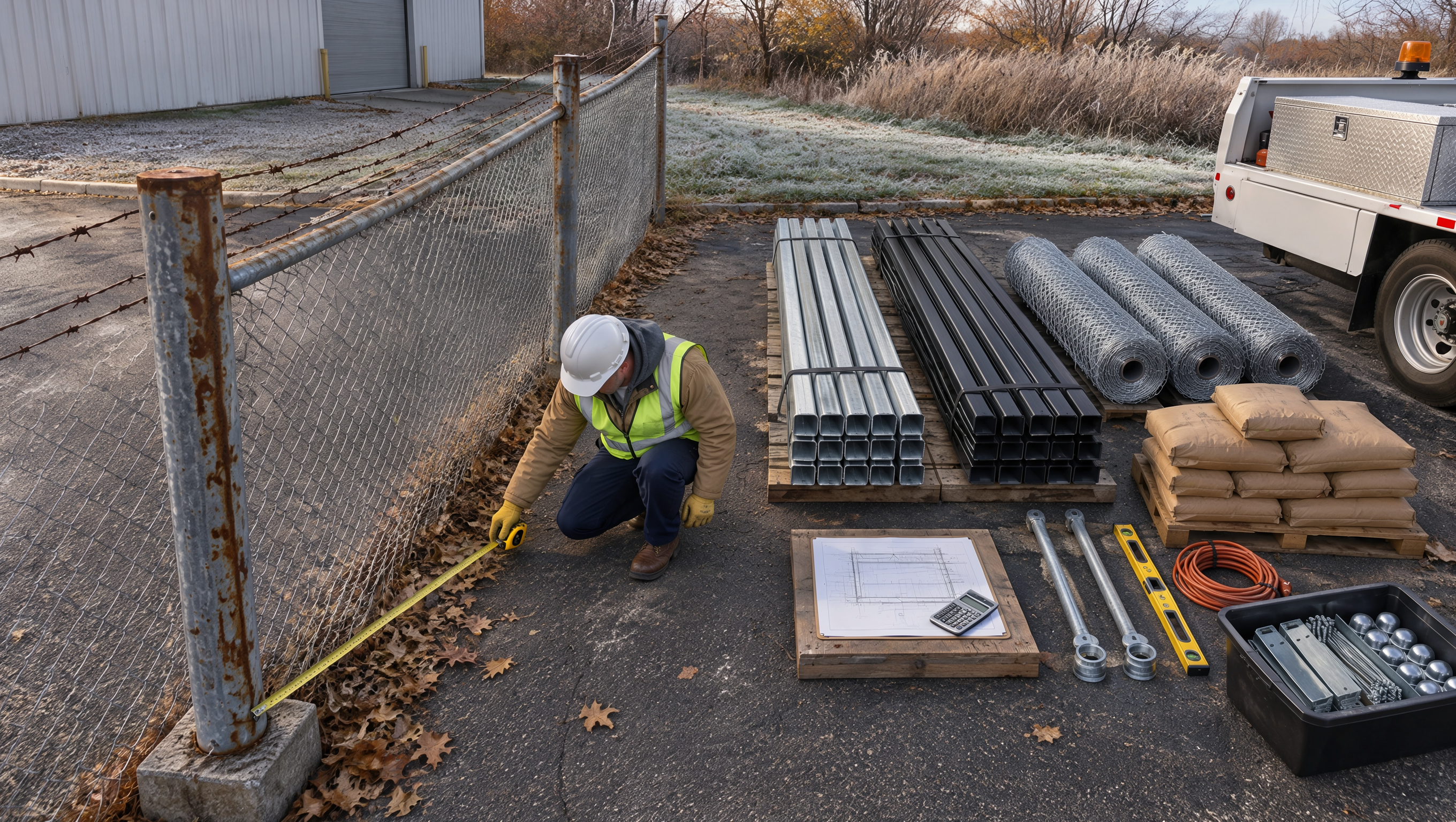
Commercial fence replacement in South Beloit should be budgeted around more than total linear footage. Material, fence height, gate configuration, post work, demolition, pavement, drainage, site access, and winter operating needs can all change the scope. Planning these details before colder conditions arrive helps businesses build a more realistic replacement budget and avoid carrying serious perimeter problems into winter.
Decide Whether Replacement Is Actually Necessary
The first budgeting question is whether the entire fence needs replacement.
Repair may still make sense when problems are limited to:
One or two damaged posts
A bent rail
A small section of torn chain link
Gate hardware
One vehicle-impact area
Replacement becomes more practical when problems are widespread.
Look for patterns such as multiple unstable posts, repeated gate failures, widespread corrosion, brittle chain link, or several damaged rails.
A complete perimeter inspection can help separate isolated repairs from sections that are no longer dependable.
That distinction has a major effect on the project budget.
Consider Sectional Replacement
Full perimeter replacement is not always the only option.
Sectional replacement may work when one area has extensive damage while the rest of the fence remains structurally sound.
This may be appropriate around:
A heavily used gate
One side of a storage yard
A vehicle-impact zone
A corroded fence run
A section with multiple leaning posts
Replacing only the affected area can help businesses address the most serious problems without rebuilding usable fencing.
The transition between the old and new sections should still be planned carefully so the finished perimeter remains aligned and secure.
Material Choice Has a Major Budget Impact
Commercial fencing can use different materials depending on the property's security and appearance needs.
Common options may include:
Galvanized chain link
Coated chain link
Ornamental metal
Other security-focused systems
Chain link can be practical around storage yards, equipment areas, warehouses, and service sections.
Ornamental fencing may be preferred around visible entrances or customer-facing frontage.
Some commercial properties may benefit from combining materials rather than using the same fence throughout.
Budget planning should match the material to the function of each section.
Review Fence Height Before Finalizing the Scope
Height affects material quantities, gate dimensions, posts, and the overall installation plan.
A business may not need the same height everywhere.
For example, a rear equipment yard may have different security needs than the front property line.
Before replacing the fence, identify:
Which areas need stronger perimeter control
Which areas mainly define the boundary
Whether visibility is important
Where gates will be located
Applicable local requirements should also be reviewed before final height and placement decisions are made.
Changing height after the quote is prepared can affect the budget significantly.
Budget Separately for Gates
Gates can represent a meaningful portion of a commercial fence replacement project.
Possible configurations include:
Pedestrian gates
Single swing gates
Double swing gates
Sliding gates
Wide vehicle entrances
A business with several truck entrances will have a different project scope from one with a single service gate.
Each entrance should be reviewed individually.
Gate width, frame size, hardware, post requirements, and configuration can all affect the project.
If automation or access control is involved, those systems may also require separate planning.
Do Not Automatically Reuse Old Gate Widths
Replacement is a good time to ask whether existing gate openings still work.
Consider the vehicles that currently use the property:
Delivery trucks
Trailers
Service vehicles
Equipment
Waste-removal trucks
Snowplows
If drivers regularly pass close to gate posts or struggle with turning clearance, recreating the same entrance may lead to repeated damage.
A wider gate may add to the initial scope but help reduce future impact repairs.
Budgeting should consider how the property operates today, not only how it was designed years ago.
Include Old Fence Removal
Replacement budgets should account for demolition as well as new installation.
Existing fencing may require removal of:
Chain link fabric
Rails
Panels
Gates
Posts
Concrete footings
Hauling and disposal should also be considered.
Old footings can be especially important when posts are installed through asphalt or concrete.
Businesses should confirm whether removal is included in the fence proposal or expected to be handled separately.
A quote for installation alone should not be compared directly with one that includes complete demolition.
Account for Asphalt and Concrete
Commercial fence lines often run through or beside paved areas.
Post replacement may involve work around:
Parking lots
Driveways
Loading areas
Sidewalks
Existing concrete footings may need to be broken out.
New post locations may require cutting pavement and restoring the surface afterward.
These details can affect labor and project scope.
During budgeting, ask how pavement work will be handled and whether restoration is included.
This is especially important around vehicle entrances where access needs to return to normal quickly.
Check Drainage Before Installing New Posts
If the old fence repeatedly leaned in one area, the replacement plan should consider why.
Inspect for:
Standing water
Erosion
Soft soil
Runoff from pavement
Low areas
Exposed footings
South Beloit can experience freeze-thaw conditions, so unstable or saturated soil deserves attention before new posts are installed.
Major drainage correction may be separate from the fence project, but ignoring the condition can create future repair costs.
A replacement budget should account for site problems that could affect the new fence rather than treating the fence line as an isolated structure.
Consider Winter Operations Before Finalizing the Layout
Fence replacement before winter should account for snow and cold-weather access.
Review:
Snowplow routes
Snow-storage areas
Delivery entrances
Employee access
Sliding gate paths
Swing gate clearance
Snowbanks can narrow entrances and force vehicles closer to posts.
Heavy snow should not be routinely stored against chain link fabric, gates, or rails.
If the current layout creates winter conflicts, replacement is an opportunity to correct them.
Good planning can reduce avoidable repairs during the first winter after installation.
Include Vehicle-Impact Protection Where Needed
Repeated vehicle damage can quickly affect a new fence.
High-risk areas may include:
Loading zones
Parking lot corners
Dumpster enclosures
Delivery gates
Equipment routes
If the old fence was repeatedly damaged in the same place, ask whether the new layout should include:
Wider access
Bollards
Wheel stops
More turning clearance
These additions may affect the project budget, but they can also help protect the new installation.
Replacing a damaged post without changing the traffic problem may simply restart the same repair cycle.
Plan Installation Around Business Access
Fence replacement can temporarily affect daily operations.
Before scheduling the work, identify which areas must remain open.
These may include:
Main entrances
Loading docks
Employee parking
Service routes
Dumpster access
Phased work may help keep important sections usable while replacement continues elsewhere.
Temporary access arrangements may also be needed when a major gate is being replaced.
These operational details should be discussed during budgeting because they can affect scheduling, staging, and the overall installation plan.
Compare Quotes by Scope, Not Only Total Price
When reviewing commercial fence replacement proposals, compare what each one actually includes.
Check for:
Material specifications
Total footage
Fence height
Posts and footings
Gate sizes and types
Existing fence removal
Pavement work
Site preparation
Cleanup
Also review exclusions such as major drainage correction, electrical work, automation, or landscaping restoration.
A lower quote may simply exclude work that another contractor has already included.
Clear scope comparison helps businesses avoid unexpected costs later.
Build a More Complete Replacement Budget Before Winter
Commercial fence replacement planning in South Beloit should consider the entire property rather than only the damaged fence line.
Material, height, gates, demolition, pavement, drainage, vehicle traffic, snow removal, and business access can all influence the final scope.
Rockford Fence provides commercial fence replacement, installation, repair, chain link fencing, security fencing, gate installation, dumpster enclosures, and other commercial fence solutions.
Contact Rockford Fence for commercial fence replacement planning in South Beloit, IL. A site evaluation can help identify which sections need replacement and define the material, gate, access, and site-work requirements before the project budget is finalized.
