
Commercial Fence Winter Prep in Rockford, IL: Security and Access Checklist
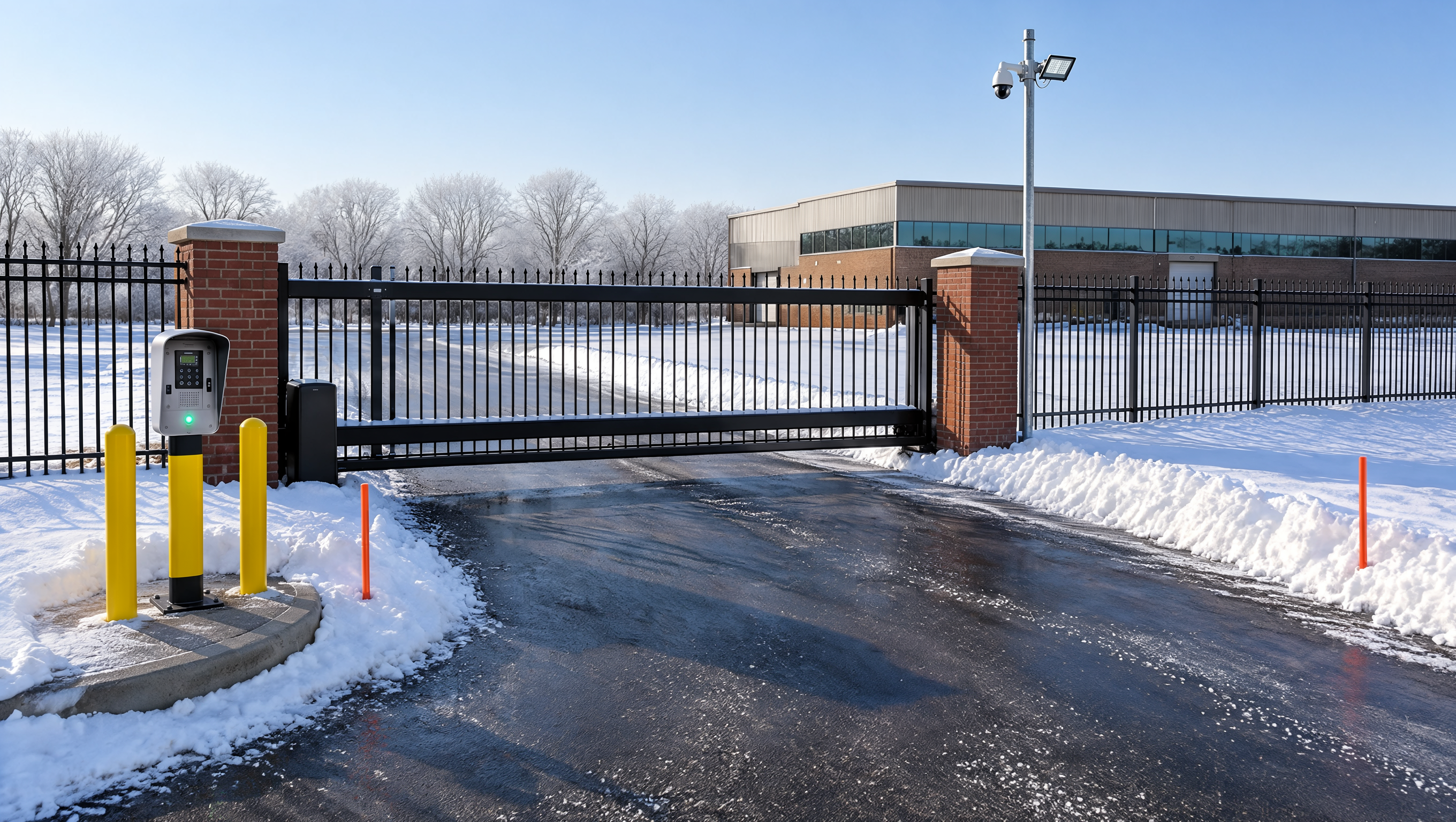
Commercial fence winter prep in Rockford should focus on keeping the perimeter secure while preserving reliable access during snow, ice, and freeze-thaw conditions. Facility managers should inspect gates, posts, chain link fabric, rails, hardware, drainage, vehicle-impact areas, and snow-storage locations before winter conditions become more difficult to manage.
Start With a Full Perimeter Walk
A winter-ready fence inspection should cover the entire property, not only the main entrance.
Walk sections around:
Parking lots
Loading zones
Equipment yards
Outdoor storage
Dumpster enclosures
Rear property lines
Look for anything that appears loose, bent, leaning, corroded, or out of alignment.
Small problems can become harder to inspect once snow covers the lower portion of the fence.
Taking photos of problem areas can also help facility managers monitor whether a section changes as winter progresses.
Test Every Gate Before Snow Arrives
Commercial gates should be opened and closed several times during the inspection.
Watch for:
Dragging
Sagging
Uneven movement
Latch misalignment
Difficulty locking
Loose hinges
Bent frames
A gate that already needs extra force to close may become less reliable once snow or ice reduces clearance.
If the latch repeatedly falls out of alignment, inspect the frame and support posts before making another adjustment.
A shifting post may be moving the entire opening.
Check Gate Posts for Stability
Gate posts carry more weight and movement than standard line posts.
Inspect for:
Leaning
Soil separation
Exposed concrete
Erosion
Corrosion near the base
Vehicle impact
Rockford can experience freeze-thaw conditions that make wet or unstable ground more noticeable during winter.
A gate post that is already moving in fall may continue shifting as temperatures change.
Stable gate posts are essential for reliable closure, locking, and vehicle access.
Inspect Corner and Terminal Posts
Corner and terminal posts help maintain fence tension.
If one moves, a larger section of chain link may begin sagging.
Look for:
Posts leaning inward
Loose tension bands
Fabric pulling toward one end
Separated rail connections
Footing movement
These posts deserve priority because their condition affects more than one small area.
They should be stabilized before chain link fabric is retensioned.
Review Chain Link Fabric
Chain link should remain reasonably tight and securely attached.
Check for:
Sagging mesh
Torn wire
Broken tie wires
Loose tension bands
Distorted openings
Fabric separating from posts
Loose chain link does not always need replacement.
If the fabric remains strong, it may often be retensioned after posts, rails, or fittings are repaired.
Badly stretched, brittle, or heavily corroded mesh may require sectional replacement.
Check Top Rails and Connections
Top rails help keep the fence aligned and supported.
Inspect for:
Bent rails
Loose sleeves
Separated connections
Missing fittings
Previous impact damage
Vehicles, equipment, falling branches, and storm debris can all damage rail sections.
A localized repair may be enough when the surrounding posts and fabric remain sound.
Leaving a bent rail through winter can allow nearby fabric to become looser or more distorted.
Inspect Locks, Hinges, and Small Hardware
Small components can create major access problems when they fail.
Check:
Hinges
Latches
Locks
Tie wires
Tension bars
Tension bands
Bolts
Gate stops
Hardware should move freely and remain secure.
High-use gates deserve additional attention because repeated operation can accelerate wear.
Repairing a loose hinge or damaged latch before winter is easier than dealing with a gate that will not close during freezing weather.
Keep Swing Gate Paths Clear
Swing gates need enough room to move through their full opening arc.
Before winter, remove:
Gravel
Leaves
Branches
Stored materials
Equipment
Also consider where snow will be stored.
A properly functioning gate can become unusable if snowbanks block its swing path.
If ground clearance is already limited, inspect the hinges, frame, and support posts rather than waiting until snow begins causing the gate to drag.
Prepare Sliding Gate Travel Areas
Sliding gates need a clear path along the fence line.
Inspect:
Rollers
Guides
Stops
Tracks where applicable
Full travel area
Remove mud, gravel, leaves, and other debris before freezing temperatures arrive.
A gate that already grinds, shakes, or hesitates should be evaluated before snow makes the travel path harder to maintain.
Snow should not be stored where the gate needs to move.
Inspect Drainage Around Posts
Drainage problems can contribute to winter post movement.
After rain, look for:
Standing water
Mud
Erosion
Low areas
Runoff toward posts
Exposed footings
If several posts lean in the same section, the surrounding ground may be part of the problem.
Major drainage correction may require separate work, but the issue should still be identified before fence repairs are made.
Repeatedly resetting posts without addressing recurring water can allow the same problem to return.
Check Ground-Level Gaps
Inspect the bottom edge of the fence before snow covers it.
Gaps can develop because of:
Erosion
Settlement
Loose chain link
Post movement
Animal activity
Large openings may weaken perimeter control around outdoor inventory, equipment, or restricted areas.
The correct repair depends on the cause.
Some sections may need fabric retensioning, while others require post stabilization or grade correction.
Look Closely at Vehicle-Impact Areas
Commercial fencing near active traffic often experiences more damage.
Focus on:
Delivery entrances
Loading areas
Parking lot corners
Dumpster enclosures
Equipment routes
Snowplow paths
Look for scrape marks, bent posts, disturbed footings, loose hardware, or damaged frames.
If the same section is repeatedly struck, repairs alone may not solve the problem.
Wider gate openings, bollards, wheel stops, or better turning clearance may help reduce repeat damage.
Plan Snow Storage Before the First Storm
Snow removal should be part of the fence-preparation checklist.
Decide where snow will be pushed and stored before winter begins.
Avoid routinely piling heavy snow against:
Chain link fabric
Gates
Posts
Rails
Panels
Compacted snow can add pressure to already weakened sections.
Snowbanks can also reduce gate width and force trucks closer to posts.
Planning storage locations early helps protect the perimeter and maintain usable access.
Prioritize Security and Access Repairs
Not every issue needs the same urgency.
Higher-priority problems generally include:
Gates that do not close or lock
Unstable gate or terminal posts
Torn chain link
Large ground-level gaps
Structural corrosion
Bent vehicle entrances
Minor cosmetic wear can often be monitored.
Facility managers should focus repair budgets on issues that directly affect access, security, or structural stability.
Prepare Your Rockford Commercial Fence for Winter
Commercial fence winter prep should focus on keeping the property secure while making sure employees, deliveries, equipment, and service vehicles can continue moving through the site.
Gates, posts, chain link, rails, hardware, drainage, impact areas, and snow-storage plans should all be reviewed before winter conditions settle in.
Rockford Fence provides commercial fence maintenance, repair, installation, replacement, chain link fencing, security fencing, gates, dumpster enclosures, and other commercial fence solutions.
Contact Rockford Fence for commercial fence winter preparation in Rockford, IL. The team can inspect the perimeter and recommend practical repairs before snow, ice, and freeze-thaw conditions make existing problems harder to manage.
