
Commercial Gate Access in Freeport, IL: Preparing Entrances for Cold Weather
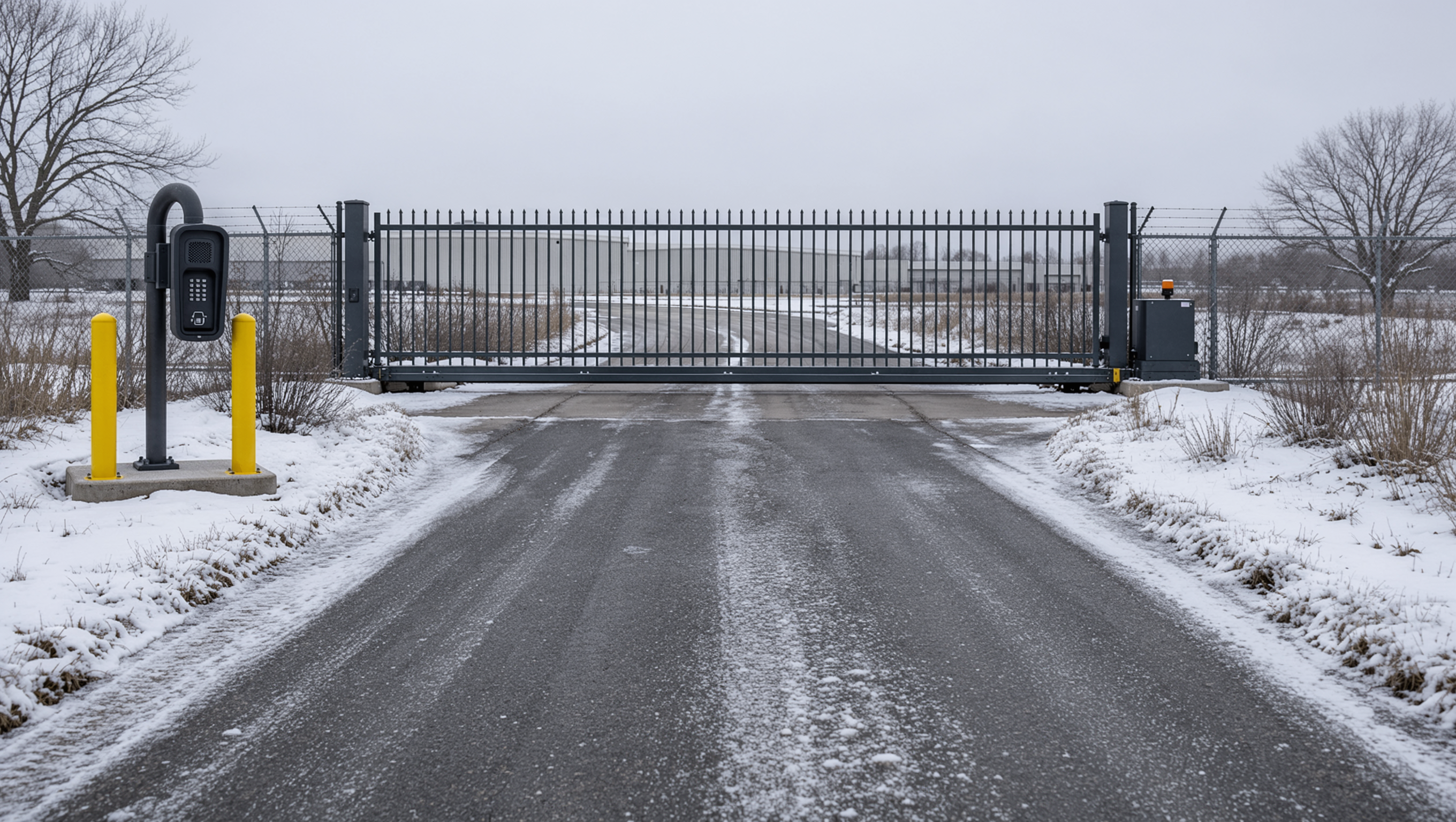
Commercial gate access in Freeport should be checked before colder weather makes existing problems harder to manage. Facility managers should review gate alignment, support posts, hinges, rollers, locking hardware, ground clearance, drainage, snow-removal routes, and vehicle turning space so entrances remain secure and usable through winter.
Review Each Entrance by How It Is Used
A commercial property may have several gates, but they may serve very different purposes.
One entrance may handle delivery trucks. Another may be used by employees, service vehicles, equipment, or waste-removal crews.
Before winter, identify which gates are critical to daily operations.
Pay particular attention to:
Main vehicle entrances
Delivery gates
Employee access points
Equipment yards
Dumpster enclosures
Emergency access routes
A problem at a rarely used gate may be less disruptive than the same problem at a primary delivery entrance.
Prioritizing entrances by use helps facility managers decide where repairs should begin.
Operate Gates Before Temperatures Drop Further
Do not rely only on visual inspection.
Open and close each gate several times.
Notice whether movement has changed since earlier in the year.
Watch for:
Dragging
Shaking
Grinding
Sudden resistance
Uneven movement
Difficulty reaching the closed position
A gate that already needs extra effort in late fall may become even harder to manage once snow, ice, and frozen debris affect the entrance.
Cold-weather preparation should address the cause before normal operations are interrupted.
Check Alignment From the Entire Opening
A latch that no longer lines up may not be a latch problem.
Stand several feet away and look at the complete gate opening.
Check whether:
One side sits lower
The frame leans
Gaps are uneven
The gate is closer to the ground than before
The closing edge no longer meets the post correctly
These changes may point to worn hinges, shifting support posts, a bent frame, or damaged rollers.
Repeatedly adjusting the latch can hide the symptom without correcting the structure.
The gate should sit correctly before final hardware adjustments are made.
Inspect Gate Posts for Structural Movement
Gate posts carry repeated movement and additional load.
Look closely at the base of each post.
Warning signs include:
Leaning
Soil separating from the footing
Exposed concrete
Erosion
Impact marks
Corrosion near ground level
Freeport can experience freeze-thaw conditions during winter, so posts that are already moving should be addressed before colder conditions become more consistent.
A shifting gate post can affect the entire entrance.
It may cause dragging, latch misalignment, reduced ground clearance, or added resistance on an automated operator.
Look at Pavement and Ground Conditions
Sometimes the gate is not the only thing that has changed.
Inspect the surface beneath and around the entrance.
Look for:
Raised pavement
Uneven gravel
Soil settlement
Potholes
Low areas holding water
A gate may begin dragging because the surface underneath has changed.
Snow and ice can reduce available clearance further.
If the problem involves both the gate and the surrounding surface, the repair plan should account for both rather than repeatedly adjusting the gate.
Check Swing Gates for Full Clearance
Swing gates need enough open space to travel through their complete arc.
Walk the entire swing area and remove:
Pallets
Branches
Equipment
Gravel piles
Stored materials
Then consider winter snow placement.
A swing gate can be fully repaired and still become unusable if snow is pushed into its opening path.
Facility managers should coordinate gate areas with snow-removal crews before storms begin.
Keeping the full swing zone clear can prevent unnecessary access interruptions.
Inspect Hinges Before They Fail
Hinges carry the weight of swing gates every time they open.
Check for:
Loose hardware
Excessive play
Binding
Bent parts
Cracks around mounting points
Corrosion
A worn hinge may allow the gate to drop slightly.
That can be enough to change latch alignment or reduce ground clearance.
If hinge wear is found, inspect the supporting post at the same time.
A new hinge may not solve the issue if the post itself is leaning or unstable.
Prepare Sliding Gates for Winter Travel
Sliding gates need a clear path along the fence line.
Inspect the entire travel area rather than only the opening.
Check:
Rollers
Guides
Stops
Tracks where applicable
Frame alignment
Remove leaves, gravel, mud, branches, and other debris before freezing temperatures make them harder to clear.
If the gate shakes or hesitates after the path is cleaned, the rollers or guides may need repair.
Do not rely on added force to push a gate through resistance.
That can create more wear and may place unnecessary strain on an automated system.
Make Sure Locks and Latches Work Naturally
Commercial gate hardware should secure the entrance without forcing the frame into position.
Inspect:
Latches
Locks
Strikes
Stops
Bolts
Handles
If someone has to lift the gate, push it sideways, or slam it shut before the lock engages, alignment should be checked.
The latch should not be used to hold a sagging or shifted gate in place.
Reliable locking matters even more in winter when access may already be affected by snow, ice, or reduced visibility.
Review Pedestrian Gates Separately
Pedestrian gates can be overlooked when most attention goes to truck entrances.
Check employee and service access points for:
Dragging
Loose hinges
Latch alignment
Ice-prone areas
Poor drainage
Reduced walkway clearance
Snow should not be stored where it blocks the gate or forces people to step around the entrance.
A smaller gate can still create operational and safety concerns if employees cannot open or close it easily.
Pedestrian access should be included in the same winter preparation plan as vehicle gates.
Look for Water Before It Becomes Ice
Drainage around commercial entrances can affect both access and gate stability.
After rain, look for:
Standing water
Mud
Runoff toward gate posts
Erosion
Low areas
Water that collects in a gate path may later freeze.
Repeated moisture can also affect soil around support posts.
If the same entrance repeatedly shifts or becomes difficult to operate after wet weather, drainage may be part of the problem.
Major drainage work may be outside the fence repair itself, but it should still be identified.
Check Corrosion on Moving and Structural Parts
Winter moisture and road salt can be hard on metal components.
Inspect:
Hinges
Gate frames
Roller assemblies
Post bases
Bolts
Welded areas
Surface rust may only require monitoring or maintenance.
More serious concerns include:
Flaking metal
Holes
Thinning sections
Weak welds
Brittle hardware
Structural corrosion should be repaired before a heavily used entrance depends on those components through winter.
If several parts are badly deteriorated, replacing the affected gate section may be more practical than repeated small repairs.
Evaluate Automated Gates as Mechanical Systems First
For automated gates, make sure the gate itself moves freely before focusing on the operator.
Mechanical problems such as:
Dragging
Worn rollers
Binding hinges
Shifting posts
Poor alignment
can make an operator work harder than intended.
After mechanical resistance is corrected, operator-related problems are easier to evaluate.
Unexpected stopping, incomplete closing, sensor problems, or electrical issues may require qualified service.
Safety devices should not be bypassed to keep an automated gate running.
Check Truck and Snowplow Clearance
Winter can make a wide entrance feel much narrower.
Snowbanks can reduce usable gate width and force vehicles closer to posts.
Review how the entrance handles:
Delivery trucks
Trailers
Snowplows
Service vehicles
Waste-removal trucks
Equipment
If vehicles already pass very close to the gate structure, winter conditions may increase the risk of impact.
Depending on the property, wider access, wheel stops, bollards, or adjusted traffic flow may help protect the gate.
Decide Where Snow Will Go Before It Arrives
Snow-storage planning should be completed before the first major accumulation.
Avoid placing snow:
Inside swing gate arcs
Along sliding gate paths
Against gate posts
Near rollers or guides
Where it reduces vehicle visibility
Large piles can also block access to pedestrian entrances or narrow turning areas.
Snow removal works best when the plow plan and gate layout are considered together.
This can help reduce accidental damage and keep entrances usable through winter.
Identify a Backup Access Plan
If a property depends heavily on one main entrance, it is worth considering what happens if that gate becomes unavailable.
Facility managers should know:
Which alternate gate can be used
Whether delivery vehicles can reach it
Whether snow will block that route
Who should be notified if access changes
A backup plan does not replace proper maintenance, but it can reduce disruption if unexpected damage occurs during severe weather.
For larger commercial properties, reliable access planning should include both the primary and secondary entrances.
Prepare Freeport Commercial Entrances for Winter Use
Commercial gate access depends on much more than the gate panel itself.
Posts, hinges, rollers, alignment, locking hardware, pavement, drainage, vehicle clearance, and snow-removal planning all affect whether an entrance remains usable during cold weather.
Rockford Fence provides commercial gate repair, maintenance, installation, replacement, chain link fencing, security fencing, dumpster enclosures, and other commercial fence solutions.
Contact Rockford Fence for commercial gate service in Freeport, IL. The team can inspect gate structures, hardware, access conditions, and surrounding fencing and recommend practical repairs before winter makes existing entrance problems more difficult to manage.
