Commercial Gate Installation in Janesville, WI: Operators & Budget Guide
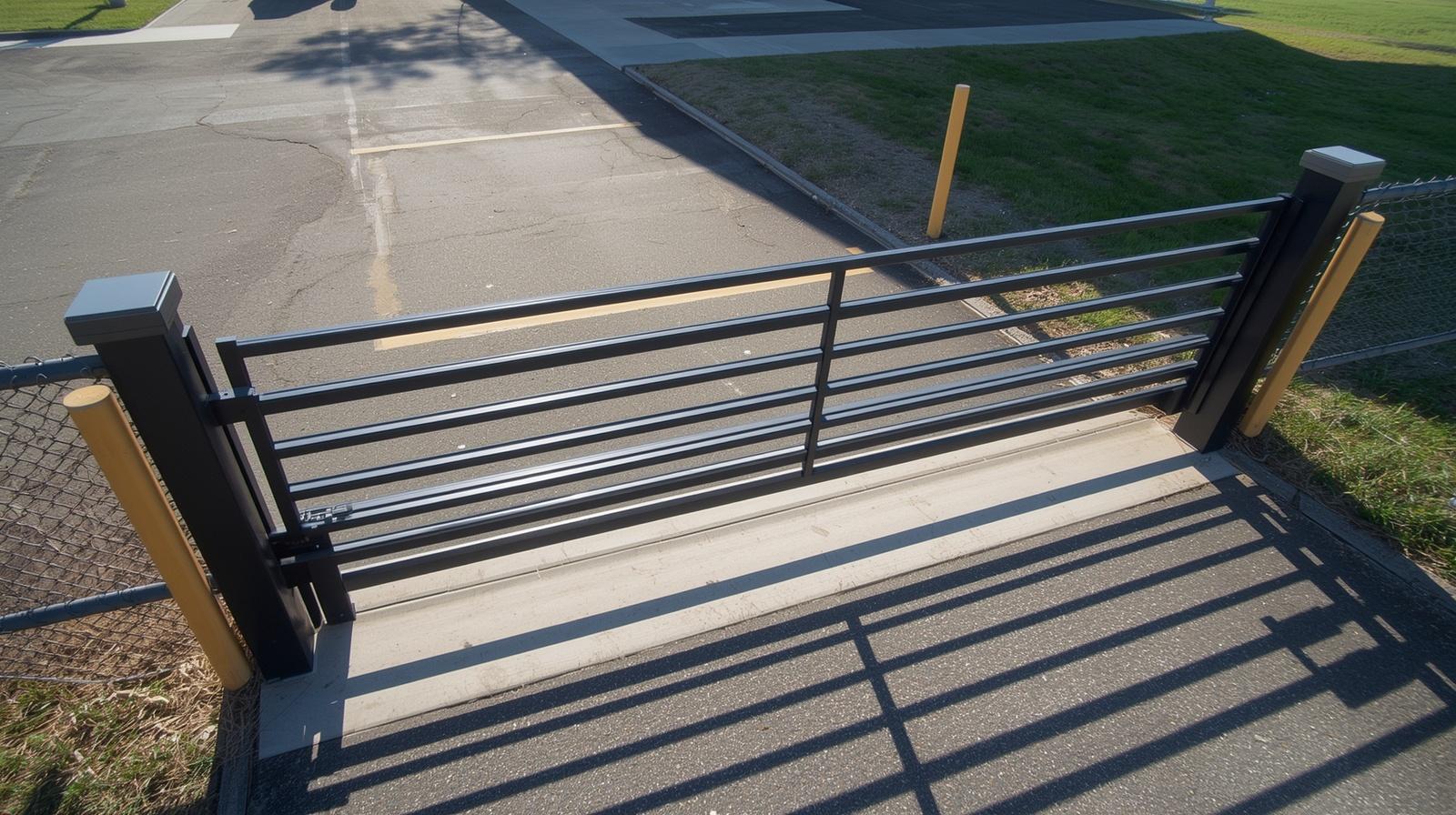
Commercial gate installation in Janesville, WI typically costs $8,000 to $50,000+ in 2026, depending on gate type, automation, access control, and site conditions. Most businesses should budget $15,000–$45,000+ for a full system that includes the gate, operator, controls, and electrical work. In Janesville, fences require permits, and city building guidance says outside improvements such as fences need permits before work begins. For fence permits, the ordinance requires a written application with a drawing, site plan, or property survey showing the proposed fence location and site conditions.
Why Commercial Gates Matter for Janesville Businesses
For commercial and industrial properties in Janesville, WI, a gate is more than an opening in a fence. It affects security, traffic flow, access control, and daily operations. A well-planned gate system can help control who enters and exits the property, protect vehicles and outdoor equipment, improve delivery flow, and reduce unauthorized access. These benefits matter most on sites with contractor traffic, fleet movement, employee parking, loading activity, or outdoor storage. Because Janesville treats fences as permitted outside improvements, gate planning should be tied to the broader site layout rather than handled as a last-minute add-on.
Commercial gates also rarely function as standalone features. In most business settings, the gate works together with an operator, keypad, card reader, intercom, camera, or other access-control device. That means the real budget conversation is not just about the gate leaf itself, but about the entire entry system and how it fits the property.
What Commercial Gate Installation Typically Costs in Janesville, WI
For planning purposes, these are practical installed ranges for commercial projects in the Janesville market:
Manual commercial gates: $3,000–$9,000
Automated swing gates: $8,000–$18,000
Sliding gates: $8,000–$30,000+
Cantilever gates: $15,000–$45,000+
High-security or custom systems: $25,000–$100,000+
For many businesses, the gate itself is only part of the total project cost. A more realistic full-system budget often looks like this:
Gate structure: $10,000–$25,000
Operator: $2,500–$5,000
Access control: $3,000–$10,000
Electrical and installation: $2,000–$8,000
That puts many real-world projects in the $15,000–$45,000+ range before unusual site challenges, multiple entry points, or higher-end security upgrades. These are market-based planning figures rather than city-issued Janesville price tables. The city’s role is on permitting and zoning, while the project pricing itself reflects prevailing commercial gate and fencing market conditions. Janesville’s ordinance separately confirms that a fence application fee is required, though the ordinance text points to a fee set by Common Council resolution rather than listing the amount in that section.
Gate Types Most Commonly Used on Commercial Properties
Sliding Gates
Sliding gates are one of the most common choices for commercial sites because they move horizontally and work well at wide openings.
They are a strong fit for:
warehouses
contractor yards
industrial properties
sites with regular truck traffic
Their biggest advantage is space efficiency. They work well where there is not enough room for a swing gate to open inward or outward.
Cantilever Gates
Cantilever gates are often one of the smartest choices in Southern Wisconsin because they do not rely on a ground track across the opening.
That makes them especially useful in areas with:
snow
ice
mud
gravel traffic
debris-prone entrances
They usually cost more than standard sliding systems, but they often reduce winter maintenance problems and operating interruptions. That is an engineering inference based on how cantilever systems operate in freeze-thaw conditions.
Swing Gates
Swing gates can work well for lower-traffic or smaller commercial properties. They may cost less at the low end, but they require clearance space and are not as convenient where frequent vehicle movement is expected.
They are often best for:
smaller offices
light commercial buildings
limited-access entry points
Barrier Arm Gates
Barrier arms are common for parking lots, office campuses, and controlled vehicle entry lanes. They open quickly and manage traffic well, but they are not a substitute for a true perimeter-security gate when the site needs physical intrusion resistance.
Operator and Access Control Costs
The operator is what makes a gate practical for most commercial properties, and it is one of the biggest cost and performance decisions in the project.
Typical operator costs are:
Light-duty operators: $1,200–$2,500
Commercial-grade operators: $2,500–$5,000
Heavy-duty industrial operators: $5,000–$8,000+
Choosing the right operator depends on:
gate weight
duty cycle
opening speed
daily traffic volume
Choosing an undersized operator is one of the fastest ways to create maintenance problems and shorten the life of the system.
Access control adds another major layer to the budget. Typical per-entry-point ranges are:
Basic keypad systems: $500–$2,500
Card or fob systems: $1,500–$5,000
Video or intercom systems: $3,000–$8,000
Advanced systems such as biometric or license-plate recognition tools: $5,000–$15,000+
For businesses with multiple users, vendors, deliveries, or restricted-access areas, this added control can be just as important as the gate hardware itself.
Biggest Cost Drivers
Several factors push gate pricing up or down faster than most owners expect.
Gate Width and Weight
The wider and heavier the gate, the more structure and operator capacity you need. Truck entrances, reinforced steel construction, and long clear openings all push pricing higher.
Traffic Volume
A site with occasional access does not need the same operator as a property with steady inbound and outbound activity all day. Higher cycle counts usually require more durable equipment and better controls.
Site Conditions
Costs increase when the property has:
sloped terrain
difficult soil
tight equipment access
drainage concerns
pavement removal or trenching complications
Electrical Work
Commercial gate projects often need conduit, trenching, low-voltage coordination, and panel work. This is one of the most underestimated line items on a gate budget.
Timeline for a Commercial Gate Project in Janesville
A realistic schedule usually looks like this:
1. Site Evaluation & Layout (3–7 days)
The contractor reviews opening widths, traffic flow, terrain, and space constraints.
2. System Design & Equipment Selection (3–5 days)
This includes choosing:
gate type
operator
controls
hardware
access method
3. Permit Review (typically 1–3 weeks)
This is one of the most important Janesville-specific steps. The city says fences require permits, and the ordinance requires a written application with a drawing, site plan, or property survey. The application must show property lines, adjoining streets, the location of buildings and structures, and the proposed fence location. The Building Division FAQ also says permits that do not require a formal plan review may sometimes be issued at the service counter while you wait, while larger commercial work and some alterations require review time. That means simple fence-related work may move faster than larger projects, but commercial owners should still build permit time into the schedule.
4. Material Procurement (1–2 weeks)
Specialty gates, operators, and access-control components may extend lead times.
5. Installation (2–7 days)
Actual installation is often the shortest phase if planning and materials are already complete.
Overall, most projects land in the 2–5 week range, but permit timing, special-order equipment, or site challenges can push that longer.
Janesville-Specific Permit Considerations
This is one of the most important local planning points. Janesville’s building page says a permit is required for outside improvements including fences. The fence ordinance requires a written application and site documentation, which means perimeter gate work tied to fencing should be treated as formal reviewed construction.
Location on the lot matters too. Public Janesville code materials indicate that in commercial and industrial districts, fence height generally does not exceed 12 feet, and in industrial districts semi-transparent fences may go up to 12 feet. At the same time, front setback privacy fencing is much more limited, so owners should not assume the same gate-and-fence design works on every edge of the property.
Midwest Climate Considerations
Janesville weather affects gate performance more than many owners expect. The main local challenges include:
frost heave around posts and foundations
snow and ice interfering with operation
moisture-related corrosion
wind load on larger gate panels
That is why cantilever gates often make sense locally, and why proper post depth, weather-resistant coatings, and strong operators matter so much.
Common Mistakes to Avoid
The most common problems on commercial gate projects include:
under-budgeting electrical work
choosing an undersized operator
picking a gate type that does not fit winter conditions
overlooking permit timing
adding access control too late in the design process
treating the gate as separate from the overall site layout
Each of these can lead to delays, change orders, downtime, or higher long-term maintenance costs.
Request a Site Visit & Quote in Janesville & Southern Wisconsin
If you're planning a commercial gate installation in Janesville, WI, Rockford Fence helps businesses compare gate types, budget for the full system, and plan for reliable operation in Midwest conditions.
We help commercial clients choose the right gate style, operator, and access control setup while keeping the project aligned with local permit and site requirements.
Contact Rockford Fence today to schedule a commercial gate consultation and quote in Janesville, WI.
