
Commercial Gate Installation in Sycamore, IL: Planning Access Before Cold Weather
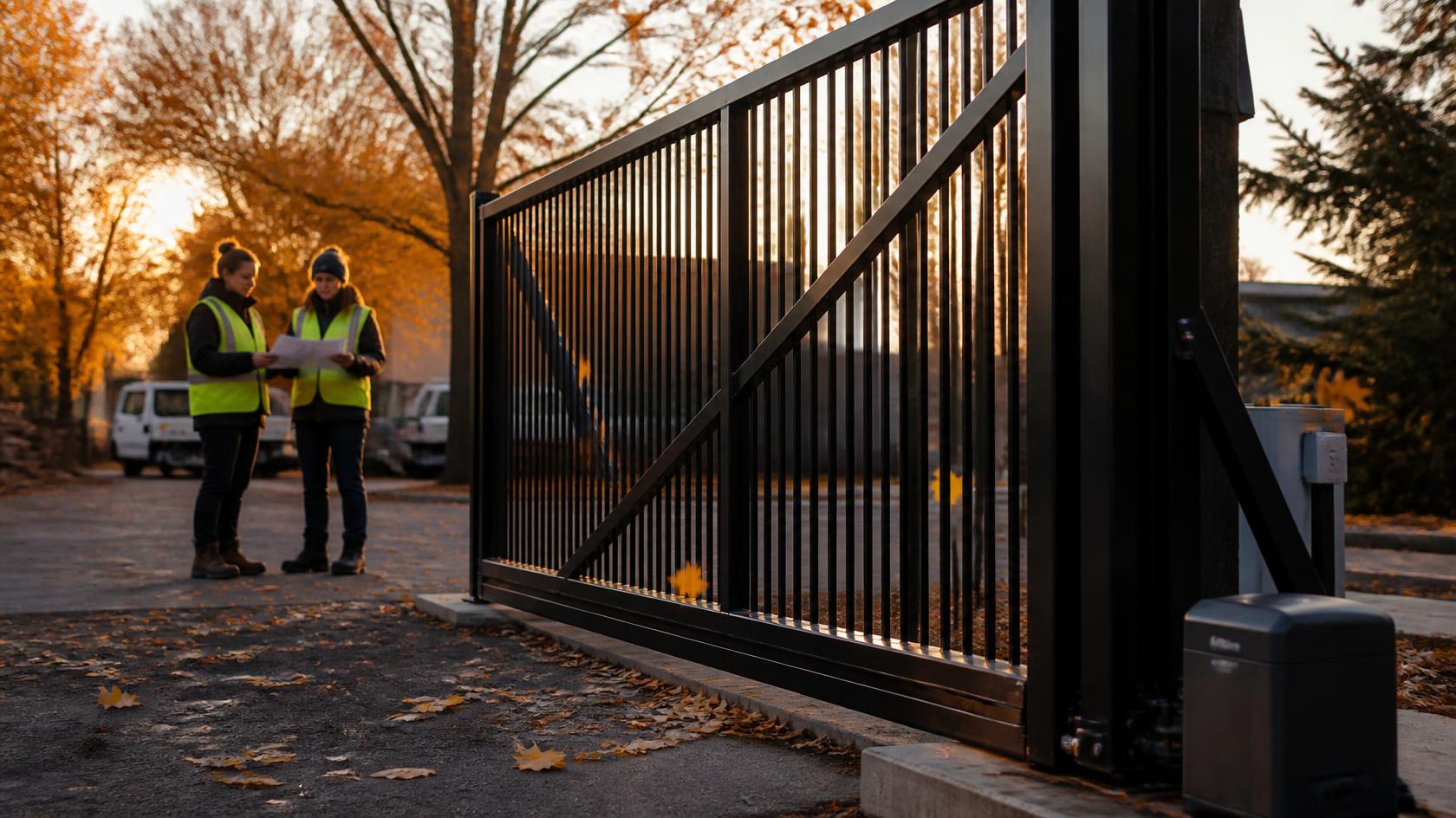
Commercial gate installation in Sycamore should be planned around vehicle access, pedestrian flow, gate width, drainage, snow removal, ground conditions, and winter clearance. Finalizing these details before colder weather arrives can help businesses avoid access problems once snow, ice, and freeze-thaw conditions begin.
Start With How the Property Uses the Entrance
A commercial gate should fit the way people, vehicles, and equipment move through the property every day.
Before choosing a gate size or location, review:
Delivery routes
Employee entrances
Customer access
Equipment movement
Waste-removal access
Outdoor storage areas
Parking lot traffic
A gate that works for passenger vehicles may not provide enough room for delivery trucks, trailers, or maintenance equipment.
Planning around actual traffic is one of the most important steps in avoiding future impact damage and access problems.
Choose the Right Gate Location
Gate placement affects both convenience and security.
The opening should connect naturally with drive lanes and avoid forcing vehicles into tight turns.
Before installation, check whether the proposed location:
Provides clear visibility
Allows comfortable vehicle turning
Avoids steep grade changes
Keeps posts away from frequent impact areas
Connects properly with the surrounding fence
Leaves enough room for snow removal
Moving the gate slightly during planning may prevent years of repeated repairs later.
Gate Width Should Match the Traffic
One of the most common planning mistakes is making a gate opening too narrow.
Commercial entrances may need room for:
Delivery trucks
Trailers
Service vehicles
Landscaping equipment
Waste-removal trucks
Snowplows
A narrow opening increases the chance of vehicles striking posts, frames, or nearby fence sections.
Gate width should be based on the largest vehicles that regularly use the entrance, not only the vehicles present during installation.
It is also worth considering whether future operations may require larger equipment.
Decide Between Swing and Sliding Gates
The available space and traffic pattern can help determine which gate style makes sense.
Swing Gates
Swing gates need clear space in the direction they open.
Planning should account for:
Snow accumulation
Parked vehicles
Sloped ground
Pedestrian areas
Traffic flow
A swing gate may not work well where snow is routinely piled or where vehicles need to stop close to the entrance.
Sliding Gates
Sliding gates move along the fence line and may be practical where swing space is limited.
They require enough room beside the opening for the gate to travel.
The path should remain clear of:
Gravel
Mud
Leaves
Snow
Ice
Stored materials
Rollers, guides, or tracks where applicable should also remain accessible for maintenance.
Plan for Cold-Weather Clearance
A gate installed before winter should still operate after snow and ice arrive.
Check how much clearance exists beneath swing gates and around the full travel area.
Low clearance may become a problem once:
Snow accumulates
Ice forms
Gravel shifts
Frozen ground becomes uneven
For sliding gates, the travel path should be positioned where snow will not routinely be pushed into the operating area.
Thinking through winter clearance before installation is easier than modifying the gate later.
Review Drainage Around Gate Posts
Gate posts carry more weight and movement than standard fence posts.
That makes stable ground especially important.
Inspect the proposed gate area for:
Standing water
Mud
Low spots
Erosion
Runoff
Saturated soil
Sycamore properties can experience freeze-thaw conditions that may contribute to movement around wet footings.
If water repeatedly collects near the proposed gate posts, drainage should be considered before installation begins.
A strong gate can still develop alignment problems if its support posts move.
Plan Strong Support Posts
Gate posts should be selected and installed based on the gate size, weight, and expected use.
Larger gates and heavily used entrances place more stress on support posts than small pedestrian gates.
Poorly supported posts can lead to:
Sagging
Latch misalignment
Dragging
Frame stress
Repeated adjustments
The gate and supporting structure should be planned as one system rather than treating the posts as standard fence components.
Think About Locking and Access Needs
Commercial properties may need different levels of access control.
Before installation, decide how the gate will be secured.
Depending on the property, this may include:
Basic latches
Locking hardware
Controlled employee access
Other access-control equipment where applicable
If electrical or electronic access-control systems are planned, determine whether that work is part of the fence installation or a separate project.
Clarifying this early can prevent delays or unexpected scope changes.
Consider Pedestrian Access Separately
Vehicle gates are not always the best solution for everyday pedestrian traffic.
A separate pedestrian gate may improve:
Employee access
Visitor flow
Safety around vehicle entrances
Security control
If people frequently walk through the same entrance as trucks or equipment, consider whether a dedicated pedestrian opening would make the layout more practical.
The pedestrian gate should also remain usable during snow and ice conditions.
Review Snowplow and Snow Storage Areas
Winter maintenance can strongly affect gate performance.
Before installation, identify:
Plow routes
Snow storage areas
Parking lot edges
Driveway entrances
Areas where snow drifts
Avoid placing gate posts where snowplows must make tight turns.
Also avoid planning snow storage directly beside the gate opening or within the path of a sliding gate.
Heavy snow piled against gates or nearby fencing can create unnecessary pressure and may reduce available clearance.
Protect Gates From Vehicle Impacts
Commercial gate entrances often become high-risk areas for impact damage.
If vehicles regularly maneuver close to the posts, consider whether the layout needs additional protection.
Possible options include:
Wider openings
Bollards
Wheel stops
Better traffic markings
More turning room
If an older gate was repeatedly struck, examine why before installing the replacement.
Rebuilding the same layout without correcting the traffic problem may lead to the same damage again.
Consider Existing Pavement and Terrain
The gate area may include:
Asphalt
Concrete
Gravel
Slopes
Uneven ground
Curbs
Drainage channels
These conditions can affect post placement, ground clearance, and gate movement.
Swing gates installed over sloped ground may require additional clearance.
Sliding gates need a usable path alongside the fence.
Evaluating terrain early can help prevent last-minute changes during installation.
Plan Around Business Operations
Commercial gate installation can affect normal access while work is underway.
Property managers should determine:
Which entrance can be temporarily closed
Whether another entrance is available
How deliveries will enter
Whether employees need alternate parking
When high-traffic periods occur
Planning access before installation begins can reduce disruption.
For properties with only one main entrance, timing and temporary access become especially important.
Review the Surrounding Fence
The new gate should connect to a stable fence system.
Before installation, inspect nearby:
Terminal posts
Chain link fabric
Rails
Panels
Existing hardware
A new gate may not perform well if it is attached to a weak or badly deteriorated fence section.
If surrounding components are damaged, repairing or replacing them as part of the gate project may provide a stronger result.
Confirm Property and Site Requirements
Before finalizing the entrance, review reliable property information such as:
Surveys
Property boundaries
Easements
Shared access areas
Known utility locations
Commercial property owners should also review applicable local requirements before deciding on final gate placement, fence height, or design.
Addressing these details early can reduce changes after installation begins.
Plan Commercial Gate Installation Before Cold Weather
A successful commercial gate installation should work with the property in every season.
Gate width, location, support posts, drainage, snow removal, vehicle traffic, ground clearance, and access control should all be considered before work starts.
Rockford Fence provides commercial gate installation, commercial fence installation, repair, replacement, chain link fencing, security fencing, dumpster enclosures, and other commercial fence solutions.
Contact Rockford Fence to discuss commercial gate installation in Sycamore, IL. The team can evaluate the entrance and help plan a gate around traffic, security, winter access, and long-term property use.
