
Commercial Gate Installation Timeline in DeKalb, IL: What to Expect This Fall
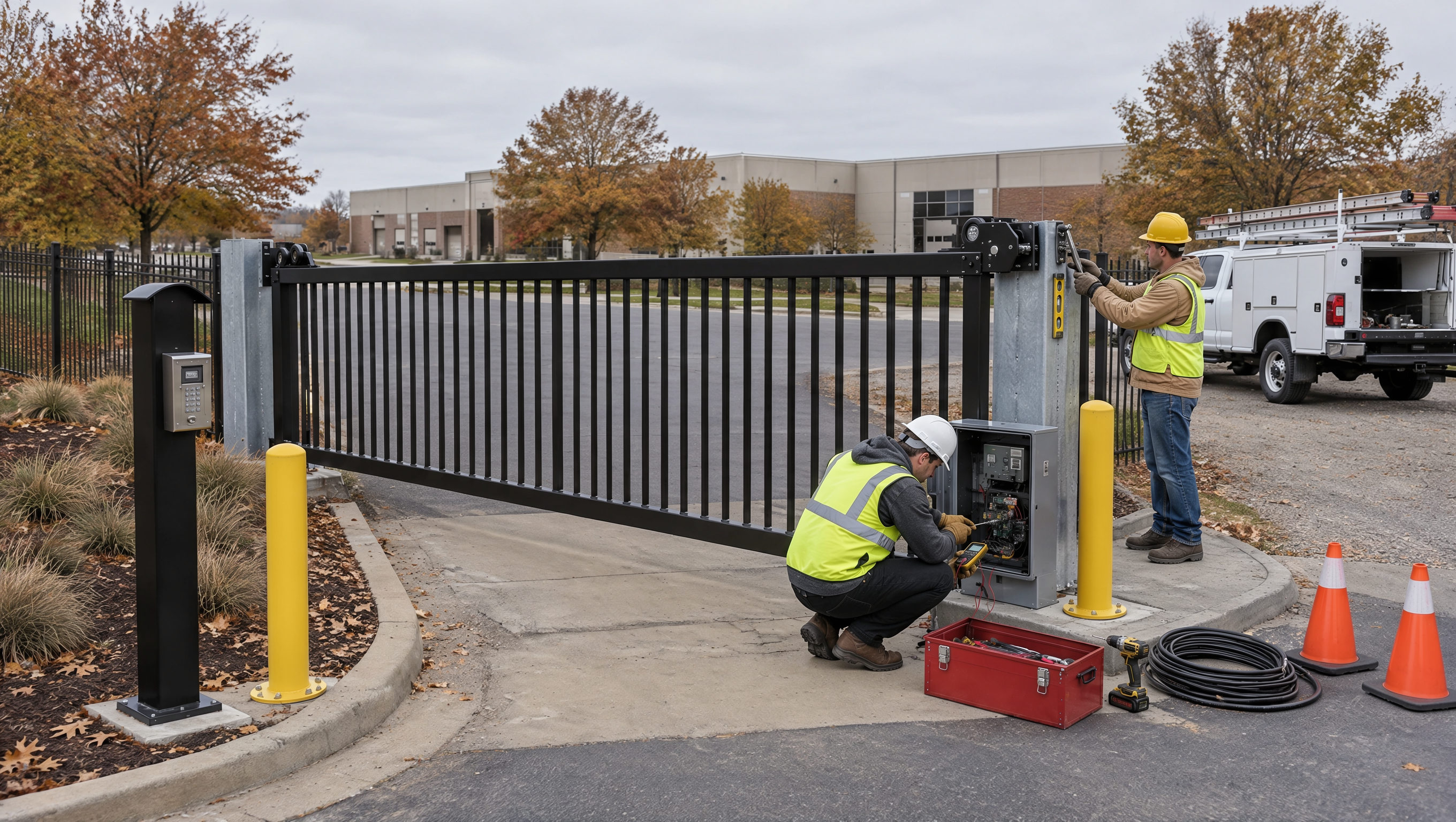
A commercial gate installation in DeKalb usually involves more than placing the gate itself. Businesses should expect planning, site measurement, gate selection, layout confirmation, post and footing work, gate installation, adjustments, and a final operational check. Fall projects should also account for shorter daylight, wet ground, colder temperatures, and upcoming snow-removal needs.
Start With a Site Evaluation
The first step is understanding how the entrance is used.
A commercial gate should be planned around:
Delivery trucks
Employee vehicles
Service vehicles
Equipment
Pedestrian traffic
Snowplow access
The contractor should also review the surrounding fence, pavement, drainage, and available opening space.
A gate that works for a small service vehicle may not provide enough turning room for a trailer or larger delivery truck.
This early site review helps define the correct gate width and configuration before materials are ordered.
Finalize the Gate Type
Once the entrance is measured, the next step is selecting the gate style.
Common options include:
Swing Gates
Swing gates open through an arc and require clear space on one or both sides of the entrance.
They work best where:
Vehicle space is available
Snow can be stored away from the swing path
Buildings or equipment do not interfere
Sliding Gates
Sliding gates move along the fence line.
They may be useful where the driveway needs to remain clear, but they require enough side space for the gate to travel.
The travel area should remain free of stored materials, debris, and future snow piles.
Choosing the gate type early helps determine post locations and site preparation needs.
Confirm the Opening Width
Gate width has a major effect on daily use.
Before installation begins, businesses should consider the largest vehicles that need access.
These may include:
Box trucks
Tractor-trailers
Waste-removal trucks
Service vehicles
Snowplows
The opening should provide enough room for both the vehicle and its approach angle.
A gate may technically fit a truck while still creating difficult turning conditions.
If the existing entrance has repeated post impacts or tight vehicle clearance, fall installation is a good opportunity to improve the layout instead of rebuilding the same problem.
Review the Existing Fence Connection
A new gate needs a stable surrounding fence.
Before installation, inspect nearby:
Terminal posts
Chain link fabric
Top rails
Fittings
Existing gate posts
If the surrounding fence is leaning or loose, new gate installation alone may not solve the problem.
Weak terminal posts or damaged rails may need repair or replacement as part of the same project.
This helps ensure the new gate connects to a stable perimeter.
Plan for Existing Gate Removal
If the project is replacing an older gate, removal should be part of the schedule.
This may include:
Removing the gate frame
Removing old hinges or rollers
Pulling damaged posts
Breaking out old concrete footings
Hauling debris
Older posts may be located in asphalt or concrete, adding another step before new supports can be installed.
Businesses should understand whether removal and disposal are included in the installation scope.
This can prevent surprises once work begins.
Prepare the Work Area
The entrance should be cleared before installation starts.
Remove or relocate:
Parked vehicles
Pallets
Equipment
Stored materials
Temporary barriers
Contractors may need room for excavation, materials, equipment, and gate assembly.
For active commercial properties, this step also involves planning alternate access.
If the main gate will be unavailable during part of the project, employees and delivery drivers should know which entrance to use.
A clear work zone can help the installation move more efficiently.
Post and Footing Work Comes Before the Gate
Gate posts are one of the most important parts of the installation.
They support the weight and repeated movement of the gate.
Installation may involve:
Excavating post locations
Removing old footings
Setting new gate posts
Aligning the posts
Placing concrete
The posts must be positioned correctly before the gate hardware can be installed.
Gate posts typically carry more load than standard line posts, so this stage should not be rushed.
If the posts are not stable or aligned, the gate may later drag, sag, or fail to latch correctly.
Fall Ground Conditions Can Affect the Schedule
Fall weather can influence site preparation.
Heavy rain may leave areas around the entrance:
Muddy
Soft
Difficult for equipment
Prone to standing water
DeKalb can also experience colder conditions as fall progresses.
If the property already has drainage problems around the gate, they should be identified before new posts are installed.
Repeated water around footings can contribute to future movement.
Major drainage correction may be separate from the gate project, but it should still be considered during installation planning.
Gate Installation Follows Structural Work
Once the support structure is ready, the gate can be installed.
For swing gates, this may involve:
Mounting hinges
Hanging the gate
Setting stops
Adjusting the latch
For sliding gates, the work may include:
Installing rollers or guides
Positioning stops
Aligning the frame
Checking the travel path
The gate should move smoothly without unnecessary resistance.
Initial adjustment is especially important because small alignment problems can become more noticeable after repeated use.
Automated Gates Require Additional Steps
If the gate will be automated, the timeline may include additional work after the mechanical gate is installed.
This may involve:
Gate operator installation
Electrical connections
Controls
Safety devices
Access-control equipment
The mechanical gate should move freely before automation is expected to operate it.
A motorized system should not be used to compensate for dragging, binding, or poor alignment.
Electrical and automated components may involve separate qualified service depending on the project scope.
Safety features should remain functional and should not be bypassed.
Final Alignment and Operation Checks Matter
A commercial gate installation is not complete when the frame is simply in place.
The final check should confirm that the gate:
Opens fully
Closes fully
Moves smoothly
Aligns with the latch
Locks correctly
Clears the ground
Does not contact nearby fencing
For sliding gates, the full travel area should remain clear.
For swing gates, the opening arc should not interfere with vehicles, equipment, or nearby structures.
These final adjustments help catch small issues before the entrance returns to full daily use.
Include Winter Access in the Final Walkthrough
Because the installation is happening in fall, the final layout should also be reviewed for winter.
Consider:
Snowplow routes
Snow-storage areas
Gate clearance
Sliding gate paths
Truck turning room
Snow should not be routinely piled in a swing gate arc or along the travel path of a sliding gate.
Snowbanks can also narrow an entrance and force vehicles closer to new gate posts.
Planning these areas now can help protect the installation during its first winter.
How Long Does the Entire Process Take?
There is no single timeline that fits every commercial gate project.
Timing depends on factors such as:
Gate type
Gate size
Existing fence removal
Pavement work
Site access
Weather
Ground conditions
Automation requirements
A straightforward manual gate replacement may involve fewer steps than a large sliding gate with pavement work and automation.
The most useful approach is to confirm the project scope first and then plan the schedule around the actual site conditions.
Prepare for a Smoother Gate Installation This Fall
Commercial gate installation in DeKalb should be planned around access, structural support, vehicle movement, and winter operations.
The process usually moves from site evaluation and gate selection through removal, post work, installation, adjustment, and final inspection.
Rockford Fence provides commercial gate installation, repair, replacement, chain link fencing, security fencing, dumpster enclosures, and other commercial fence solutions.
Contact Rockford Fence to discuss commercial gate installation in DeKalb, IL. A site evaluation can help define gate width, configuration, access requirements, and the steps needed for a practical fall installation.
