
Commercial Gate Maintenance in Janesville, WI: Fall Service Checklist
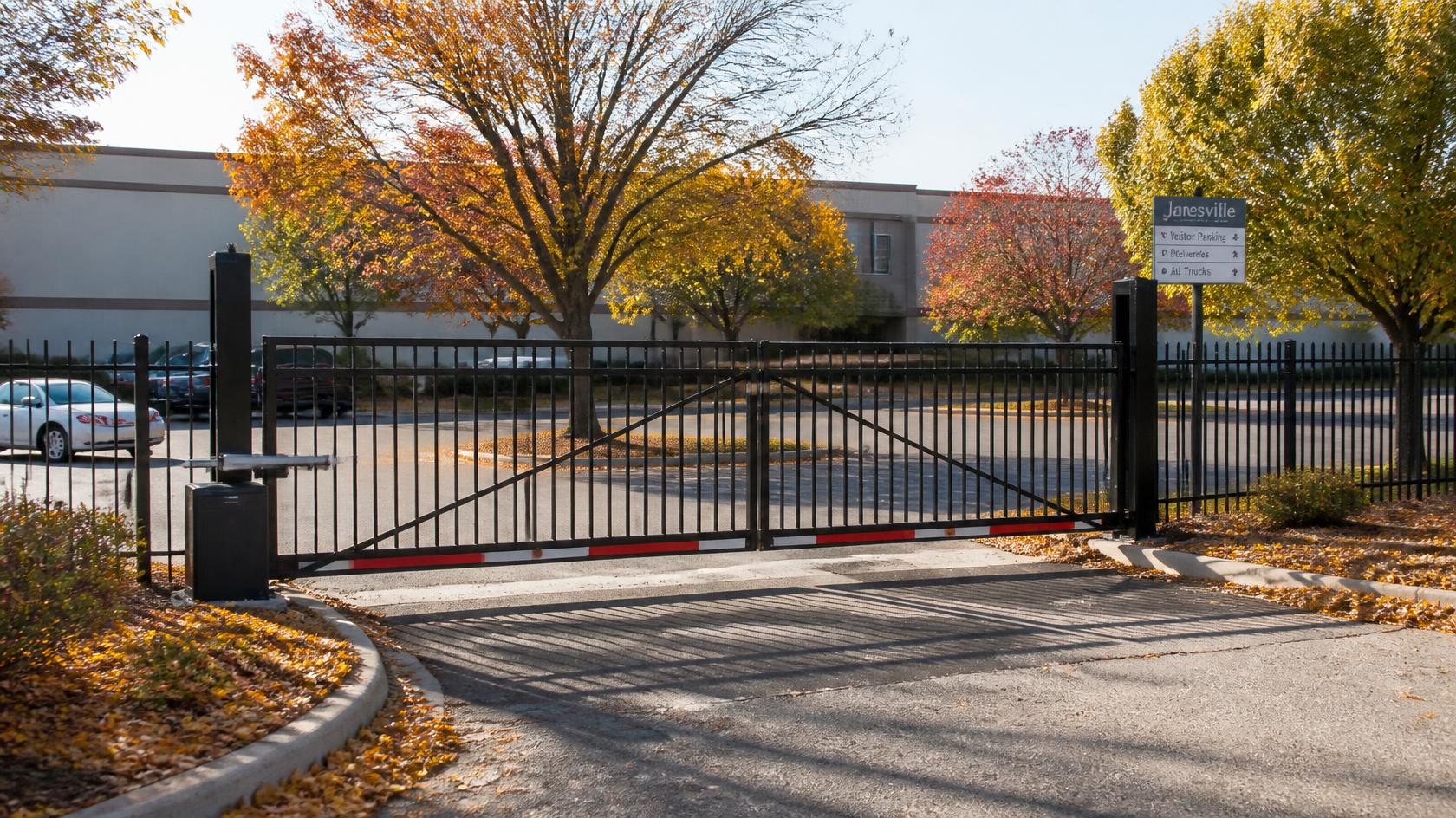
Fall is a good time to inspect commercial gates before snow, ice, and freeze-thaw conditions make small problems harder to manage. Janesville property owners and managers should check hinges, rollers, posts, frames, latches, drainage, ground clearance, and gate travel paths so access points remain dependable through winter.
Start With How the Gate Operates
Before inspecting individual parts, open and close each gate several times.
Watch and listen for changes such as:
Dragging
Grinding
Shaking
Uneven movement
Difficulty latching
Unusual resistance
A gate that stops before fully closing
A gate that requires extra force may already have an alignment, hardware, or support problem.
Fall maintenance should focus on identifying the cause before colder weather adds snow, ice, or frozen ground to the issue.
Check Swing Gate Hinges
Swing gates depend heavily on their hinges.
Inspect for:
Loose bolts
Bent hardware
Rust
Excessive movement
Binding
Worn connections
A loose hinge can allow the gate to sag gradually.
Once that happens, the bottom of the gate may begin scraping the ground or the latch may stop lining up correctly.
Tightening or replacing worn hardware before winter can help prevent a minor alignment problem from becoming a larger repair.
Inspect the Gate Frame
The frame should remain straight and square.
Look for:
Bending
Twisting
Cracked welds
Loose connections
Impact marks
Commercial gates may be damaged by delivery vehicles, trailers, landscaping equipment, forklifts, or other traffic.
Even a small impact can change the frame enough to affect operation.
If the gate repeatedly goes out of alignment after adjustments, the frame itself may need closer inspection.
Check Gate Posts for Stability
Gate posts handle more movement and weight than standard line posts.
Before winter, inspect for:
Leaning
Movement near the footing
Exposed concrete
Soil erosion
Corrosion near the base
Vehicle damage
Janesville properties can experience repeated freeze-thaw cycles, and wet soil around a post may contribute to movement.
A structurally sound post may sometimes be reset.
Badly bent, corroded, or unstable posts may need replacement before they begin affecting the gate opening.
Test the Latch and Lock
A commercial gate should close completely and latch without being lifted, pulled, or pushed sideways.
Check for:
Misalignment
Loose mounting hardware
Rust
Binding
Difficulty locking
A latch problem may actually begin with a shifting gate post or sagging frame.
If the hardware repeatedly needs adjustment, inspect the complete opening instead of treating the latch as an isolated problem.
For security-related entrances, locking problems should receive priority.
Check Ground Clearance
Swing gates need enough clearance to move over pavement, gravel, or soil.
Fall is a good time to identify areas where the gate is already close to dragging.
Look for:
Uneven pavement
Soil buildup
Gravel accumulation
Low spots
Existing scraping marks
A gate with minimal clearance may become difficult to use after snow or ice accumulates.
Correcting the underlying alignment problem now can help reduce winter access problems.
Inspect Sliding Gate Rollers and Guides
Sliding gates have different maintenance needs.
Check:
Rollers
Guides
Stops
Frame alignment
Travel paths
Tracks where applicable
Grinding or shaking can indicate worn rollers, damaged guides, or debris interfering with movement.
Remove:
Leaves
Mud
Gravel
Small branches
Other debris
If this material freezes into place later, the gate may become harder to operate.
Keeping the travel path clear before winter is an important part of fall gate maintenance.
Look for Rust and Corrosion
Metal gates and hardware should be inspected before winter moisture and road salt exposure increase.
Check:
Hinges
Bolts
Gate frames
Posts
Latches
Roller hardware
Welded connections
Minor surface rust may be manageable while the underlying metal remains strong.
More serious warning signs include flaking metal, thinning components, weak connections, or hardware that breaks during adjustment.
Corrosion around post bases deserves particular attention because it may affect structural strength.
Review Drainage Around the Gate
Water near gate posts can create recurring alignment problems.
Look for:
Standing water
Mud
Erosion
Low spots
Exposed footings
Runoff toward posts
Wet soil combined with freezing temperatures can contribute to movement around footings.
If a gate tends to shift after winter, drainage may be part of the problem.
Correcting the water issue along with the gate repair can help reduce repeated seasonal movement.
Check Vehicle Clearance
Commercial entrances should provide enough room for the vehicles that use them.
Inspect areas used by:
Delivery trucks
Trailers
Waste-removal vehicles
Maintenance equipment
Employee vehicles
Look for fresh scrapes, dented posts, bent frames, or damaged hardware.
Repeated impacts may indicate that the opening is too narrow or poorly positioned.
Depending on the property, wider gate clearance, bollards, wheel stops, or improved traffic flow may help reduce future damage.
Plan for Snow and Ice
Gate maintenance should include the area around the entrance, not only the gate itself.
Before winter, identify:
Snowplow routes
Snow storage areas
Places where ice collects
Drainage paths
Areas that may block gate movement
Avoid piling heavy snow directly in the path of swing or sliding gates.
Forcing a gate through packed snow can place unnecessary pressure on frames, hinges, rollers, and posts.
Keeping the operating area open can make winter access much easier.
Inspect Dumpster and Service Gates
Dumpster enclosures and service entrances often experience frequent use and close vehicle traffic.
Check:
Hinges
Frames
Latches
Posts
Ground clearance
Alignment
These gates may already have wear from repeated opening, closing, and vehicle activity.
If a gate barely functions in fall, snow and frozen ground may make the problem worse.
Tighten Loose Hardware
Fall maintenance is a good opportunity to check smaller components before they create larger issues.
Inspect:
Bolts
Hinges
Latches
Fasteners
Gate stops
Roller connections
Loose hardware can allow movement to increase over time.
When components are badly worn, bent, or corroded, replacement may be more appropriate than repeated tightening.
Prioritize High-Use Gates
Not every gate on a commercial property receives the same amount of traffic.
Give extra attention to gates used for:
Daily deliveries
Employee parking
Equipment yards
Storage areas
Service access
Dumpster collection
High-use gates can develop wear faster because the hardware moves repeatedly throughout the day.
They should enter winter operating smoothly and closing reliably.
Know When Maintenance Becomes Repair
Routine maintenance may handle:
Minor adjustments
Loose hardware
Debris removal
Early wear
Basic alignment corrections
Professional repair may be needed when:
Posts are unstable
Frames are bent
Hinges are badly worn
Sliding components are damaged
Alignment problems keep returning
Structural corrosion is present
Waiting until the gate stops working completely can make the repair more disruptive to daily property access.
Complete Fall Gate Service Before Winter
A dependable commercial gate should open smoothly, close completely, and remain aligned with its posts, latch, and locking hardware.
Checking hinges, rollers, frames, posts, drainage, ground clearance, and traffic areas in fall can help property managers address developing problems before winter conditions arrive.
Rockford Fence provides commercial gate repair, fence repair, installation, replacement, chain link fencing, security fencing, dumpster enclosures, and other commercial fence solutions.
Contact Rockford Fence for commercial gate maintenance in Janesville, WI. The team can inspect high-use entrances and recommend practical repairs before snow, ice, and freezing conditions make existing problems worse.
