
Commercial Gate Maintenance in Rockford, IL: Preparing for Ice and Snow
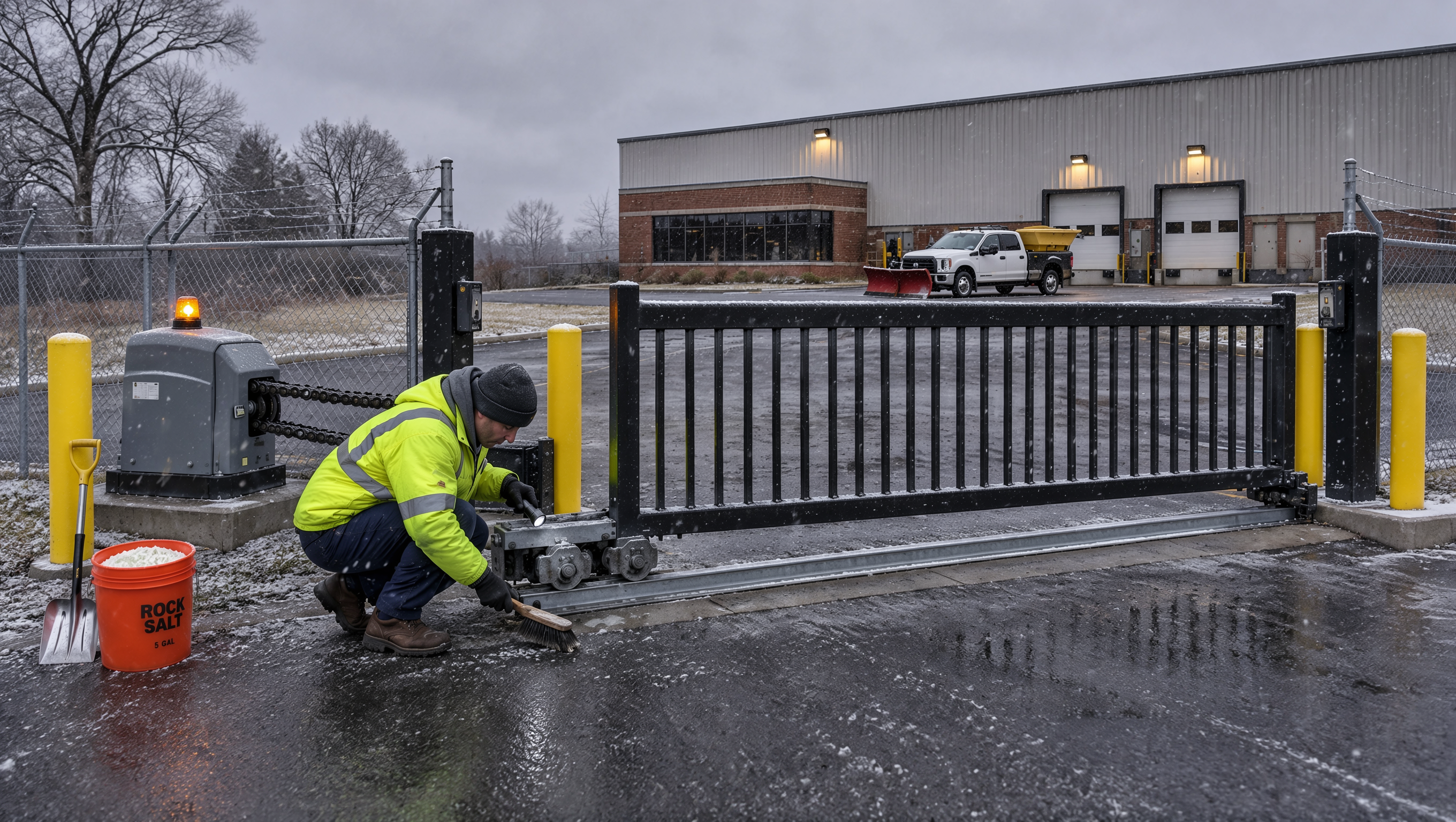
Commercial gate maintenance in Rockford should focus on alignment, post stability, hinges, rollers, latches, drainage, and keeping travel paths clear before ice and snow become regular problems. Facility managers should also review snowplow routes and snow-storage areas so entrances remain usable and gate components are not damaged during winter operations.
Start With a Complete Gate Operation Check
Before winter conditions become more severe, operate every commercial gate several times.
Watch for:
Dragging
Sagging
Uneven movement
Grinding
Latch misalignment
Difficulty locking
Unusual resistance
A gate that already needs extra force to move may become less reliable once snow, ice, or frozen debris adds resistance.
Minor movement problems are easier to diagnose before the entrance is covered with snow.
If the gate does not move smoothly now, maintenance should focus on finding the cause instead of waiting for a complete winter failure.
Check Gate Alignment From Both Sides
Stand back and look at how the gate sits within the opening.
Watch for:
Uneven gaps
One side sitting lower
A frame leaning toward a post
Reduced ground clearance
Latch hardware no longer lining up
Alignment problems may come from worn hinges, a bent frame, damaged rollers, or support post movement.
Repeatedly adjusting the latch without correcting the structural issue may provide only a short-term fix.
A properly aligned gate should move through its full range without needing to be lifted or pushed sideways.
Inspect Gate Posts Before the Ground Freezes
Gate posts carry more weight and repeated movement than standard fence line posts.
Look closely for:
Leaning
Movement near the footing
Soil separation
Exposed concrete
Erosion
Corrosion near the base
Rockford can experience freeze-thaw conditions that make wet or unstable soil more noticeable.
If a gate post is already shifting, winter ground movement may make the alignment problem worse.
The post should be stabilized before hinge, latch, or roller adjustments are treated as complete.
Review Drainage Around the Entrance
Water can create several winter gate problems.
After rain or early snowmelt, check for:
Standing water
Mud
Low spots
Erosion
Runoff toward gate posts
Once temperatures fall, standing water may become ice in the exact area where vehicles or gates need to move.
Repeated moisture around support posts can also contribute to soil movement.
If the gate regularly loses alignment after wet weather, drainage may be part of the underlying problem.
Major drainage work may require separate service, but it should still be identified during gate maintenance.
Inspect Swing Gate Hinges
Swing gates rely on hinges that remain secure and properly aligned.
Check for:
Loose fasteners
Excessive movement
Binding
Bent components
Cracks around connections
Worn hinges can cause the gate to sag.
That may reduce ground clearance and prevent the latch from lining up correctly.
If hinge wear is found, inspect the post at the same time.
Replacing or adjusting the hinge will not solve the problem if the post itself continues moving.
Keep Swing Paths Clear
Swing gates need enough room to move through their full opening arc.
Before winter, remove:
Gravel
Leaves
Branches
Stored materials
Equipment
Then consider where snow will accumulate.
A snow pile that blocks the swing area can make an otherwise functional gate unusable.
If the gate barely clears the ground before snow arrives, address that issue now.
Ice and compacted snow can reduce clearance further and create additional resistance.
Inspect Sliding Gate Rollers and Guides
Sliding gates have different maintenance needs.
Review:
Rollers
Guides
Stops
Tracks where applicable
Full travel path
The gate should move smoothly without shaking, grinding, or pulling sideways.
Mud, gravel, leaves, and small debris should be removed before they freeze into the travel area.
If rough movement continues after the path is cleared, the rollers, guides, or frame alignment may need repair.
Forcing a sliding gate through resistance can create additional wear.
Plan Snow Storage Away From Sliding Paths
Sliding gates need open space beside the fence line.
Snow should not be stored:
Along the gate's travel path
Around rollers or guides
Near the fully open position
Against gate stops
A snowbank can prevent the gate from opening completely.
It can also cause the frame to push against resistance if the operator or user continues trying to move it.
Snow-storage planning should happen before winter storms become routine.
Keeping the travel path open is part of maintaining reliable access.
Test Latches, Locks, and Stops
A commercial gate should close securely without needing excessive force.
Inspect:
Latches
Locks
Handles
Stops
Bolts
Closing points
A latch that barely works before winter may become unreliable after the gate shifts slightly or ice builds near the entrance.
Loose or bent hardware should be corrected before snow complicates access.
Security hardware should work naturally when the gate is in its normal closed position.
If the gate has to be lifted or pushed to lock, investigate the alignment problem first.
Check for Corrosion on Moving Components
Gate hardware can be exposed to moisture and road salt throughout winter.
Pay attention to:
Hinges
Bolts
Gate frames
Post bases
Roller hardware
Welded connections
Surface rust does not always mean a component has failed.
More serious warning signs include:
Flaking metal
Holes
Thinning structural parts
Weak welds
Brittle hardware
Corroded components should be evaluated before winter conditions add more moisture and repeated movement.
Structural weakness around hinges or posts deserves more attention than cosmetic discoloration alone.
Review Automated Gates Where Applicable
Automated commercial gates should first be checked mechanically.
A gate operator may struggle when the gate has:
Dragging
Poor alignment
Worn rollers
Unstable posts
Debris in the travel path
Once the gate moves freely, watch for operator-related symptoms such as inconsistent movement, unusual stopping, or failure to complete the opening or closing cycle.
Problems involving controls, sensors, electrical components, or operators may require qualified service.
Safety devices should not be bypassed to keep the gate running.
The mechanical gate and automated system should work together without unnecessary resistance.
Inspect Vehicle-Impact Areas
Commercial gates often sit close to active traffic.
Look for damage around:
Delivery entrances
Loading zones
Parking areas
Equipment routes
Snowplow paths
Warning signs include:
Scraped posts
Bent frames
Disturbed footings
Damaged hardware
New alignment changes
Winter conditions can make tight entrances even more difficult because snowbanks reduce turning space.
If the same gate is repeatedly struck, consider whether the property needs more clearance, wider access, bollards, wheel stops, or better traffic routing.
Coordinate Gate Maintenance With Snow Removal
Snowplow operations should be part of the winter gate plan.
Before the first significant snowfall, confirm:
Which entrances plows will use
Where snow will be pushed
Which gate posts need extra clearance
Where snowbanks could narrow vehicle access
Avoid pushing heavy snow directly against gates, posts, or nearby fence sections.
Snowbanks can also force trucks closer to the gate structure.
A clear snow-removal plan can help protect both the entrance and the surrounding perimeter.
Prioritize Problems That Could Block Access
Not every gate issue has the same urgency.
Higher-priority problems include:
Gates that do not close
Gates that do not lock
Unstable support posts
Severe dragging
Damaged hinges
Failed rollers
Bent frames
Structural corrosion
Minor cosmetic wear can usually be monitored.
Facility managers should focus first on problems most likely to interrupt daily access or compromise security during winter.
Prepare Rockford Commercial Gates for Winter
Commercial gate maintenance before ice and snow should focus on dependable movement, secure closure, stable posts, clear travel paths, and practical snow planning.
Addressing these areas now can help reduce blocked entrances, repeated adjustments, and preventable gate damage during colder weather.
Rockford Fence provides commercial gate maintenance, repair, installation, replacement, chain link fence repair, security fencing, dumpster enclosures, and other commercial fence solutions.
Contact Rockford Fence for commercial gate service in Rockford, IL. The team can inspect gate alignment, posts, hardware, rollers, and surrounding fence conditions before winter access problems become more serious.
