
Commercial Gate Repair in Dixon, IL: Problems to Fix Before Freezing Weather
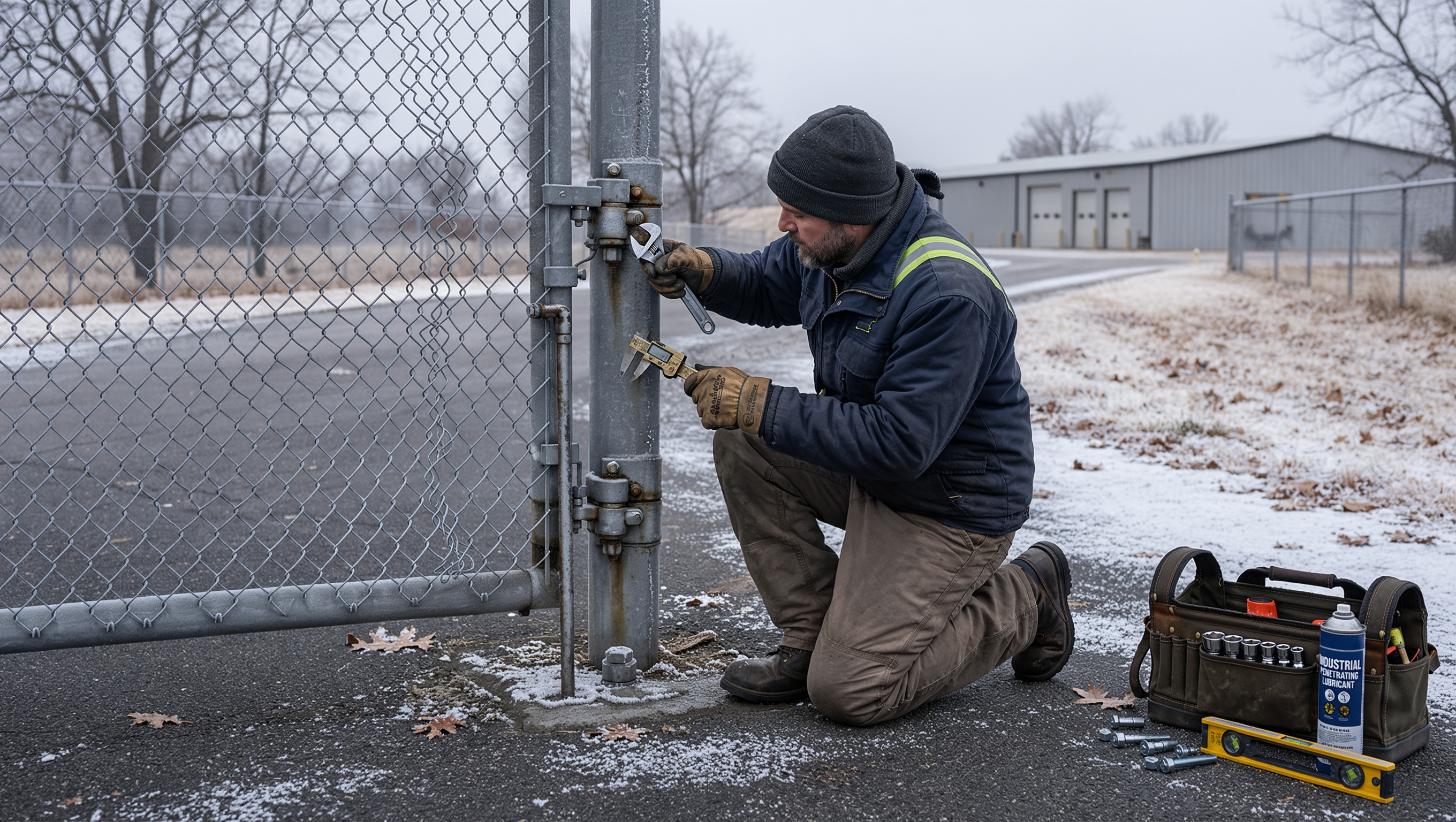
Commercial gate repair in Dixon should address sagging frames, unstable posts, worn hinges, damaged rollers, unreliable locks, and poor ground clearance before freezing weather arrives. Northern Illinois winter conditions can worsen existing mechanical and structural problems, making entrances harder to operate. Early repairs help businesses maintain perimeter security and dependable access for employees, deliveries, and service vehicles.
Why Commercial Gate Problems Should Not Wait Until Winter
Commercial gates experience repeated movement throughout the year. Delivery traffic, equipment access, changing ground conditions, and normal hardware wear can gradually affect their performance.
A gate that requires extra effort to open in late fall may become increasingly difficult to operate when snow and ice accumulate.
For warehouses, industrial facilities, storage yards, and other commercial properties in Dixon, an unreliable entrance can interrupt daily operations.
Addressing mechanical and structural concerns before winter can help reduce unexpected access problems and emergency repair needs.
Identify Early Warning Signs of Gate Failure
Commercial gate problems often develop gradually rather than appearing without warning.
Facility managers should watch for:
Gates that require extra force to open
Grinding or scraping sounds
Uneven movement
Difficulty engaging locks
Visible frame sagging
Changes in ground clearance
Incomplete opening or closing
These symptoms may indicate worn hardware, structural movement, or alignment problems.
Document when each issue occurs. A gate that binds at one specific point may have a different problem from one that experiences resistance throughout its entire travel path.
Correct Gate Alignment Problems
Proper alignment allows a commercial gate to move smoothly and reach its intended closing position.
When alignment changes, the gate may begin scraping the pavement, missing the latch, or leaning toward its supporting post.
Common causes include:
Worn hinges
Shifting support posts
Bent gate frames
Damaged rollers
Loose mounting hardware
Repeatedly adjusting the latch without investigating the underlying problem may provide only temporary improvement.
The gate frame and supporting structure should be evaluated together before final hardware adjustments are made.
Repair Unstable Gate Posts and Footings
Gate posts support considerable weight and repeated movement, particularly at wide commercial vehicle entrances.
Inspect each support post for leaning, corrosion, cracked concrete, exposed footings, and separation between the soil and concrete.
Dixon experiences seasonal temperature changes that can contribute to freeze-thaw movement in susceptible soil.
Where drainage problems or footing instability already exist, colder weather may make post movement more noticeable.
A shifting gate post can affect the entire entrance, causing sagging, reduced clearance, and unreliable locking.
Stabilizing or replacing the affected post should take priority over repeated hinge or latch adjustments.
Replace Worn Swing Gate Hinges
Swing gates depend on hinges to support the frame and maintain controlled movement.
Over time, hinge assemblies may develop excessive play, corrosion, loose connections, or mechanical damage.
Common Signs of Hinge Problems
The gate drops toward its closing edge.
Movement becomes uneven or difficult.
The frame shifts during operation.
Mounting hardware becomes loose.
The gate begins scraping the ground.
A damaged hinge may need adjustment or replacement depending on its condition.
The supporting post and mounting area should also be inspected to ensure they can properly support the repaired hardware.
Address Sliding Gate Roller and Guide Problems
Sliding gates require properly functioning rollers, guides, and other support components to maintain smooth movement.
Inspect these parts for excessive wear, corrosion, damage, and poor alignment.
Where applicable, tracks should also be checked for debris, deformation, or uneven surfaces.
A sliding gate that shakes, grinds, or hesitates may have mechanical resistance that requires professional attention.
Forcing the gate through resistance can accelerate component wear and place additional strain on automated equipment.
Repairs should restore smooth movement across the entire travel path rather than only improving operation near the entrance.
Fix Insufficient Ground Clearance
Ground clearance can become particularly important during winter.
A commercial gate that barely clears the surface in dry conditions may begin dragging when ice or compacted snow accumulates.
Inspect the area beneath the gate for:
Raised pavement
Uneven gravel
Soil settlement
Surface deterioration
Existing scrape marks
Determine whether the gate has dropped or whether the surrounding surface has changed.
The appropriate repair may involve correcting hinge alignment, stabilizing posts, repairing the frame, or addressing uneven ground conditions.
Simply increasing operating force does not resolve inadequate clearance.
Restore Reliable Locks and Latches
A commercial gate must do more than open and close. It must also secure the property when closed.
Inspect locking hardware for worn components, corrosion, loose fasteners, damaged strikes, and poor alignment.
The latch should engage without requiring someone to lift or push the gate sideways.
Unreliable locking hardware is especially concerning around equipment yards, outdoor storage areas, and restricted commercial spaces.
If the gate does not close naturally, structural and mechanical problems should be corrected before replacing or adjusting the lock.
Inspect Gate Frames for Impact Damage
Commercial entrances can experience accidental contact from trucks, trailers, forklifts, and other equipment.
Even a relatively minor impact may change gate alignment or damage structural connections.
Look for bent frame members, distorted corners, cracked welds, and damaged mounting points.
A localized repair may be appropriate when the surrounding structure remains sound.
However, extensive frame distortion or weakened structural connections may make replacement more practical.
Properties experiencing repeated gate damage should also review vehicle turning space and entrance width.
Address Corrosion Before Winter Exposure Increases
Metal gates and hardware may experience greater exposure to moisture and deicing salts during winter.
Inspect vulnerable components, including:
Gate frames and post bases
Hinges and mounting brackets
Roller assemblies
Bolts and fasteners
Welded connections
Minor surface rust may be manageable through appropriate maintenance.
Deep pitting, flaking metal, holes, and thinning structural components are more serious concerns.
Parts that have lost significant strength may require replacement to restore dependable gate operation.
Evaluate Drainage Around Commercial Entrances
Water collecting near a gate can create both structural and operational problems.
Standing water may freeze across the entrance, while recurring moisture around support posts can contribute to unstable soil conditions.
After rainfall, inspect for pooling water, erosion, pavement runoff, and low areas along the gate's travel path.
If an entrance repeatedly develops alignment problems after wet weather, drainage should be considered during the repair assessment.
Major drainage improvements may require separate work, but identifying the condition can help prevent recurring gate problems.
Review Automated Gate Operating Problems
Commercial properties with automated gates should pay attention to changes in opening and closing behavior.
An operator may struggle when the gate has worn rollers, binding hinges, poor alignment, or insufficient clearance.
Mechanical problems should be evaluated rather than expecting the operator to compensate for increased resistance.
Unexpected stopping, incomplete closing, inconsistent movement, or unusual operating sounds may also indicate equipment or control problems.
Electrical components, access controls, safety sensors, and operator repairs should be handled by qualified personnel.
Safety devices must never be bypassed to keep a malfunctioning gate operating.
Coordinate Gate Repairs With Snow-Removal Plans
A properly repaired gate still needs sufficient operating space during winter.
Facility managers should designate snow-storage areas away from swing gate arcs, sliding gate paths, support posts, and pedestrian entrances.
Snow accumulation can reduce usable entrance width and force vehicles closer to the gate structure.
Review snowplow routes and delivery access before significant snowfall.
If an entrance already has limited turning clearance, additional space or protective features such as appropriately positioned bollards may help reduce accidental damage.
Determine Whether Repair or Replacement Is More Practical
Individual gate repairs may make sense when the frame remains structurally sound and problems are limited to hinges, rollers, latches, or localized post damage.
Replacement may be more appropriate when the gate has extensive structural corrosion, severe frame distortion, multiple failing components, or recurring operational problems.
The existing entrance layout should also be considered.
If the gate no longer accommodates current delivery vehicles or equipment, replacement may provide an opportunity to improve access rather than continue repairing an unsuitable opening.
Schedule Commercial Gate Repair in Dixon Before Winter
Reliable commercial gates are important for maintaining property security, managing vehicle traffic, and supporting everyday business operations.
Addressing alignment problems, unstable posts, worn hardware, damaged frames, drainage concerns, and insufficient clearance before freezing weather can help prevent avoidable disruptions.
Rockford Fence provides commercial gate repair, gate installation, fence replacement, chain link fencing, security fencing, and dumpster enclosure solutions.
Contact Rockford Fence for commercial gate repair in Dixon, IL. A professional evaluation can help identify mechanical and structural problems and determine which repairs should be completed before winter places additional demands on your property's entrances.
