
Commercial Gate Repair in Rockton, IL: Latch, Hinge and Operator Problems
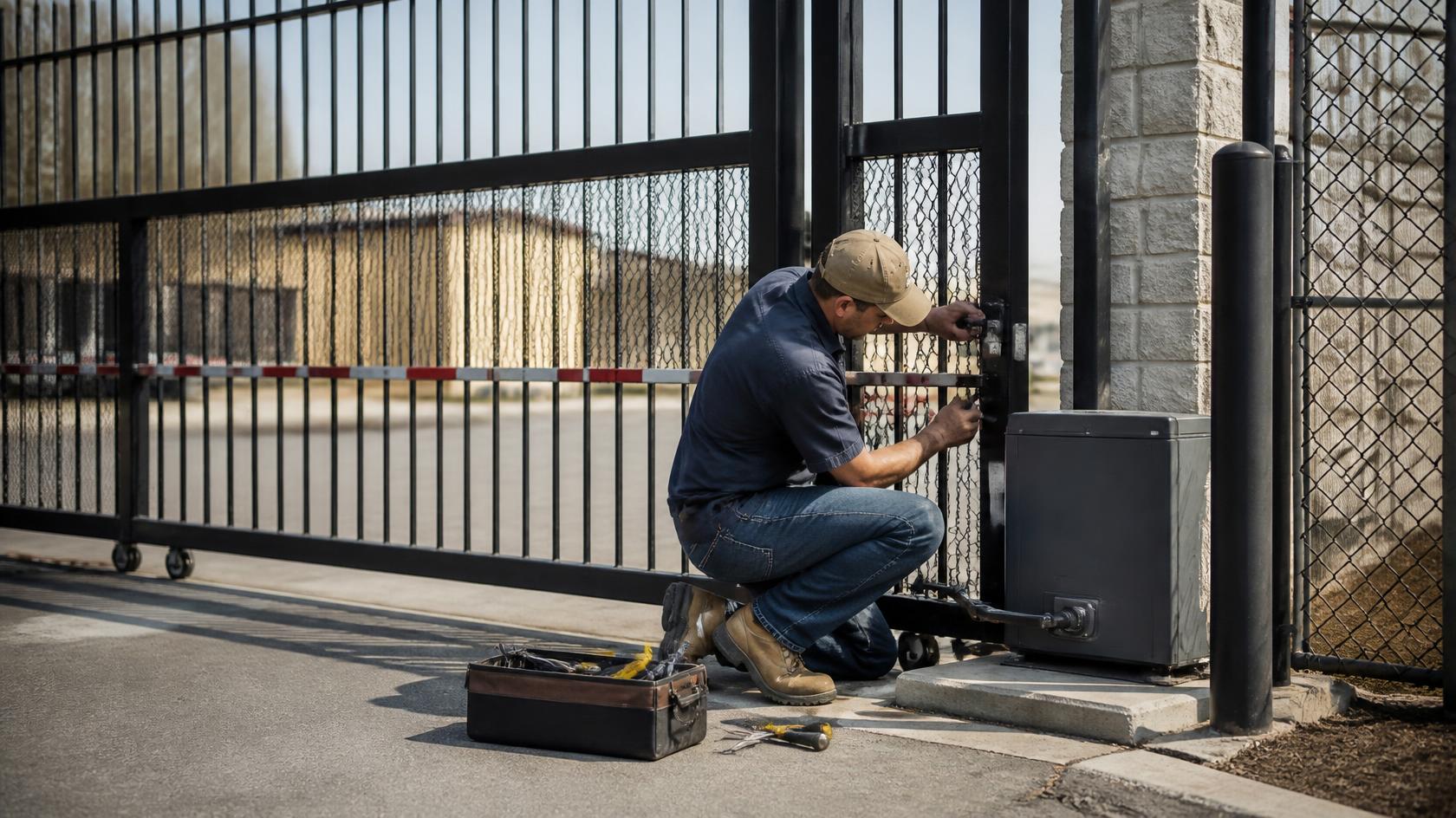
Commercial gate problems in Rockton often begin with latch misalignment, worn hinges, unstable posts, damaged frames, or operator issues on automated systems. Because several components work together, the best repair starts by identifying whether the problem is mechanical, structural, electrical, or related to ground and weather conditions.
Gate Problems Often Have More Than One Cause
A commercial gate may appear to have one obvious problem, but the actual cause can be somewhere else in the system.
For example, a latch may stop lining up because the gate post shifted. A hinge may wear unevenly because the frame is sagging. An automated gate operator may struggle because the gate itself has become difficult to move.
Common symptoms include:
Gates that will not close fully
Repeated latch misalignment
Sagging or dragging
Loose hinges
Grinding or shaking
Gates that stop partway
Automated gates moving inconsistently
A complete inspection should separate the visible symptom from the underlying cause.
Latch Problems Can Point to Alignment Issues
A commercial gate latch should meet the receiver cleanly without forcing the gate into position.
Watch for:
Latches sitting too high or low
Difficulty locking
Gates that need lifting before closing
Loose latch hardware
Repeated adjustments
Sometimes the latch itself is worn or damaged.
However, if the problem keeps returning, inspect the gate frame and support posts.
Even a small amount of post movement can shift the gate enough to prevent proper closure.
Moving the latch repeatedly may restore function temporarily without correcting the structural problem.
Check Whether the Gate Is Sagging
Sagging is one of the most common reasons latches stop lining up.
Possible causes include:
Worn hinges
Loose bolts
A shifting hinge post
A bent frame
Repeated heavy use
A sagging gate may sit visibly lower on the latch side or begin scraping the ground.
If the gate is still structurally sound, hinge or hardware work may restore alignment.
If the frame or support post is damaged, the repair may need to address those components first.
A latch repair will not hold if the gate continues moving out of square.
Hinges Should Move Smoothly Without Excessive Play
Swing gates depend on hinges to carry repeated movement and weight.
Inspect them for:
Loose fasteners
Excessive movement
Binding
Visible wear
Corrosion
Bent components
A worn hinge can allow the frame to drop slightly each time the gate operates.
That can eventually cause dragging, latch problems, and added stress on the post.
If the hinge is replaced, the post should also be checked for stability.
New hardware attached to a shifting post may still leave the gate misaligned.
Gate Posts Are Part of the Repair
Hinge and latch problems are often connected to the posts supporting the gate.
Look for:
Leaning
Movement near the footing
Exposed concrete
Soil erosion
Impact damage
Corrosion near the base
Rockton properties can experience freeze-thaw conditions that affect wet or unstable soil around footings.
A post that moves even slightly may change the gate opening enough to create recurring problems.
If the post remains structurally sound, resetting may be possible. Bent, badly corroded, or unstable posts may require replacement.
Bent Frames Can Create Persistent Problems
A commercial gate frame may be damaged by trucks, trailers, forklifts, landscaping equipment, or snowplows.
Warning signs include:
Twisting
Uneven gaps
Difficulty closing
One corner sitting low
Scraped pavement beneath the frame
Hardware no longer lining up
A frame that is no longer square may continue causing latch and hinge issues no matter how often the hardware is adjusted.
The frame should be evaluated before replacing smaller components repeatedly.
Localized damage may be repairable, while severe distortion may make replacement more practical.
Sliding Gates Need a Different Mechanical Check
Sliding commercial gates do not rely on swing hinges, but they can still develop alignment and movement problems.
Inspect:
Rollers
Guides
Stops
Tracks where applicable
Frame alignment
Travel paths
Grinding, shaking, uneven movement, or stopping before fully opening can indicate worn hardware or obstruction.
Gravel, mud, leaves, snow, and debris should be removed from the travel area.
A gate that is mechanically difficult to move can also place additional strain on an automated operator where one is installed.
Operator Problems May Start With the Gate Itself
Automated commercial gates use operators to move the gate, but not every problem is caused by the operator.
Before assuming the motor or control system has failed, the gate should be checked for mechanical resistance.
Possible causes include:
Dragging
Worn rollers
Binding hinges
Bent frames
Debris in the travel path
Misalignment
If the gate is difficult to move mechanically, the operator may have to work harder than intended.
Repairing the gate movement first may be necessary before diagnosing the automated equipment further.
Watch for Common Operator Warning Signs
Where an automated gate operator is installed, possible warning signs include:
Gate movement stopping unexpectedly
Slower movement than normal
Repeated reversing
Inconsistent opening or closing
Unusual sounds
Failure to complete a full cycle
These symptoms can result from operator components, controls, sensors, power issues, or mechanical resistance in the gate itself.
Because automated systems involve electrical and moving components, repairs should be evaluated carefully rather than bypassing safety features or forcing the gate to operate.
If access-control equipment is also connected, determine whether the problem comes from the gate operator or the separate access system.
Weather Can Make Existing Problems More Noticeable
Cold weather can expose gate issues that were less obvious during warmer months.
Possible winter-related problems include:
Reduced ground clearance
Frozen debris in gate paths
Ice around moving components
Post movement
Snow blocking travel areas
Moisture contributing to corrosion
A swing gate that already sits low may begin dragging after snow accumulates.
A sliding gate may struggle if gravel or debris freezes into its path.
For automated gates, added mechanical resistance may make operator problems more noticeable.
Vehicle Damage Should Be Checked Around the Entire Entrance
Commercial entrances often experience impact from delivery vehicles, trailers, equipment, and snowplows.
After a strike, inspect more than the visible dent.
Check:
Gate posts
Frames
Hinges
Latches
Rollers
Nearby fence sections
Concrete footings
A small shift at one post may affect the complete opening.
If the same area is repeatedly hit, consider whether the entrance needs more clearance.
Wider gate openings, bollards, wheel stops, or improved traffic routing may help reduce future repairs.
Prioritize Problems That Affect Secure Closure
Some gate issues can be monitored, but others directly affect security and access.
Give higher priority to:
Gates that will not latch
Gates that will not lock
Unstable posts
Frames that are badly bent
Hinges near failure
Sliding gates that bind
Automated gates that stop unpredictably
Cosmetic wear can usually wait.
Problems that prevent dependable opening, closing, or locking should be addressed before they interfere with normal business operations.
Know When Repair Is Still Practical
Repair may make sense when:
Damage is localized
Posts remain stable
The frame is structurally sound
Hinges or latches can be replaced
Rollers or guides can be repaired
Operator problems are limited and serviceable
Corrosion is not widespread
Replacement may be more practical when the frame is badly distorted, support posts repeatedly move, structural corrosion is extensive, or repeated repairs no longer restore dependable operation.
The decision should consider the entire entrance rather than one failed component.
Keep Rockton Commercial Gates Reliable
A commercial gate works as a connected system.
Latches depend on alignment. Hinges depend on stable posts. Automated operators depend on a gate that moves freely. Frames, hardware, ground conditions, and traffic all affect how reliably the entrance performs.
Rockford Fence provides commercial gate repair, fence repair, installation, replacement, chain link fencing, security fencing, dumpster enclosures, and other commercial fence solutions.
Contact Rockford Fence for commercial gate repair in Rockton, IL. The team can inspect latch, hinge, frame, post, sliding gate, and operator-related problems and recommend practical repair or replacement options based on the condition of the entrance.
