Commercial Gate Repair in Sycamore, IL: Keeping Business Access Secure
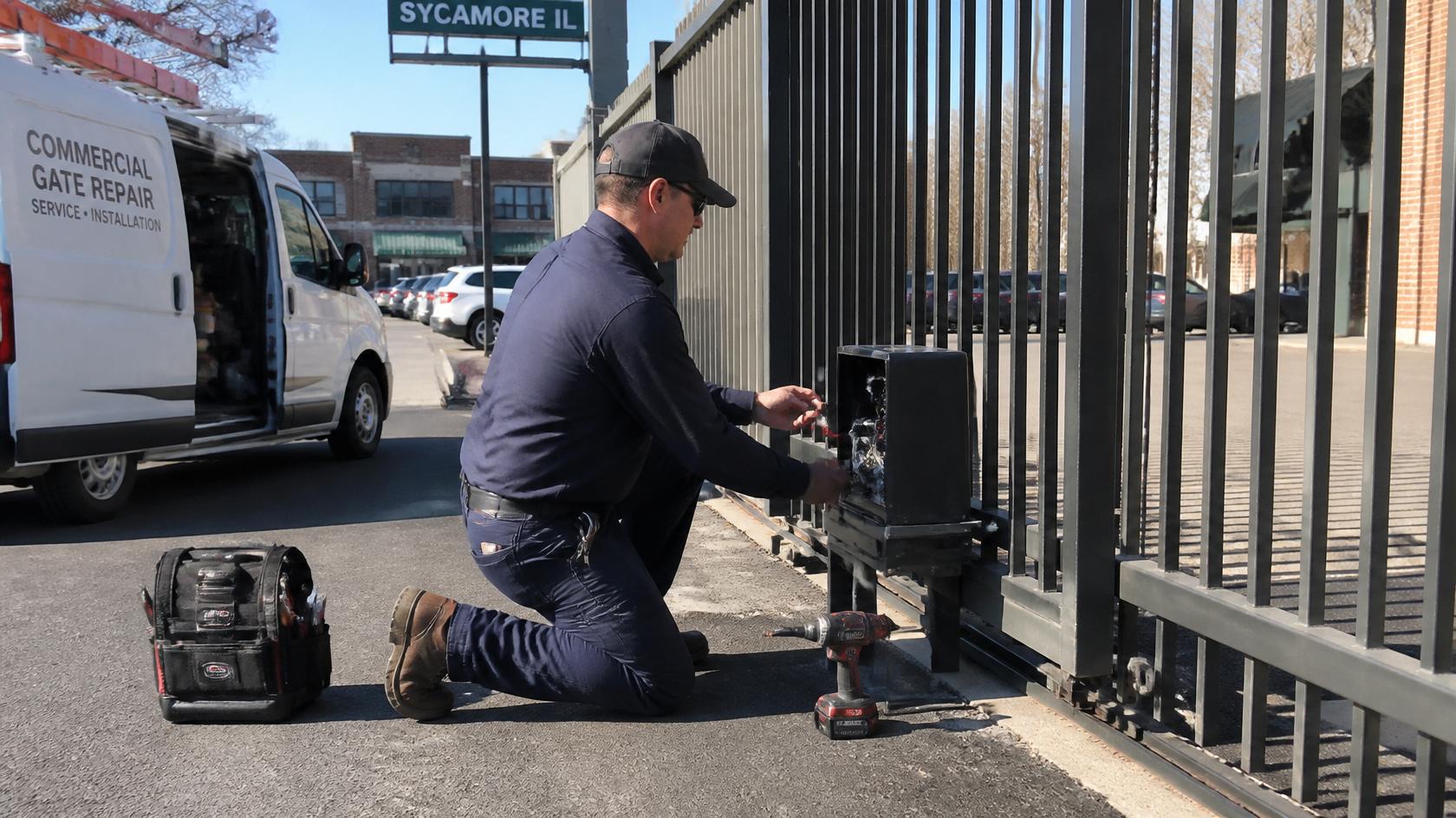
A damaged commercial gate can disrupt deliveries, reduce security, and create safety concerns for employees and visitors. Businesses in Sycamore should address dragging gates, broken latches, leaning posts, worn rollers, and access-control problems before the damage spreads.
Why Commercial Gate Repair Matters
Commercial gates control access to warehouses, parking areas, equipment yards, storage facilities, loading zones, utility spaces, and dumpster enclosures.
When a gate stops working properly, the problem can affect more than convenience. A gate that will not close may leave valuable equipment exposed. A dragging gate can slow deliveries. Damaged hardware may also create a safety risk for employees, customers, drivers, and contractors.
Commercial properties in Sycamore face heavy gate use along with Midwest weather conditions such as snow, ice, wind, rain, and freeze-thaw cycles. Routine inspections and timely repairs help keep access secure and daily operations moving.
Common Commercial Gate Problems
Commercial gates contain several connected components. Posts, hinges, rollers, tracks, frames, latches, and access-control equipment must work together.
A problem with one part can place additional pressure on the rest of the system.
Gates That Drag or Sag
A gate should move smoothly without scraping the pavement or ground.
Dragging or sagging may be caused by:
Loose or worn hinges
A bent gate frame
A leaning gate post
Frost movement
Soil settlement
Pavement changes
Excessive gate weight
Vehicle impact
Forcing a dragging gate can damage the frame, post, latch, or operator. Early adjustment may prevent a more expensive repair.
Broken or Misaligned Latches
A commercial gate is not secure unless it closes and latches correctly.
Latches may stop aligning when posts shift, hinges loosen, or the gate frame bends. Rusted bolts, damaged locks, and worn drop rods can also prevent reliable closure.
A repair may involve realigning the gate, replacing the latch, tightening hardware, or resetting the supporting post.
Leaning or Unstable Gate Posts
Gate posts support more weight and movement than standard fence posts. Even a small shift can affect the entire gate.
Posts may lean because of:
Saturated soil
Poor drainage
Freeze-thaw movement
Inadequate footings
Repeated gate use
Vehicle or equipment impacts
Snow pushed against the post
A structurally sound post may be reset or reinforced. Bent, rusted, cracked, or badly shifted posts usually need replacement.
Worn Hinges and Connection Points
Swing gates depend on strong hinges and secure welds. Daily use gradually wears these components.
Signs of hinge trouble include:
Squeaking or grinding
Visible rust
Loose bolts
Cracked welds
Uneven movement
Gate sagging
Excessive play around connections
Lubrication and adjustment may solve minor issues. Heavily worn hinges or damaged welds should be repaired before the gate drops further.
Roller and Track Problems
Sliding gates rely on rollers, guides, tracks, and properly aligned frames.
Dirt, gravel, ice, leaves, and debris can block the gate path. Rollers may also wear down, seize, or move out of alignment.
Facility managers should watch for slow movement, unusual noise, shaking, or resistance. Continuing to operate a damaged sliding gate can strain the frame and gate operator.
Access-Control and Automated Gate Issues
Automated commercial gates may include motors, keypads, card readers, sensors, remotes, intercoms, and safety devices.
Problems may include:
Gate operators that stop working
Delayed opening or closing
Unresponsive keypads
Damaged wiring
Sensor misalignment
Remote-control problems
Gates stopping midway
Repeated automatic reopening
Mechanical problems should be inspected along with the access-control system. A gate operator cannot work properly if the gate is dragging, misaligned, or structurally damaged.
Safety sensors and emergency access features should also remain clear and functional.
How Sycamore Weather Affects Commercial Gates
Northern Illinois weather can change gate alignment and damage hardware throughout the year.
Snow and Ice
Snow and ice can block gate tracks, reduce ground clearance, and place extra weight on gate components.
Snowplows may also strike posts, gate frames, or nearby fencing. Commercial properties should clearly mark gate entrances before winter and avoid pushing snow against the gate.
Freeze-Thaw Cycles
Moisture in the soil freezes, expands, and later thaws. Repeated movement can shift gate posts and concrete footings.
A gate that worked correctly in fall may begin dragging or missing the latch after winter.
Heavy Rain and Drainage
Standing water can soften the soil around gate posts and contribute to leaning. Water may also collect in sliding gate tracks and increase rust or debris buildup.
Drainage should direct water away from posts, tracks, operators, and electrical components.
Wind and Storm Damage
Strong winds place pressure on large gate panels, privacy screening, and weakened frames.
After severe weather, inspect hinges, posts, latches, welds, rollers, and nearby fence sections. Falling branches and storm debris can damage a gate even when the problem is not immediately visible.
Commercial Gate Repair by Property Type
Different commercial properties face different access and security needs.
Warehouses and Loading Areas
Warehouse gates must accommodate delivery vehicles, trailers, forklifts, and frequent traffic.
Common problems include vehicle impacts, bent frames, damaged posts, and gates that are too narrow for current operations.
Repeated damage may indicate that the gate opening or traffic layout needs improvement.
Equipment and Storage Yards
Equipment yards depend on secure gates to protect machinery, materials, and outdoor inventory.
Broken locks, open gaps, weak hinges, and damaged chain link fabric should be treated as priority repairs.
Parking Lots and Business Entrances
Parking gates must operate reliably during busy arrival and departure periods.
Dragging gates, malfunctioning access controls, or unreliable locks can delay employees, customers, and service providers.
Dumpster and Utility Enclosures
Dumpster enclosure gates experience frequent contact from waste trucks, carts, and equipment.
Loose hinges, bent frames, broken latches, and leaning posts are common. Repairs should restore both function and a clean exterior appearance.
Preventing Commercial Gate Damage
Preventive maintenance can reduce unexpected gate failures.
Property managers should:
Keep tracks and gate paths clear
Lubricate moving hardware when needed
Tighten loose bolts and fittings
Inspect hinges, rollers, and welds
Test latches and locks
Check posts for leaning
Remove snow and ice buildup
Keep vegetation away from the gate
Protect posts with bollards where appropriate
Train drivers and snow-removal crews around gate areas
High-traffic gates may need more frequent inspections than gates used only occasionally.
When to Repair a Commercial Gate
Repair is often practical when the damage is limited and the main frame remains structurally sound.
Repair may be appropriate when:
Hinges or rollers are worn
The latch needs replacement
One post has shifted
The gate needs realignment
A small frame section is bent
Access-control hardware needs service
The surrounding fence remains stable
Targeted repairs can restore secure access without replacing the entire gate system.
When Gate Replacement Makes More Sense
Replacement may offer better long-term value when the gate has widespread damage or no longer supports the property’s needs.
Consider replacement when:
The frame is severely bent
Multiple welds or connections are failing
Posts repeatedly shift
Rust has weakened major components
Repairs are becoming frequent
The gate opening is too narrow
Security requirements have changed
The existing gate cannot support updated access control
A replacement can also improve traffic flow, security, gate width, and long-term durability.
Schedule Commercial Gate Repair in Sycamore
A commercial gate should open smoothly, close completely, and provide dependable access control. Dragging, sagging, broken latches, unstable posts, and operator problems should not be ignored.
Rockford Fence provides commercial gate repair, fence repair, fence replacement, chain link fencing, ornamental fencing, security fencing, dumpster enclosures, and commercial fence installation.
Contact Rockford Fence to schedule a commercial gate inspection in Sycamore, IL. The team can identify the cause of the problem and recommend a practical repair or replacement solution for your property.
