DIY vs. Professional Fence Installation in Madison
The biggest mistake with a new Madison fence isn't your material choice. It's an invisible, preventable problem that appears after the first winter, turning a beautiful investment into a crooked mess. Knowing how to avoid it starts with one fundamental decision.
For most homeowners, the project boils down to one question: DIY or hire a professional? While DIY seems cheaper, the right choice for residential fencing in Madison balances three critical factors: true final cost, climate-specific skills, and local rules.
This guide offers a clear framework to help you decide if DIY is realistic, understand the hidden costs of both options, and find a reputable expert for fence installation in the Madison, WI suburbs. You’ll get a fence that doesn't just look great on day one, but stays that way for years.
What's the Best Fence Material for the Wisconsin Climate?
Choosing the right material for your fence in the Madison area goes beyond just looks; it's about selecting a material that can stand up to our humid summers and harsh, snowy winters. The three most popular choices you'll see in yards from Verona to Middleton are classic wood, low-maintenance vinyl, and durable aluminum. Each handles the Wisconsin climate differently, depending on your budget, tolerance for upkeep, and goals.
To decide, consider what you value most: a traditional aesthetic that requires yearly maintenance, or a "set it and forget it" solution?
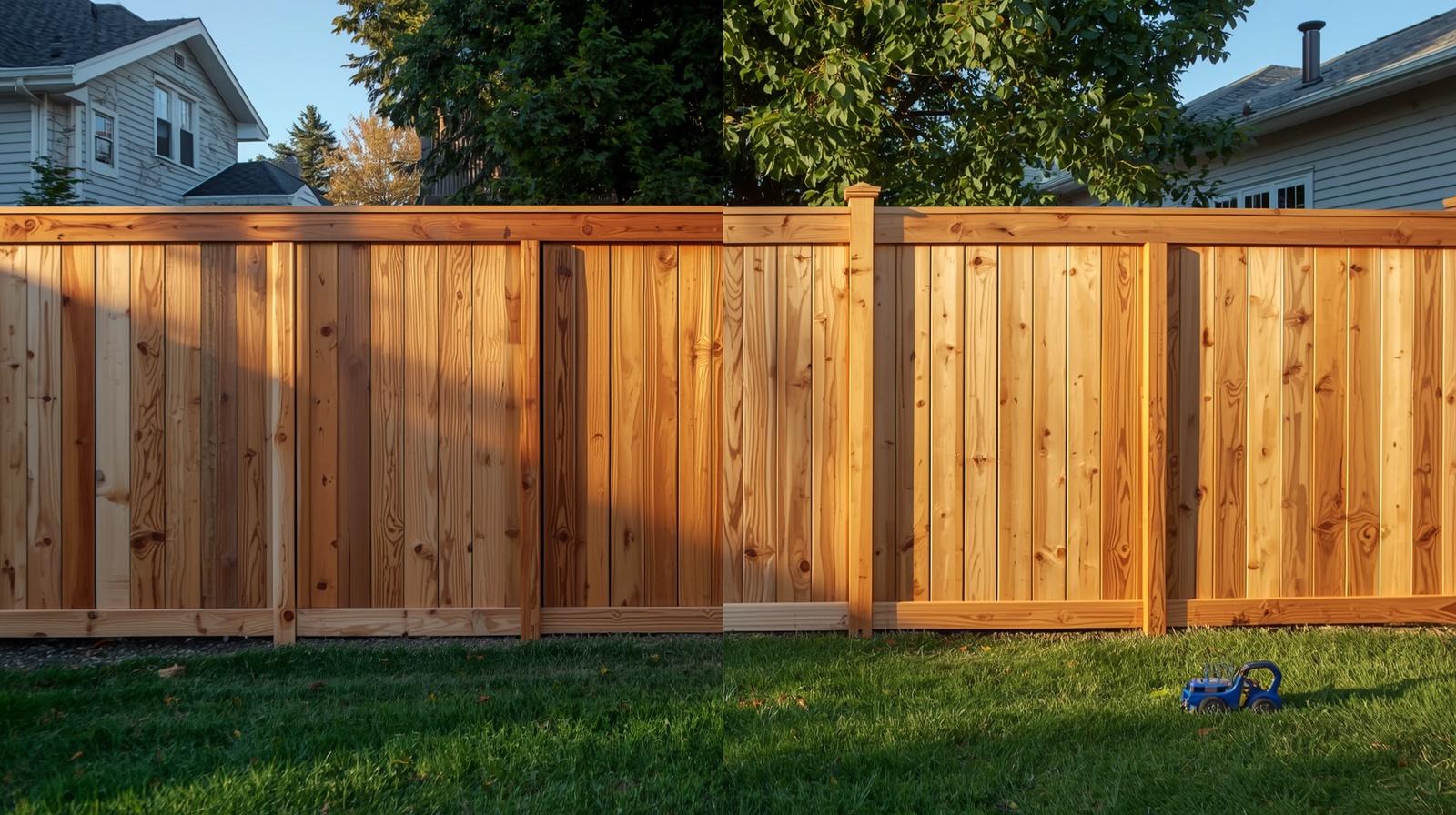
Choose Wood (Cedar/Pine) if... you love a classic, natural look and want the flexibility to paint or stain it. Cedar has natural oils that help it resist rot and insects, but both it and pressure-treated pine will need sealing every couple of years to prevent warping and discoloration from Wisconsin’s moisture. It’s often the most affordable option upfront.
Choose Vinyl (PVC) if... your top priority is minimal maintenance. Vinyl won’t rot, warp, or need staining. A simple rinse is all it takes to keep it looking new. While the initial cost is higher than most wood options, its longevity and lack of upkeep costs make it a great long-term investment against our freeze-thaw cycles.
Choose Aluminum if... you need an elegant, strong fence that won't rust, especially for pool safety. It’s a top choice for meeting Wisconsin's pool enclosure requirements because it provides security without blocking the view, and it is completely unaffected by moisture.
Ultimately, your choice balances upfront cost against long-term maintenance. Wood offers a timeless look for a lower initial price, while vinyl and aluminum provide decades of durability with almost no work required.
The True Cost of a Fence: Breaking Down DIY vs. Professional Pricing
Tackling a fence project yourself can seem like a great way to save money, but the final DIY fence cost is often much higher than just the price of wood or vinyl panels. You have to account for renting heavy equipment like a power auger for post holes, the fees for hauling away dirt and old materials, and buying extra supplies to cover for inevitable mis-cuts or mistakes. These “hidden” expenses can quickly add 20-30% to your initial budget, turning a weekend project into a costly headache.
When you receive a quote from a professional, you're paying for more than just materials and muscle. That price includes the crew's expertise, which ensures the job is done right and fast. Crucially, a reputable company's quote for madison fence installation also bundles in their liability insurance—protecting you if something goes wrong—and a warranty. This warranty is your guarantee that if a post leans or a gate sags in the future, they will come back and fix it on their dime, not yours.
While the average cost to install 6 ft privacy fence professionally is higher upfront, the true savings from DIY may be less than you think after accounting for hidden expenses. For a typical 150-foot fence, a professional privacy fence cost Middleton WI quote includes protection, expertise, and the non-negotiable know-how to install a fence that withstands a Wisconsin winter.
Why Your Fence Needs to Pass the 'Wisconsin Frost Heave' Test
That "Wisconsin winter" know-how isn't just about snow; it's about fighting the powerful, invisible force of frost heave. When the moisture in the soil freezes, it expands and pushes upward with tremendous force. For a fence with shallow posts, this process acts like a slow-motion jack, lifting posts out of the ground year after year. The result is a wavy, leaning fence that loses its structural integrity and good looks. This is the single biggest reason for fence failure during a proper fence installation Madison WI.
The professional solution is to dig below the frost line—the maximum depth that ground frost can penetrate. In the Madison area, WI fence building codes require posts to be set in concrete at a minimum depth of 42 to 48 inches. By anchoring the post base in stable, unfrozen soil (as the graphic shows), it’s protected from the upward push of freezing ground. This is the most effective frost heave solutions for fence posts and the only way to ensure your investment lasts for decades.
This leads to the most important question for any potential contractor: “How deep do you set your posts?” Any answer less than 42 inches is a major red flag. A reputable installer will confidently state they go 48 inches deep, because they know it’s essential for a lasting fence, even if it means a more challenging winter fence installation. Getting this detail right is just as important as following local ordinances, which also have a big impact on your project.
Navigating Local Fence Rules: Permits and Property Lines in Dane County
Beyond building a fence that can survive a Wisconsin winter, you also need one that follows your local town's rules. Each suburb around Madison has its own unique guide to local fence building codes that dictates what you can build, where you can build it, and whether you need official permission first. This permission, known as a permit, is a crucial step that protects your investment by ensuring your project is fully compliant before construction even begins.
To understand these residential fencing rules, follow this quick checklist:
Visit your local website. Search for "fence permit" on your city or village's official site (e.g., cityoffitchburg.org). This is where you can find out things like how much does a fence permit cost in Dane County.
Look for key numbers. Note the rules for fence height (often 6 feet max in backyards, 4 feet in front) and setbacks—the required distance from your fence to property lines or sidewalks.
Know your boundaries. Before digging, you must know your exact property lines. The official map of your lot, called a property line survey or plat, is the only way to be certain.
Following the specific property line fence rules Fitchburg or your local equivalent helps prevent costly mistakes and stressful neighbor disputes. While you can do this research yourself, an experienced local fence installer will already be an expert on these regulations. They can often manage the entire permit process for you, ensuring everything is done correctly from the very start.
How to Choose the Best Fence Company in the Madison Suburbs
Once you have a plan and understand the local rules, finding the right professional is your most important step. Before you even talk price, ask any potential contractor for a certificate of general liability insurance. This isn’t just paperwork; it’s your protection. If an accident happens on your property, their insurance covers it, not your homeowner's policy. Any reputable madison fence company will provide this document without hesitation.
Next, demand a professional fence quote that is itemized, not just a single number scribbled on a card. It should clearly break down costs for labor, materials (like posts, panels, and gates), and any extra services such as old fence removal. A vague estimate is a red flag that can lead to surprise charges later, while a detailed quote demonstrates transparency and careful planning for your specific project.
Before making your final payment, there is one last document you need: a lien waiver. Think of this as an official receipt proving the contractor has paid their suppliers for your materials. This simple document protects you from future claims against your property if a contractor fails to pay their bills. It’s the final step to ensure your project is complete and problem-free.
Ultimately, finding one of the best fence companies in Madison suburbs is about more than just the lowest bid. It’s about securing a professional, insured partner for your investment. Asking these key questions is how you turn a search for "how to choose a fencing contractor Sun Prairie" into a successful, stress-free project.
Your Final Decision: A Checklist for Your Madison Fence Project
You now understand what makes a fence last in a Madison suburb, from weighing vinyl versus wood to grasping why a 48-inch post depth is non-negotiable. You are equipped to move forward with confidence.
Use this simple DIY fence checklist to make your final decision:
DIY: I have 2-3 full weekends to dedicate.
DIY: I own or can rent an auger and level.
DIY: I am confident I can set posts below the 48" frost line.
DIY: My top priority is saving on labor costs.
Pro: My top priority is a worry-free fence with a warranty.
Pro: I am uncomfortable navigating local permit rules myself.
Regardless of your choice, your best next step is clear: contact local professionals to get at least two quotes. When you hire a fence contractor for an estimate, you gain a valuable price and process benchmark—powerful knowledge even for a DIY build. You now have everything you need to start your Madison fence project on solid ground.
