Fence Repair in Evansville, WI: Common Issues After Storms and Winter Weather
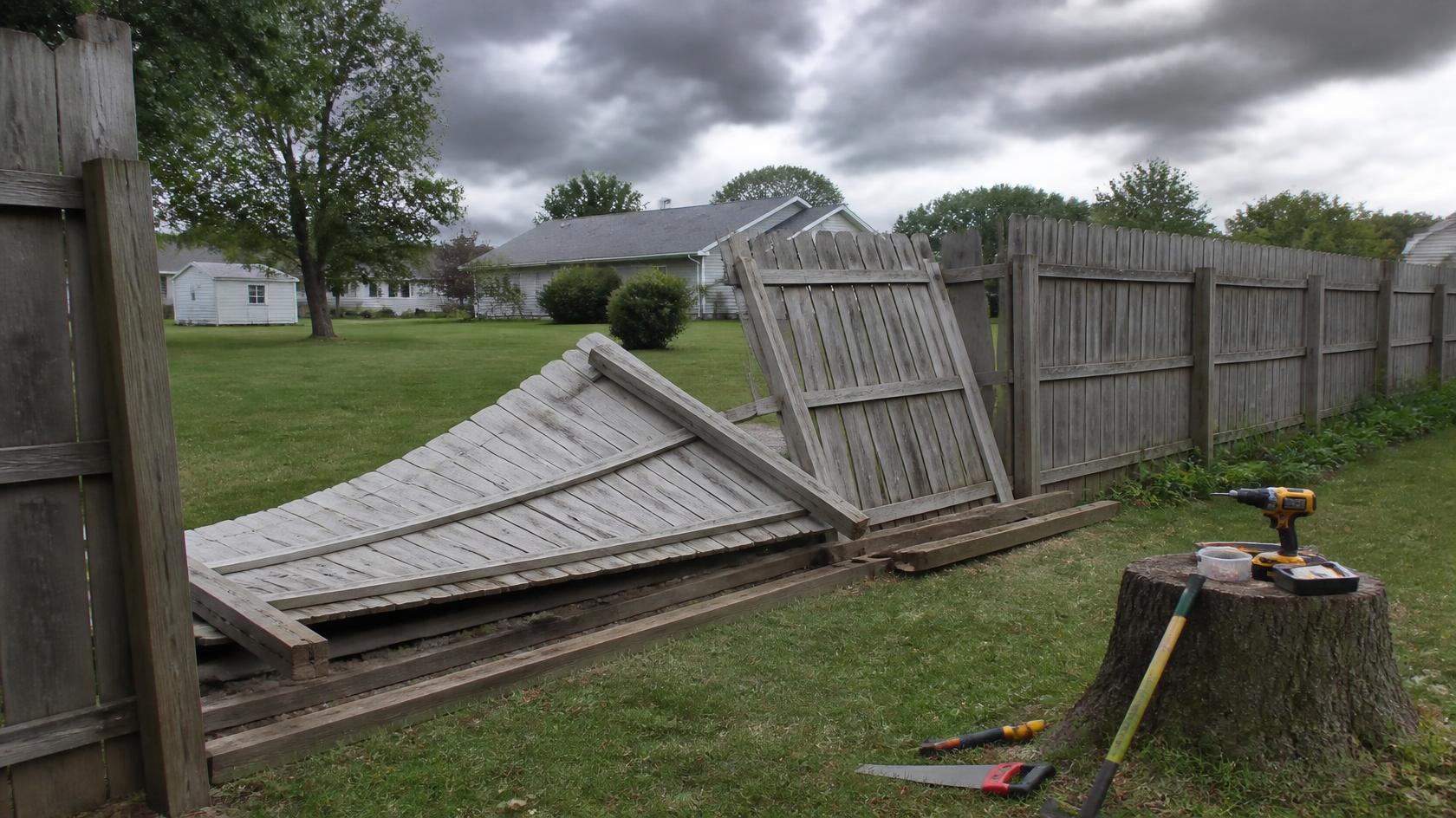
Storms and Wisconsin winters can leave fences with leaning posts, loose panels, bent rails, sagging chain link, and gates that no longer close correctly. Evansville property owners can often limit the damage by inspecting fences after strong winds, heavy snow, ice, and freeze-thaw cycles and repairing weak areas early.
How Wisconsin Weather Affects Fencing
A fence does not need to collapse to suffer weather damage.
Strong winds can loosen panels and hardware, while heavy snow may place pressure on rails, posts, and chain link fabric. During winter, freezing and thawing soil can gradually shift post footings and change gate alignment.
After difficult weather, check the entire fence line for changes such as:
Leaning or loose posts
Damaged boards or panels
Bent or separated rails
Sagging chain link mesh
Gates that drag or fail to latch
Rusted hardware
New gaps beneath the fence
Catching these problems early can prevent one damaged component from placing additional stress on neighboring sections.
Check Posts for Leaning or Movement
Fence posts provide the structural support for the entire system.
Storms and winter weather may cause posts to move because of saturated soil, erosion, freeze-thaw cycles, wind pressure, or damaged footings.
Look for:
Posts that are no longer straight
Movement at ground level
Soil separating from the post
Exposed or cracked concrete
Rot near wood post bases
Corrosion near metal post bases
A structurally sound post may sometimes be reset. Rotten, badly bent, deeply corroded, or severely unstable posts generally need replacement.
Inspect Drainage Around the Fence
Water can contribute to recurring post problems.
After snowmelt or heavy rain, look for standing water, muddy areas, exposed footings, or soil washing away from posts.
Downspouts or surrounding grading may also direct runoff toward the fence.
If water is causing the soil to shift, simply resetting the post may provide only a temporary repair. Addressing drainage can help protect the repaired fence over the longer term.
Look for Loose or Broken Wood Sections
Wood fences can take significant pressure during strong winds, particularly solid privacy styles.
Inspect boards, rails, and panel connections for:
Loose pickets
Cracked boards
Missing fasteners
Split rails
Panels pulling away from posts
Warping
Signs of rot
A few damaged boards may be replaced individually if the posts and rails remain strong.
If several rails or structural posts are deteriorating, a larger sectional repair or replacement may be more appropriate.
Check Chain Link Fabric and Rails
Chain link fencing allows more airflow than solid fencing, but storms and winter conditions can still cause damage.
Watch for:
Sagging fabric
Broken tie wires
Loose tension bands
Bent top rails
Torn mesh
Gaps beside posts
Heavy snow or fallen branches may bend rails and reduce fabric tension.
If the mesh remains in good condition, it can often be retensioned after damaged posts or rails are repaired.
Torn, badly distorted, or heavily corroded fabric may require sectional replacement.
Pay Attention to Gate Alignment
Gates often reveal structural movement before other parts of the fence.
A gate that worked normally before winter may suddenly drag, sag, or miss its latch.
Possible causes include:
A shifted hinge post
Loose hinges
Frost movement
A bent frame
Snow or debris beneath the gate
Movement in the latch post
Avoid repeatedly forcing a difficult gate open or closed. This can damage hinges, frames, latches, rollers, and supporting posts.
The structural cause should be corrected before simply repositioning the latch.
Clear Snow and Ice Around Gates
Snow and ice can prevent gates from operating normally even when the gate itself is undamaged.
Keep swing and sliding gate paths clear of:
Packed snow
Ice
Gravel
Mud
Frozen debris
Sliding gates also need clear tracks, guides, and roller paths.
If a gate remains difficult to operate after the area has been cleared, inspect its posts, frame, and hardware for damage or movement.
Inspect for Damage From Fallen Branches
Winter storms and strong winds can bring branches down onto fences.
Once debris can be safely removed, inspect the complete affected area.
A branch may cause:
Broken wood panels
Bent chain link rails
Stretched mesh
Damaged ornamental sections
Shifted posts
Bent gates
Some problems may not be visible until the branch weight has been removed.
Watch for Rust and Corrosion
Moisture and winter conditions can contribute to corrosion on metal fencing and gate hardware.
Pay particular attention to:
Post bases
Hinges
Latches
Bolts
Tie wires
Tension bands
Welded connections
Minor surface rust may be manageable when the underlying metal is still strong.
Deep corrosion, brittle chain link fabric, flaking metal, or weakened posts may require replacement of the affected components.
Check for Gaps Along the Ground
Heavy rain, snowmelt, and erosion can create openings beneath a fence.
These gaps can be especially important for homeowners with pets and businesses that depend on secure property boundaries.
Depending on the cause, repairs may include:
Restoring soil grade
Retensioning chain link fabric
Replacing damaged boards
Adding bottom support
Correcting erosion or drainage
If a gap repeatedly returns, the underlying ground or water problem should also be investigated.
Priorities for Residential Fence Repair
Evansville homeowners should prioritize weather damage that affects everyday safety and property use.
Important issues include:
Gates that will not latch
Pet escape openings
Loose privacy panels
Unstable posts
Sharp chain link wire
Damaged sections near walkways or play areas
When damage is isolated, targeted repairs may restore the fence without replacing the entire system.
Priorities for Commercial Properties
Commercial fences may protect parking areas, equipment yards, outdoor inventory, utilities, loading areas, and dumpster enclosures.
Property managers should inspect:
Vehicle entrances
Pedestrian gates
Terminal posts
Loading areas
Snowplow routes
High-traffic corners
Snowplows, delivery vehicles, and equipment can cause impact damage that may initially look minor.
If the same area is repeatedly damaged, wider gates, bollards, wheel stops, or improved traffic flow may help reduce future repairs.
When Fence Repair Makes Sense
Repair is often appropriate when:
One or two posts have shifted
A few panels or boards are damaged
One rail needs replacement
Chain link fabric remains strong
A gate needs adjustment
Storm damage is limited to one area
Replacement may be more practical when several posts are unstable, rot or corrosion is widespread, multiple sections have failed, or gates repeatedly need repair.
Schedule Fence Repair in Evansville
Storm and winter damage can become more expensive to address when weak posts, loose sections, or gate problems are allowed to spread. A thorough inspection can help determine which parts of the fence can be repaired and whether any sections have reached the point of replacement.
Rockford Fence provides residential and commercial fence repair, installation, replacement, chain link fencing, wood fencing, ornamental fencing, security fencing, gates, dumpster enclosures, and commercial fence solutions.
Contact Rockford Fence for a fence inspection in Evansville, WI, and practical recommendations based on the condition of your property.
