Fence Repair After Midwest Storms in Rockford, IL: What to Check First
Fence repair after Midwest storms in Rockford, IL often starts with checking posts, gates, panels, chain link fabric, rails, hardware, and storm-damaged sections. Strong wind, heavy rain, snow, ice, fallen branches, and freeze-thaw cycles can weaken a fence even if it still looks upright. A prompt inspection helps property owners decide whether repair is enough or if replacement may be the better long-term option.
Why Fence Inspections Matter After Midwest Storms
Midwest storms can be hard on fences. Strong winds, heavy rain, hail, snow, ice, fallen branches, and flying debris can damage posts, panels, rails, gates, and chain link fabric. Some damage is easy to see right away. Other damage may be less obvious but can get worse over time.
For homeowners in Rockford, storm-damaged fencing can affect pets, backyard privacy, curb appeal, child safety, and property boundaries. For business owners, property managers, facility managers, and commercial property owners, damaged fencing can affect security, access control, parking lots, equipment yards, dumpster enclosures, service areas, and daily operations.
A fence that is still standing after a storm may not be stable. Leaning posts, loose panels, sagging gates, rusted hardware, and loose chain link sections should be checked early to prevent larger repair needs later.
Start With Safety First
Before inspecting a storm-damaged fence, property owners should make sure the area is safe. Storm damage can leave sharp edges, unstable panels, hanging branches, broken boards, exposed nails, or bent metal.
Watch for:
Fallen branches or tree limbs
Loose fence sections
Sharp chain link edges
Broken boards or splinters
Bent rails
Gates swinging open
Unstable posts
Debris near walkways or driveways
If a fence section looks unstable, avoid pushing or leaning on it. Damaged sections can shift suddenly, especially after high winds or saturated soil.
Check Fence Posts First
Fence posts are the foundation of the entire fence. If posts move during a storm, the rest of the fence can lean, sag, or pull apart.
Signs of Post Damage
After a storm, check for:
Posts leaning to one side
Posts loose in the ground
Cracked or rotted wood posts
Rust at the base of metal posts
Posts pulling away from panels or rails
Fence sections that move when lightly touched
Soil washed away around posts
Rockford properties deal with freeze-thaw cycles, heavy rain, snow, and wet soil. When the ground shifts or softens, posts may loosen. If only one or two posts are affected, repair may be possible. If multiple posts are leaning or unstable, fence replacement may be more practical.
Inspect Gates and Access Points
Gates are one of the most important areas to check after a storm. They move often, carry weight, and depend on proper alignment.
Common Gate Problems After Storms
Storms can cause gates to:
Sag
Drag on the ground
Stop latching
Pull away from posts
Bend or twist
Swing open unexpectedly
Become hard to open or close
Rust or loosen around hinges and latches
For homeowners, a damaged gate can create problems for pets, children, and backyard access. For commercial properties, gate issues can affect employees, delivery drivers, service vehicles, parking lots, dumpster access, and restricted areas.
Gate repair may include replacing hinges, adjusting latches, resetting posts, repairing frames, or replacing damaged hardware.
Look for Broken Panels and Boards
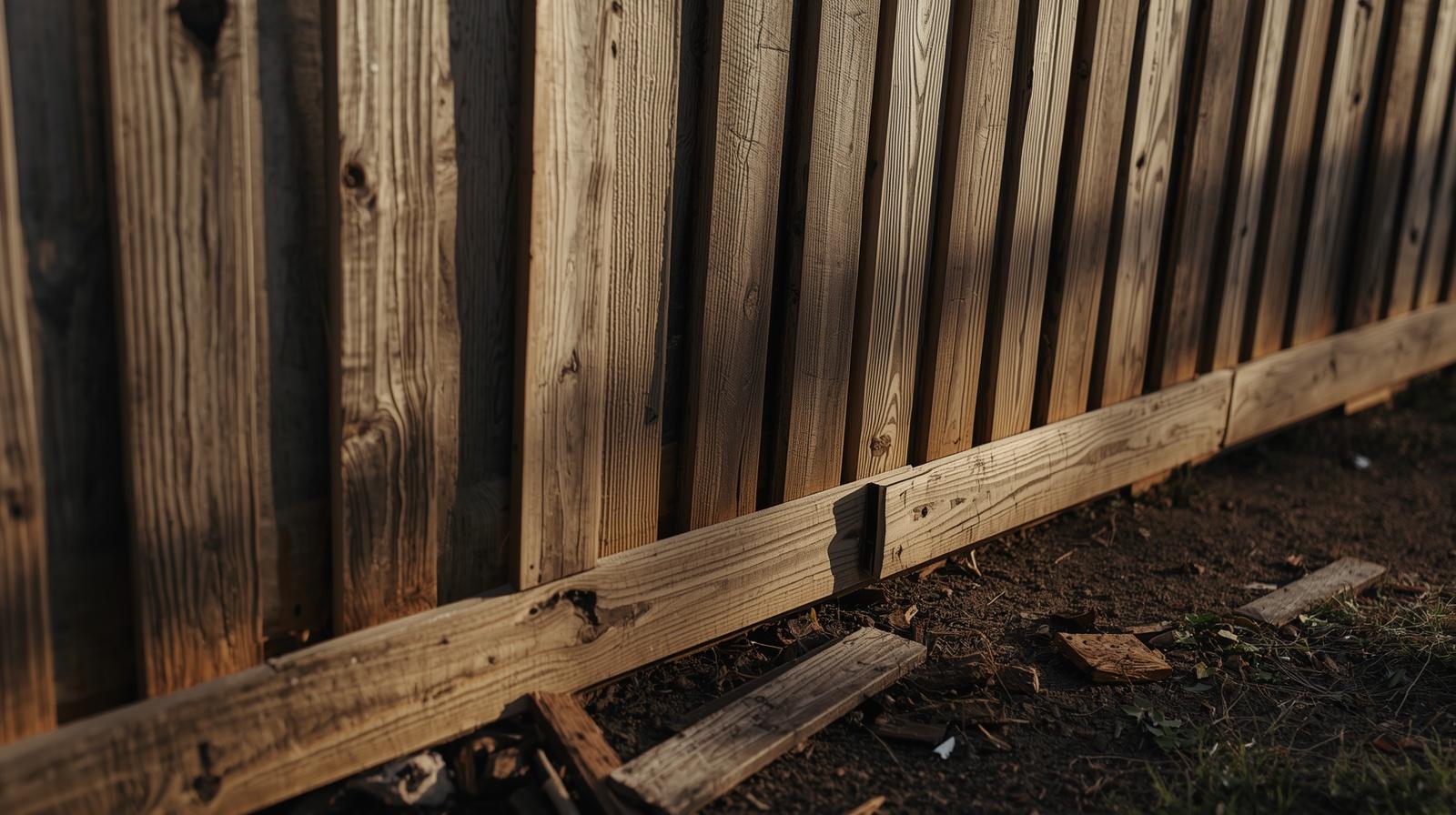
Wood fences and privacy fences can take heavy damage during Midwest storms. Wind pressure, falling branches, moisture, and flying debris can crack boards, loosen panels, or pull sections away from posts.
Check wood fencing for:
Broken boards
Loose pickets
Cracked rails
Panels pulling away from posts
Warped sections
Rot exposed by storm damage
Splintered wood
Sagging wood gates
A few broken boards or panels may be repairable. If rot, leaning posts, or panel damage is widespread, fence replacement may provide better long-term value.
Check Chain Link Fabric and Rails
Chain link fencing is durable, but storms can still damage it. Strong winds, falling branches, vehicle impact, snow pressure, and debris can loosen fabric or bend rails.
Common chain link storm damage includes:
Loose chain link fabric
Bent top rails
Broken ties
Damaged tension wire
Leaning posts
Rusted fittings
Gaps near the ground
Gate frame damage
Loose chain link fabric can create weak points. For homes, this may affect pet containment. For businesses, it can reduce security around storage yards, parking lots, equipment areas, and commercial back lots.
If the damage is limited to one section, repair may be enough. If fabric is rusted or loose throughout long sections, replacement may be better.
Check for Gaps Along the Fence Line
Storms can create gaps under or around a fence. These gaps may be caused by soil erosion, loose chain link fabric, broken boards, shifted posts, or debris impact.
Gaps can affect:
Pet containment
Backyard safety
Privacy
Security
Commercial access control
Property boundaries
Even a small gap can become a bigger issue if pets use the yard or if the fence protects a restricted commercial area. Gaps should be repaired before they spread.
Inspect Hardware, Hinges, and Latches
Small hardware pieces help keep the fence stable. After a storm, bolts, brackets, ties, hinges, latches, and fittings may loosen or break.
Check for:
Loose screws or bolts
Rusted hinges
Broken latches
Missing chain link ties
Damaged brackets
Loose rail ends
Rusted tension bands
Hardware that no longer holds alignment
Hardware repairs may seem minor, but they can prevent larger damage. A loose hinge or broken latch can quickly turn into a gate problem. Missing ties can allow chain link fabric to loosen further.
Look for Rust, Rot, and Moisture Damage
Storm damage can expose existing fence problems. Rain, snow, ice, and standing moisture can make rust and rot worse.
Rust Concerns
Rust may appear on:
Metal posts
Chain link fabric
Top rails
Gate frames
Hinges
Latches
Bolts and fittings
Minor rust may be repairable with hardware replacement or sectional repair. Widespread rust may mean the fence is losing strength.
Wood Rot Concerns
Wood fences should be checked for soft, dark, crumbling, or weakened sections. Rot is often found near the bottom of posts, boards, and rails where moisture collects.
If rot is limited, repair may work. If several sections are rotting, replacement may be the safer and more durable option.
Check Commercial Fence Areas Carefully
Commercial properties often rely on fencing for security, access control, and site organization. After a storm, business owners and property managers should inspect high-use and high-value areas first.
Commercial fence areas to check include:
Equipment yards
Storage lots
Parking areas
Dumpster enclosures
Service entrances
Utility spaces
Fleet vehicle areas
Restricted access zones
Commercial gates
A damaged commercial fence can affect daily operations. If a gate will not close or a chain link section is loose, the property may be left less secure.
Check Residential Fence Areas Carefully
Homeowners should check the areas that affect daily use of the yard.
Residential areas to inspect include:
Backyard gates
Pet areas
Privacy fence sections
Side yards
Garden areas
Fence lines near trees
Sections near driveways
Areas where children or pets play
For pet owners, loose chain link fabric, broken panels, open gates, or gaps near the ground should be repaired quickly.
When Fence Repair May Be Enough
Not every storm-damaged fence needs full replacement. Repair may be practical when damage is limited and the rest of the fence is still stable.
Fence repair may be enough when:
One or two posts are leaning
A gate needs adjustment
A few boards or panels are damaged
Chain link fabric is loose in one area
A top rail is bent
Hardware needs replacement
Rust or rot is minor
Storm damage is isolated
Targeted repairs can restore function when the overall fence is still in good condition.
When Fence Replacement May Be Better
Fence replacement may be the better option when damage is widespread or the fence was already weak before the storm.
Replacement may make more sense when:
Multiple posts are leaning
Several panels are broken or loose
Wood is rotting in several areas
Chain link fabric is rusted or loose throughout
Gates keep failing
Several sections are unstable
Repairs are becoming frequent
The fence no longer provides privacy or security
The layout no longer works for the property
If the fence has been repaired many times, a storm may be the sign that replacement is the better long-term solution.
How to Reduce Future Storm Damage
Property owners cannot prevent every storm, but regular maintenance can help a fence hold up better.
Helpful steps include:
Repair leaning posts early
Tighten loose hinges and latches
Replace damaged boards
Watch for rust or rot
Keep trees trimmed near the fence
Remove debris from the fence line
Keep snow piles away from gates
Check chain link tension regularly
Inspect the fence after winter
Fix small problems before the next storm
A fence that is already weak is more likely to suffer major damage during strong winds, snow, or heavy rain.
Contact Rockford Fence for Storm Damage Fence Repair in Rockford, IL
If your fence has storm damage, leaning posts, broken gates, loose chain link fabric, damaged panels, bent rails, rusted hardware, or unstable sections, Rockford Fence can help determine whether repair or replacement is the right solution.
Rockford Fence provides fence installation, fence repair, fence replacement, chain link fencing, wood fencing, ornamental fencing, security fencing, gates, dumpster enclosures, and commercial fence solutions for residential and commercial properties.
Contact Rockford Fence for fence repair after Midwest storms in Rockford, IL and nearby areas.
