Fence Repair for Storage Yards in Beloit, WI: Perimeter Warning Signs
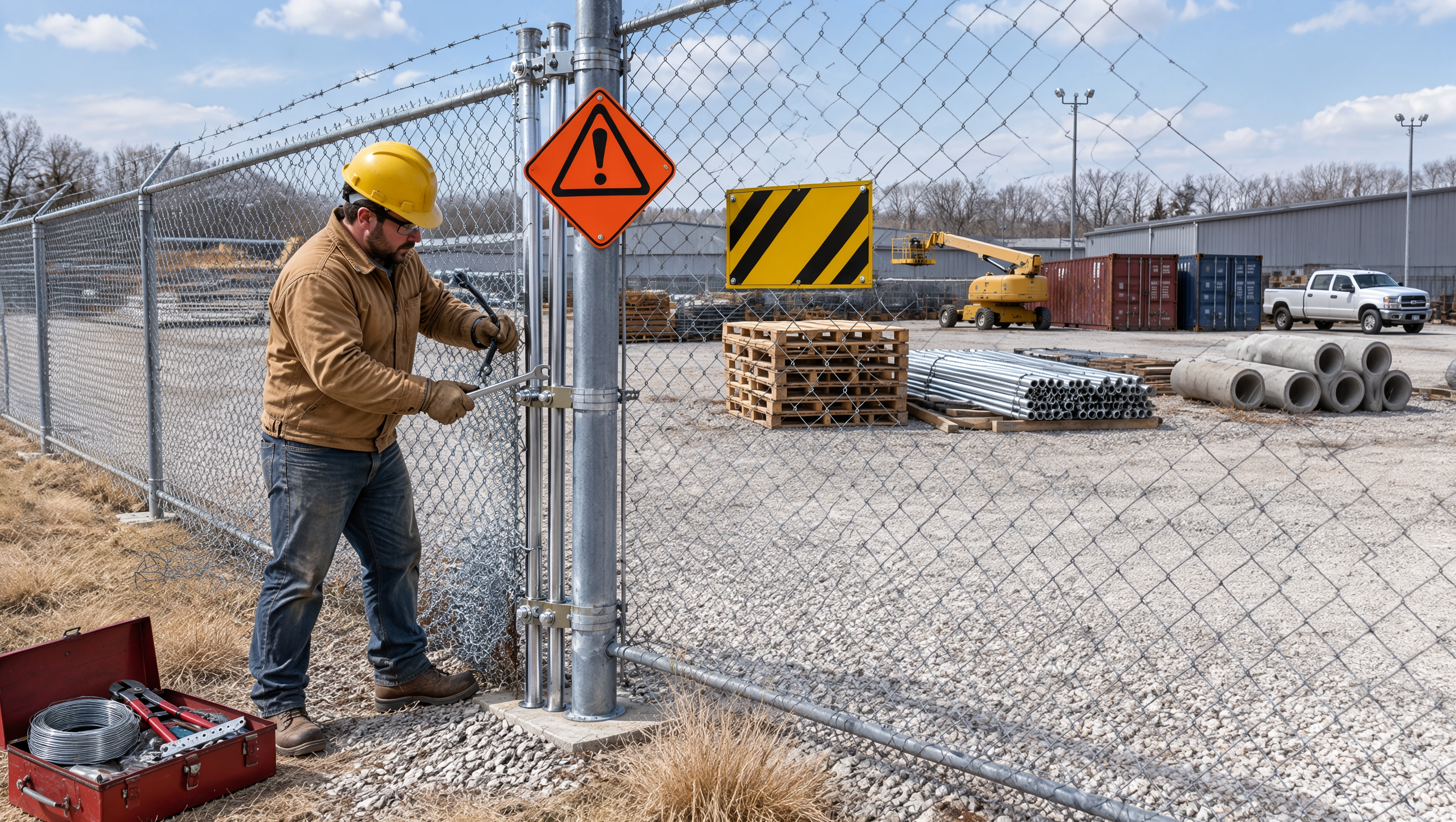
Storage yard fencing in Beloit should be inspected for leaning posts, loose chain link, damaged rails, gate problems, corrosion, ground-level gaps, and vehicle impact. These warning signs can weaken perimeter security and make daily access less reliable. Catching them early can help businesses repair smaller sections before larger replacement work becomes necessary.
Start With the Areas Protecting Stored Equipment and Inventory
Storage yard fencing has a practical job: keep the perimeter defined, secure, and usable for daily operations.
That makes certain areas more important than others.
Begin inspections around:
Vehicle entrances
Equipment storage
Outdoor inventory
Loading areas
Rear property lines
Dumpster enclosures
Restricted sections
A small weakness near an active gate or high-value storage area may deserve more attention than cosmetic damage along a lower-risk section.
Facility managers should rank problems by how they affect security, access, and structural stability.
Leaning Posts Are One of the Clearest Warning Signs
Fence posts support the entire chain link system.
A post that has started leaning can affect nearby:
Fabric tension
Top rails
Fittings
Gates
Ground clearance
Look closely at the base of each affected post.
Warning signs may include:
Exposed concrete
Soil separation
Erosion
Vehicle scrape marks
Corrosion near ground level
If several posts lean in the same section, the cause may involve drainage or soil movement rather than isolated damage.
The supporting posts should be repaired before loose chain link is retensioned.
Loose Chain Link Can Point to a Structural Problem
Sagging or loose fabric is easy to notice, but the mesh may not be the root cause.
Possible causes include:
Shifting terminal posts
Bent top rails
Broken tie wires
Loose tension bands
Impact damage
Before tightening the chain link, inspect the structure holding it.
If a terminal or corner post is moving, tightening the fabric first may only create another problem.
Strong fabric can often be retensioned after the structural issue is repaired.
Brittle, badly stretched, or heavily corroded fabric may need sectional replacement instead.
Bent Top Rails Should Not Be Ignored
Top rails help maintain alignment along chain link fence runs.
They can be bent by:
Forklifts
Trucks
Trailers
Falling branches
Storm debris
Snow-removal equipment
A bent rail may also pull nearby fabric out of position.
Inspect rail sleeves and fittings around the damaged area.
If the posts and fabric remain structurally sound, a localized rail replacement may restore the section without rebuilding a large part of the perimeter.
Leaving the rail damaged can allow the surrounding chain link to loosen over time.
Terminal and Corner Posts Need Extra Attention
Terminal and corner posts carry more fence tension than standard line posts.
When one begins moving, a longer fence run may start sagging.
Look for:
Posts leaning inward
Loose tension bands
Fabric pulling toward one end
Rail separation
Footing movement
A shifting terminal post can weaken a large section of the storage yard perimeter even when the fabric itself is still usable.
These posts should be stabilized before chain link tension is restored.
Gate Problems Can Quickly Affect Yard Access
Storage yards often depend on vehicle gates throughout the day.
Test each gate and watch for:
Dragging
Sagging
Latch misalignment
Loose hinges
Bent frames
Difficulty locking
Uneven clearance
A gate that needs to be lifted or pushed to close is showing an alignment problem.
The issue may involve the latch, but it can also come from unstable gate posts, worn hinges, or a bent frame.
Repeated latch adjustments should not replace a full inspection of the entrance.
Sliding Gates Need a Clear Travel Path
Many storage yards use sliding gates because they can preserve vehicle maneuvering space.
Their operation depends on a clear path.
Inspect:
Rollers
Guides
Stops
Tracks where applicable
Full travel area
Remove gravel, mud, leaves, branches, and stored materials that may interfere with movement.
A gate that grinds, shakes, or hesitates may have roller or alignment problems.
If the path is clear and the movement remains rough, the mechanical components should be inspected before the gate is forced through the problem.
Ground-Level Gaps Can Weaken Perimeter Control
Inspect the bottom edge of the fence for openings.
Gaps can form because of:
Erosion
Soil settlement
Loose fabric
Post movement
Animal activity
Large openings can weaken perimeter control around equipment and outdoor inventory.
The proper repair depends on the cause.
Some sections may need grade correction, while others require post stabilization or chain link retensioning.
If the same gap returns repeatedly, the ground condition deserves further investigation.
Drainage Problems Can Move Fence Posts
Storage yards often include large paved or compacted areas that direct water toward perimeter edges.
After heavy rain, check for:
Standing water
Mud
Erosion
Low spots
Runoff near posts
Exposed footings
Beloit properties can experience freeze-thaw conditions, so wet or unstable soil may become more problematic as temperatures drop.
If several posts move in one area, repeated water exposure may be contributing.
Major drainage correction may be separate from fence repair, but the condition should still be identified before posts are reset or replaced.
Corrosion Should Be Checked Before It Becomes Structural
Metal fencing around storage yards may be exposed to moisture, road salt, and equipment contact.
Inspect:
Post bases
Rails
Gate frames
Tie wires
Bolts
Hinges
Welded connections
Surface rust does not automatically mean a component has failed.
More serious warning signs include:
Flaking metal
Holes
Thinning posts
Brittle wire
Weak welds
If corrosion affects several structural components in the same section, sectional replacement may make more sense than repairing each part individually.
Vehicle Impact Is Common Around Storage Yards
Storage yards often have trucks, trailers, forklifts, and equipment moving close to the perimeter.
Focus inspections around:
Main gates
Loading zones
Trailer corners
Dumpster areas
Equipment routes
Look for:
Fresh scrapes
Bent posts
Dented rails
Disturbed footings
Damaged gate frames
One impact can affect several connected components.
If the same location is repeatedly damaged, consider whether the site needs wider access, bollards, wheel stops, or additional turning clearance.
Repairing the same post repeatedly may not solve the underlying traffic problem.
Repeated Repairs Can Signal a Bigger Issue
An isolated repair can be practical when the rest of the fence remains sound.
However, repeated problems in the same area may indicate that the section needs more extensive work.
Watch for patterns such as:
The same gate losing alignment
Several posts shifting together
Fabric repeatedly becoming loose
Corrosion spreading across connected components
Frequent vehicle damage
Sectional replacement may provide a better long-term solution when several parts are failing at once.
Full replacement may be considered if similar deterioration appears throughout the entire storage yard perimeter.
Prioritize Repairs That Affect Security and Access
Not every warning sign needs immediate action.
Higher-priority repairs generally include:
Gates that do not close or lock
Unstable gate or terminal posts
Torn chain link
Large ground-level gaps
Bent vehicle entrances
Structural corrosion
Minor cosmetic wear can often be monitored.
For storage yards, the main goal is maintaining dependable perimeter control while keeping gates and vehicle routes functional.
Protect Your Beloit Storage Yard Perimeter
Fence problems around storage yards should be addressed before they interfere with security or daily operations.
Posts, chain link, rails, gates, drainage, corrosion, and vehicle-impact areas should all be inspected as part of the same perimeter system.
Rockford Fence provides commercial fence repair, chain link repair, gate repair, installation, replacement, security fencing, dumpster enclosures, and other commercial fence solutions.
Contact Rockford Fence for fence repair at storage yards in Beloit, WI. The team can inspect perimeter warning signs and recommend practical repairs or sectional replacement based on the condition of the fence.
