
Fence Repair in Poplar Grove, IL: What to Check After Strong Winds
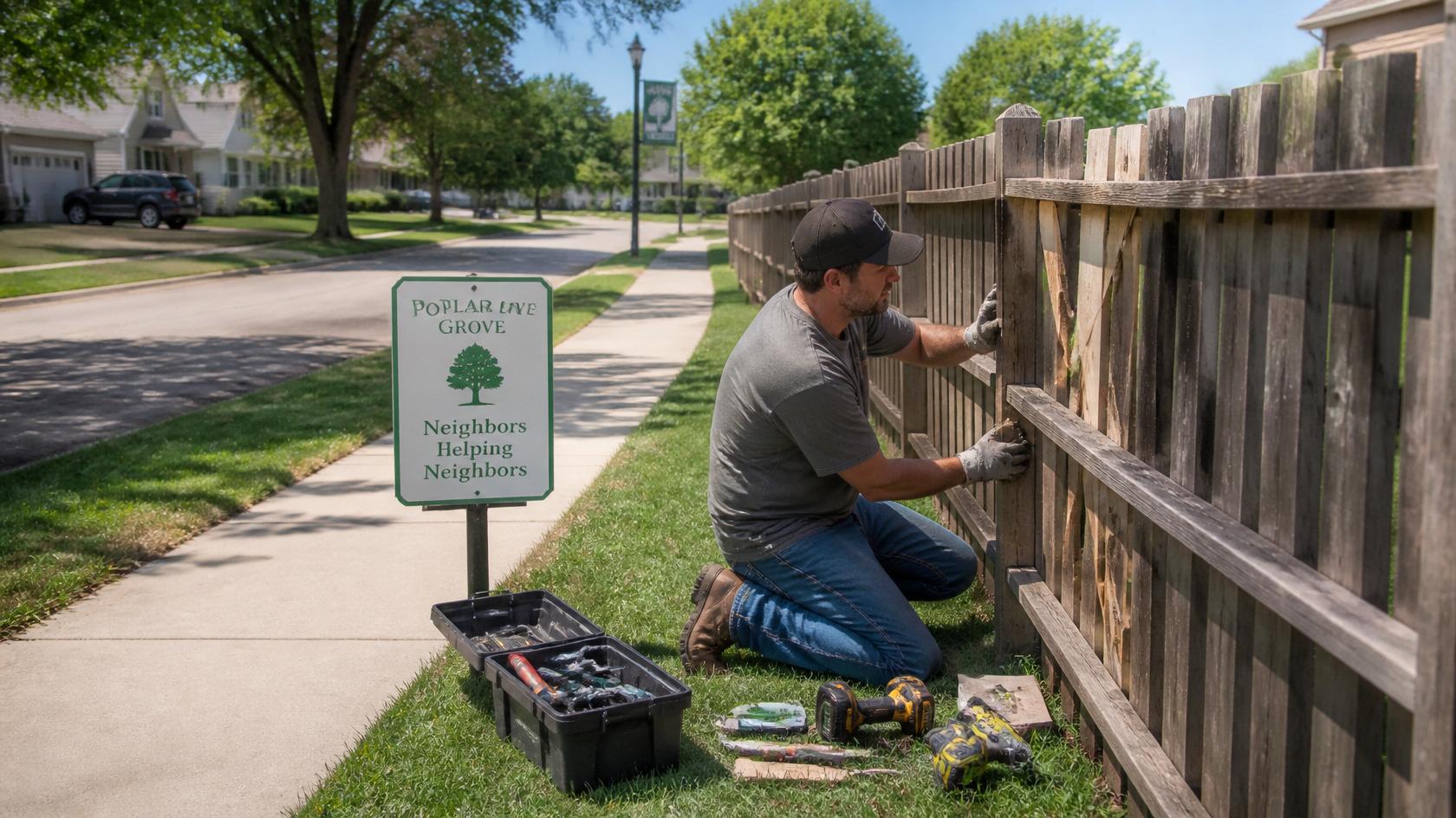
Strong winds can loosen fence posts, bend rails, damage panels, stretch chain link fabric, and knock gates out of alignment. After severe weather in Poplar Grove, inspect the entire fence line and address unstable or open sections before they create larger safety, security, or access problems.
Why Strong Winds Can Damage a Fence
Fences in northern Illinois must handle changing weather throughout the year. Strong wind can place sudden pressure on posts, panels, gates, rails, and hardware, especially when the ground is wet or partially frozen.
Solid privacy fences often receive more wind pressure because air cannot easily pass through the panels. Chain link and ornamental fencing allow more airflow, but they can still be damaged by falling branches, flying debris, loose privacy screening, or unstable posts.
A fence does not need to collapse completely to require repair. Small changes in alignment may place extra stress on nearby sections and lead to additional damage later.
Homeowners, business owners, and property managers in Poplar Grove should inspect their fences after strong winds, storms, and nearby tree damage.
Begin With a Full Fence-Line Inspection
Walk the entire fence perimeter instead of checking only the section visible from the house, parking area, or main entrance.
Damage may be hidden behind shrubs, buildings, storage areas, or uneven ground.
Look for:
Leaning or loose posts
Bent rails
Cracked or missing boards
Sagging chain link fabric
Loose fence panels
Broken tie wires or fasteners
Damaged gates
Open gaps
Fallen branches
Exposed nails or sharp metal
Damage near corners and terminal posts
Check both sides of the fence when possible. A post or panel may appear straight from one direction but show movement or separation from the other side.
Check Fence Posts for Leaning or Movement
Fence posts carry the pressure placed on the entire system. When strong wind pushes against fence panels or fabric, the force is transferred to the posts and their footings.
Posts may become unstable because of:
Saturated soil
Freeze-thaw movement
Weak or deteriorated footings
Wind pressure
Fallen branches
Vehicle or equipment impacts
Snow or debris piled against the fence
Gently check questionable posts for movement without placing yourself near a section that may fall.
A slightly shifted post may be reset if it remains structurally sound. Wood posts with rot, metal posts with deep rust, and severely bent or cracked posts usually require replacement.
Ignoring one leaning post can cause nearby rails, boards, or chain link fabric to loosen.
Inspect Wood Fence Panels and Boards
Wood privacy fencing can receive significant pressure during strong winds because the solid surface catches the wind.
Inspect wood fences for:
Cracked boards
Missing pickets
Loose panels
Separated rails
Pulled fasteners
Split posts
Warped sections
Rot near the ground
Loose boards may be reattached when the surrounding wood remains strong. Individual damaged pickets and rails can also be replaced without rebuilding the entire fence.
However, fastening a board back onto rotted wood will not provide a lasting repair. The post, rail, or panel must have enough strength to hold new hardware securely.
Widespread rot, repeated panel failure, or several unstable posts may make replacement more practical than continued repairs.
Look for Loose or Damaged Chain Link Fabric
Chain link fences allow wind to pass through, but they can still develop problems after a storm.
Wind may pull on privacy screening, loose mesh, attached signs, or vegetation growing through the fence. Falling limbs and debris can also bend the fabric or top rail.
Check for:
Sagging mesh
Torn or stretched fabric
Broken tie wires
Loose tension bands
Bent top rails
Gaps near posts
Sharp wire ends
Openings beneath the fence
Loose chain link fabric can often be restretched and secured when the material remains usable.
Torn, badly bent, or heavily rusted sections may need sectional replacement. If several posts, rails, and fabric sections are failing, full replacement may provide better long-term value.
Inspect Ornamental Fence Sections
Ornamental fencing can bend when struck by branches, debris, vehicles, or heavy equipment.
Check panels and pickets for:
Bending
Cracked welds
Loose brackets
Chipped protective coatings
Rust
Misaligned sections
Damaged post connections
A bent ornamental panel may affect both appearance and security. Open gaps or sharp edges should be repaired promptly, especially near sidewalks, entrances, and public areas.
Damaged coatings should also be addressed before moisture reaches the exposed metal and causes corrosion.
Check Gates Carefully
Gates are often the first part of a fence to show alignment problems after strong winds.
A large gate can act like a sail, placing added pressure on hinges, posts, latches, rollers, and frames.
Look for Dragging or Sagging
A gate should open smoothly without scraping the ground or pavement.
Dragging may be caused by:
Loose hinges
A bent frame
A shifted gate post
Pavement movement
Soil buildup
Storm debris
Excess pressure from wind
Avoid repeatedly forcing a dragging gate. This can damage the hinges, latch, frame, and supporting post.
Test the Latch and Lock
Close the gate and confirm that the latch lines up correctly.
A latch problem may indicate that the gate frame or post has shifted. Simply replacing the latch may not solve the underlying alignment issue.
Commercial gates should also be checked for damaged drop rods, lock brackets, rollers, tracks, sensors, and access-control equipment.
Inspect Gate Posts
Gate posts support more weight and movement than standard fence posts. Even a small shift can prevent the gate from closing securely.
Bent, loose, or leaning gate posts should be inspected quickly, especially when the gate controls access to a backyard, pool, warehouse, equipment yard, parking area, or commercial property.
Remove Fallen Branches Carefully
Branches resting on a fence may be placing more pressure on it than expected.
Do not pull or cut large branches without considering how the weight will shift. Removing the wrong section first could cause the branch or fence to move suddenly.
Large limbs, damaged trees, and branches near electrical lines should be handled by qualified professionals.
After debris is removed, inspect the fence again. Damage may have been hidden beneath the branch.
Check for Ground and Drainage Problems
Strong winds often occur with heavy rain. Wet soil can reduce the support around fence posts and make them easier to move.
Inspect for:
Standing water
Washed-out soil
Exposed concrete footings
Mud around gate posts
Erosion beneath the fence
Downspouts draining toward posts
A post repair may not last if the drainage problem remains.
Correcting grading, runoff, or standing water can help protect the repaired fence from future movement.
Freeze-thaw cycles can make the problem worse by expanding moisture around the footing during winter.
Residential Fence Repair After Wind Damage
Residential fences in Poplar Grove may protect backyards, pets, pools, gardens, play areas, and property boundaries.
Homeowners should prioritize repairs when damage creates:
Gaps where pets can escape
Access to a pool or unsafe area
Sharp or exposed fasteners
Unstable panels
Reduced privacy
A gate that will not latch
A section leaning toward a walkway
Temporary support may help prevent further movement, but it should not replace a proper repair.
Children and pets should be kept away from unstable fence sections until the damage is corrected.
Commercial Fence Repair After Strong Winds
Commercial fences may protect warehouses, parking areas, loading zones, equipment yards, outdoor inventory, utility areas, and dumpster enclosures.
Facility managers should inspect:
Vehicle gates
Pedestrian gates
Locking hardware
Perimeter corners
Areas near open fields
Fence sections with privacy screening
Loading and delivery areas
Dumpster enclosures
Sections near trees
Security concerns should be addressed first. Open gaps, damaged locks, unstable posts, and gates that cannot close may leave the property exposed.
Repeated wind damage may indicate that the fence design, attached screening, post strength, or gate system needs improvement.
When Fence Repair Is the Right Choice
Repair is usually appropriate when the damage is limited and most of the fence remains stable.
Repair may be practical when:
One or two posts have shifted
Several wood boards are damaged
One rail or panel is bent
A chain link section is loose
Gate hardware needs adjustment
A few fittings have failed
The rest of the fence is structurally sound
Targeted repairs can restore security, appearance, and normal access without replacing the entire fence.
When Fence Replacement Makes More Sense
Replacement may be the better choice when wind damage reveals widespread deterioration.
Consider replacement when:
Multiple posts are leaning
Wood rot affects several sections
Chain link fabric is rusted or brittle
Panels repeatedly come loose
Gates continue to fail
Storm damage covers a large area
The fence no longer meets security needs
Repair costs are becoming frequent
Replacement also provides an opportunity to improve fence material, post strength, gate access, privacy, layout, and long-term durability.
Schedule Fence Repair in Poplar Grove
Strong winds can weaken a fence even when the damage is not immediately obvious. Leaning posts, loose panels, bent rails, sagging fabric, and damaged gates should be repaired before the next storm adds more pressure.
Rockford Fence provides residential and commercial fence repair, installation, replacement, chain link fencing, wood fencing, ornamental fencing, security fencing, gates, dumpster enclosures, and commercial fence solutions.
Contact Rockford Fence to schedule a fence inspection in Poplar Grove, IL. The team can identify wind damage and recommend a practical repair or replacement based on the fence’s condition.
