
Fence Replacement Cost Factors in Marengo, IL
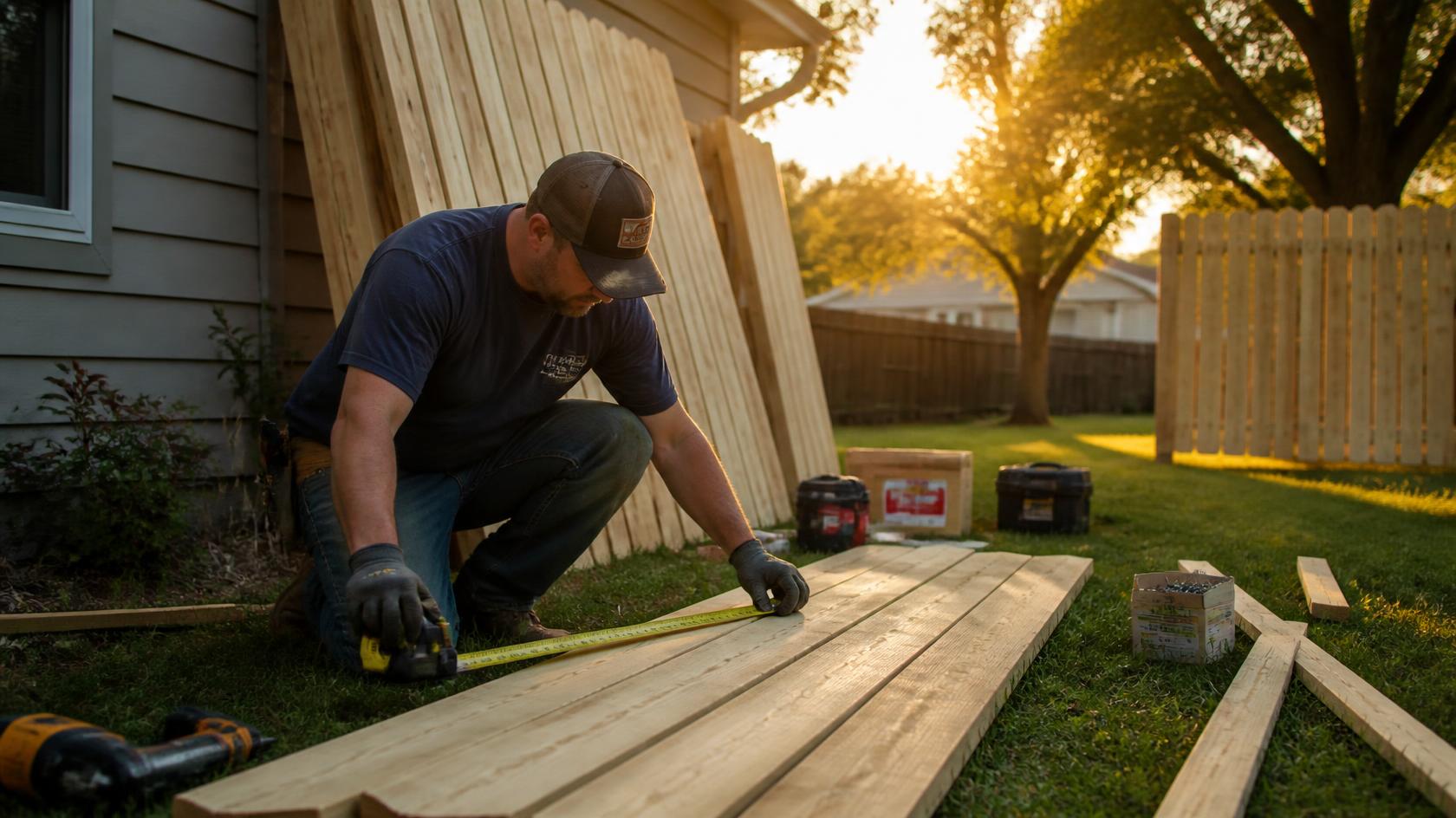
Fence replacement costs in Marengo can vary based on material, total length, height, gates, removal work, terrain, drainage, access, and the condition of existing posts or footings. Looking at the whole property instead of only the price per foot gives homeowners and commercial property owners a clearer picture of what may affect the project.
Why Fence Replacement Pricing Varies
Fence replacement is not a one-size-fits-all project.
Two properties with a similar amount of fencing may have very different installation needs because of gate size, terrain, old concrete footings, landscaping, access, or drainage.
A straightforward replacement on flat, open ground is very different from a project that requires:
Removing large concrete footings
Working around trees or structures
Installing multiple gates
Adjusting to slopes
Correcting drainage problems
Managing limited equipment access
Understanding these factors can help property owners plan more realistically.
Fence Material
Material choice is one of the first factors that affects project scope.
Wood Fencing
Wood is often selected for privacy and a traditional appearance.
Cost can be influenced by:
Fence height
Board or panel style
Number of posts
Gate design
Layout complexity
Long-term maintenance should also be considered because wood may require attention for moisture, warping, loose fasteners, or rot.
Chain Link Fencing
Chain link can be practical for larger residential lots, pet areas, commercial properties, equipment yards, and outdoor storage.
Project factors may include:
Fence height
Fabric specifications
Number of terminal posts
Top rails
Gate size
Security requirements
Because chain link can often be repaired in sections, it may also be worth determining whether the entire fence truly needs replacement.
Ornamental Fencing
Ornamental fencing is often chosen where appearance and visibility are both important.
The number of panels, posts, corners, gates, and layout changes can all affect the installation.
Total Fence Length
The total length of the new fence affects the amount of material and labor required.
Longer fence lines generally need more:
Posts
Rails
Panels or fabric
Hardware
Installation time
However, length should not be considered by itself.
A shorter fence with several gates, difficult terrain, or extensive removal work may involve more labor than a longer, simple fence run.
Fence Height
Height can also influence material and structural requirements.
Taller fences generally require:
More material
Longer posts
Additional support
Heavier panels or fabric
Solid privacy fencing also catches more wind than open fence styles.
Property owners should review applicable local requirements before significantly changing fence height or placement.
Number and Type of Gates
Gates are more complex than standard fence sections.
Factors may include:
Number of gates
Gate width
Swing or sliding design
Hardware
Locking needs
Supporting posts
A small walk gate requires different planning than a wide vehicle entrance.
For commercial properties, gate size may need to accommodate delivery trucks, trailers, maintenance equipment, or daily business traffic.
Planning access correctly from the start may also help reduce future impact damage.
Old Fence Removal
Replacing a fence usually involves removing the existing system first.
Removal may include:
Wood panels
Chain link fabric
Rails
Gates
Posts
Concrete footings
Old hardware
Posts set in large concrete bases can require significantly more work than lightweight or deteriorated sections.
Vegetation, roots, and tight spaces can also make removal more difficult.
Condition of Existing Posts and Footings
Old posts and foundations can influence how much preparation is needed.
Existing posts may be:
Leaning
Rotten
Corroded
Bent
Set in oversized concrete
Positioned incorrectly for the new layout
Some components may still be usable, but others may need complete removal before the replacement fence can be installed properly.
The condition of the old footing system should be evaluated rather than assumed.
Terrain and Ground Conditions
The shape of the property can affect installation complexity.
Common site conditions include:
Slopes
Uneven ground
Low areas
Rocky soil
Tree roots
Landscaping obstacles
A flat, open fence line is generally easier to work with than a perimeter with multiple elevation changes.
Sloped properties may require additional planning to keep the fence aligned and reduce unwanted gaps.
Drainage Around the Fence Line
Drainage can affect both the replacement process and the long-term stability of the new fence.
Watch for:
Standing water
Mud
Erosion
Low spots
Exposed old footings
Runoff toward the fence
Northern Illinois freeze-thaw cycles can worsen post movement in saturated ground.
If drainage contributed to the old fence leaning or failing, correcting that problem before installation may help protect the new fence.
Property Access
Installation crews need room to move materials, equipment, and debris.
Access may be more difficult when the fence runs through:
Narrow side yards
Dense landscaping
Tight areas between buildings
Steep sections
Enclosed commercial spaces
Limited access can increase the amount of manual handling required.
Commercial properties may also need work coordinated around employees, deliveries, customers, and parking.
Corners and Layout Changes
A straight fence run is usually simpler than a perimeter with many turns.
Additional corners may require:
More posts
More hardware
Additional measurements
More cutting and fitting
Changing the fence layout can also affect project scope.
Replacement can be a good time to move gates, improve yard access, or reduce sections that were repeatedly damaged.
Residential Fence Replacement Factors
For Marengo homeowners, replacement planning often focuses on:
Privacy
Pets
Backyard access
Landscaping
Gate placement
Maintenance
The new fence should support how the yard is used today rather than simply duplicate an older layout that no longer works well.
Commercial Fence Replacement Factors
Commercial projects may include additional needs such as:
Vehicle gates
Security fencing
Parking areas
Equipment yards
Outdoor storage
Dumpster enclosures
Loading zones
If the old fence was repeatedly struck by vehicles or equipment, wider gates, bollards, wheel stops, or revised traffic flow may help reduce future repairs.
Repair, Sectional Replacement, or Full Replacement?
Full replacement is not always necessary.
Repair may make sense when:
Damage is isolated
Most posts remain stable
Chain link fabric is still strong
Only one gate or rail needs work
Sectional replacement may be appropriate when one portion is badly damaged but the rest of the perimeter remains dependable.
Full replacement may be more practical when several posts, panels, rails, or gates are failing throughout the property.
Plan a More Accurate Fence Replacement Budget
Before setting a budget, consider the complete scope rather than focusing only on material cost.
Important questions include:
What needs to be removed?
How many gates are required?
Are old footings difficult to remove?
Is the terrain uneven?
Are there drainage concerns?
Can crews easily access the fence line?
Does the layout need to change?
An on-site inspection can help identify which factors apply to the property.
Plan Fence Replacement in Marengo
Fence replacement pricing can be influenced by material, length, height, gates, removal, terrain, drainage, access, and existing fence conditions. Looking at these factors together gives property owners a clearer understanding of the project.
Rockford Fence provides residential and commercial fence installation, repair, replacement, chain link fencing, wood fencing, ornamental fencing, security fencing, gates, dumpster enclosures, and commercial fence solutions.
Contact Rockford Fence to discuss fence replacement in Marengo, IL. The team can evaluate the existing fence and help identify the factors that may affect the scope of your project.
