Fence Replacement in Rochelle, IL: Questions to Ask Before Starting
Before replacing a fence in Rochelle, consider its condition, material, layout, gate access, maintenance needs, and long-term purpose. Asking the right questions early can help homeowners and commercial property owners avoid unexpected costs and choose a fence that performs well in northern Illinois weather.
Does the Entire Fence Need Replacement?
The first question is whether the whole fence needs to be removed or whether targeted repairs could extend its life.
Fence repair may be enough when:
Only one or two posts are leaning
Several boards or pickets are damaged
One chain link section is loose
A gate needs adjustment
A single rail or panel is broken
Rust is limited to a few components
Replacement may be more practical when damage appears throughout the fence line.
Common replacement signs include:
Multiple loose or leaning posts
Widespread wood rot
Heavily rusted chain link fabric
Repeated gate failures
Cracked or missing panels
Extensive storm damage
Frequent repair costs
A fence that no longer meets security needs
A professional inspection can help determine whether repairing isolated areas will provide lasting value or only delay an unavoidable replacement.
What Is the Main Purpose of the New Fence?
The fence material, height, layout, and gate design should match the property’s needs.
Homeowners may need fencing for:
Privacy
Pet containment
Pool safety
Backyard security
Property boundaries
Curb appeal
Noise or visual separation
Commercial properties may need fencing for:
Perimeter security
Equipment protection
Controlled vehicle access
Outdoor inventory
Loading zones
Dumpster enclosures
Utility areas
Employee parking
A fence designed mainly for privacy will look and perform differently from one built for commercial access control. Defining the main goal before selecting materials makes the planning process easier.
Which Fence Material Fits the Property?
Each fence material offers different benefits, maintenance requirements, and appearance.
Chain Link Fencing
Chain link fencing is practical for yards, pet areas, warehouses, storage spaces, commercial perimeters, and utility enclosures.
It provides visibility and can secure large areas efficiently. Options may include different heights, heavier fabric, privacy screening, and reinforced gates.
Chain link is generally low-maintenance, but posts, fittings, fabric, and gates should still be inspected for rust, looseness, and impact damage.
Wood Fencing
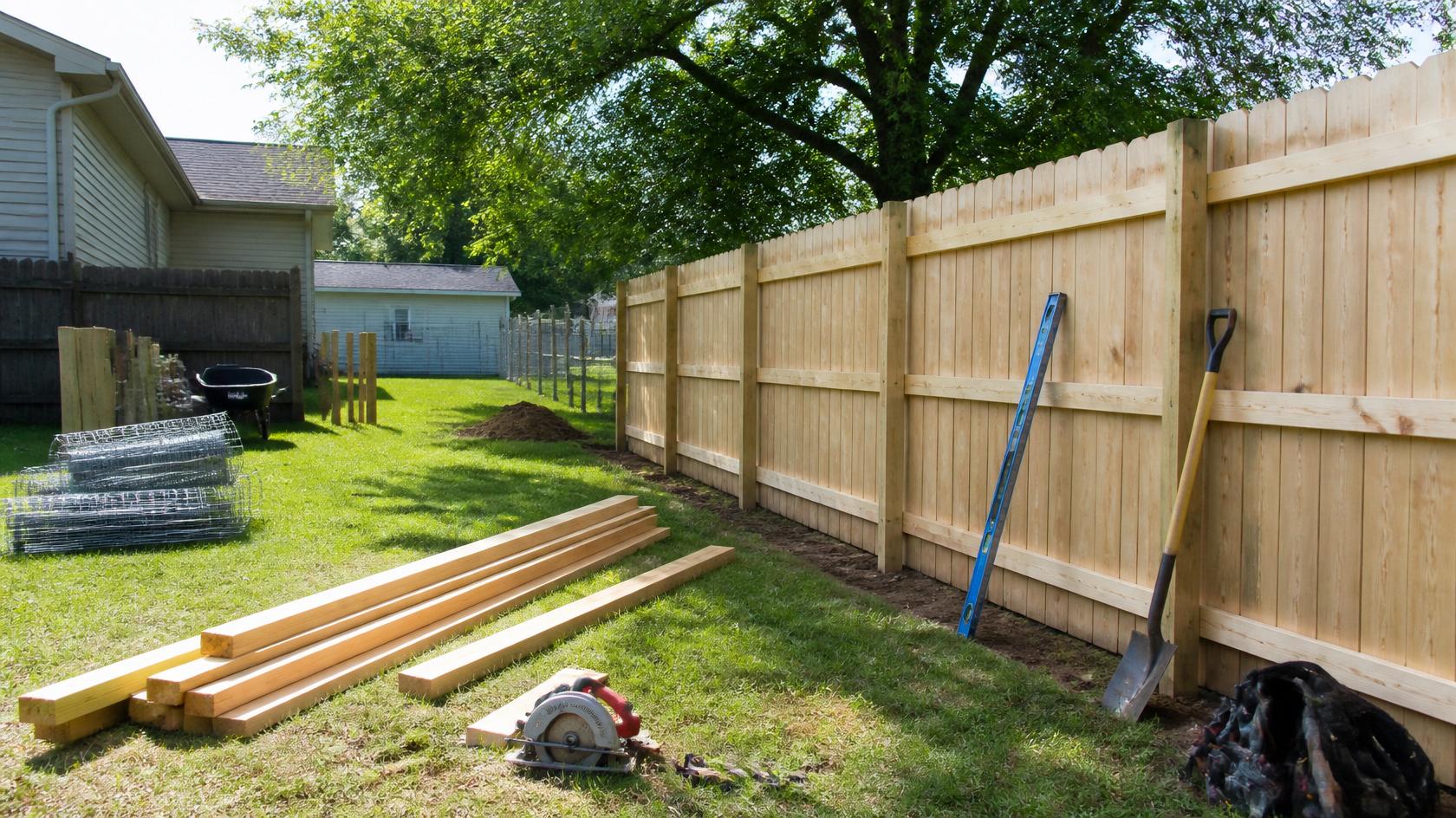
Wood fencing offers privacy and a traditional appearance. It can be customized with different heights, board styles, and finishes.
However, wood requires more maintenance than many metal options. Snow, rain, ground moisture, and freeze-thaw cycles can contribute to warping, splitting, and rot.
Property owners should be prepared for periodic cleaning, staining, sealing, and board replacement.
Ornamental Fencing
Ornamental fencing provides an open, finished appearance for homes, offices, apartment properties, and commercial entrances.
It can define boundaries without blocking visibility. Maintenance usually includes checking coatings, fasteners, panels, and gate hardware for damage or corrosion.
The best material depends on the property’s purpose, desired appearance, budget, and willingness to perform ongoing maintenance.
How Will Midwest Weather Affect the Fence?
Rochelle experiences wind, snow, ice, heavy rain, and repeated freeze-thaw cycles. These conditions should influence both the fence material and installation method.
Wind Exposure
Open lots and commercial properties may receive stronger wind pressure than sheltered residential yards.
Solid privacy fencing catches more wind than chain link or ornamental fencing. Proper post spacing, footing depth, and installation are important for maintaining stability.
Snow and Ice
Snow piled against a fence can bend panels, stretch chain link fabric, and push posts out of alignment.
Commercial properties should consider where snowplows will operate and where snow will be stored. Gates and fence corners near parking lots may need extra protection.
Rain and Drainage
Standing water can soften soil around posts and accelerate wood deterioration or metal corrosion.
Before replacing the fence, check whether grading, downspouts, or drainage routes are directing water toward the fence line.
Installing a new fence without correcting recurring drainage problems may lead to future post movement.
Freeze-Thaw Cycles
Moisture in the soil expands when it freezes and contracts when it thaws. Repeated movement can shift posts and affect gate alignment.
Fence posts and gate posts should be installed with local soil and seasonal conditions in mind.
Where Are the Property Lines?
Property lines should be confirmed before fence replacement begins.
An existing fence may not always sit exactly on the legal boundary. Replacing it in the same location without verification could create a dispute with a neighboring property owner.
Useful information may come from:
A recent property survey
Plat documents
Property markers
Previous construction records
Municipal or county information
Property owners should also confirm any required setbacks, easements, utility access areas, or neighborhood restrictions.
Commercial properties may have additional concerns related to sidewalks, parking areas, fire access, loading zones, and underground utilities.
Are Permits or Approvals Required?
Fence rules may vary depending on height, location, material, and property type.
Before installation, confirm whether the project requires:
A local permit
Zoning approval
Homeowners association approval
Pool enclosure compliance
Utility locating
Setback verification
Corner visibility clearance
Commercial fence projects may also need review based on traffic flow, emergency access, security systems, or site plans.
Confirming requirements before materials are ordered can reduce delays and avoid costly changes.
How Many Gates Are Needed?
Gate planning should be part of the initial design rather than an afterthought.
Homeowners should consider access for:
Lawn equipment
Trash containers
Bicycles
Patio furniture
Landscaping work
Emergency entry
A gate that is too narrow may make routine yard work difficult.
Commercial properties should plan around delivery trucks, trailers, forklifts, maintenance equipment, employees, and waste-removal services.
Questions to ask include:
How wide should each gate be?
Will vehicles need to turn near the entrance?
Should the gate swing inward or outward?
Is a sliding gate more practical?
Does the gate need a lock?
Is access-control equipment required?
Will snow or ice block its movement?
Gate posts must support repeated movement and additional weight, so they often require stronger construction than standard fence posts.
Should the Fence Layout Change?
Fence replacement creates an opportunity to correct problems with the existing layout.
A new design may improve:
Vehicle access
Backyard use
Pet containment
Privacy
Parking flow
Loading access
Security around equipment
Dumpster enclosure access
Snow-removal routes
If the same section of fence is repeatedly hit by vehicles or equipment, replacing it in the same location may lead to the same damage.
Wider gates, protective bollards, wheel stops, improved lighting, or adjusted traffic routes may provide a better long-term solution.
What Will Happen to the Old Fence?
Fence removal should be included in the project planning.
Ask whether the replacement work includes:
Removing existing panels or fabric
Pulling old posts and footings
Hauling away materials
Clearing vegetation
Removing damaged concrete
Preparing the fence line
Filling holes or correcting grade changes
Removing old posts can be more involved when large concrete footings, tree roots, pavement, or underground utilities are present.
Understanding the removal process helps property owners prepare the area and avoid surprises.
How Much Maintenance Will the New Fence Need?
Maintenance requirements vary by material and property use.
Wood may require sealing, staining, and periodic board replacement. Chain link fencing should be checked for loose fabric, damaged fittings, and rust. Ornamental fencing may need coating repairs when scratches or chips expose the metal.
All fence types benefit from regular inspections of:
Posts
Rails
Panels or fabric
Gates
Hinges
Latches
Locks
Drainage areas
Commercial gates and high-traffic fence sections may need more frequent attention than residential fencing.
Choosing a material that matches the owner’s maintenance expectations can improve long-term satisfaction.
When Is the Best Time to Replace a Fence?
Fence replacement can be completed during different parts of the year, depending on ground conditions, weather, and project size.
Spring may reveal winter damage, but wet soil can affect access. Summer often provides favorable installation conditions, while fall allows property owners to prepare before snow and freezing temperatures arrive.
Emergency replacement may be needed at any time when storm damage, vehicle impact, or structural failure creates an immediate security concern.
Planning early gives property owners more time to compare materials, finalize gate locations, confirm property lines, and prepare the site.
Plan Your Fence Replacement in Rochelle
Replacing a fence is an opportunity to improve security, access, appearance, and long-term durability. The best results begin with clear decisions about the fence’s purpose, material, layout, gates, drainage, and maintenance needs.
Rockford Fence provides residential and commercial fence installation, repair, replacement, chain link fencing, wood fencing, ornamental fencing, security fencing, gates, dumpster enclosures, and commercial fence solutions.
Contact Rockford Fence to discuss fence replacement in Rochelle, IL. The team can evaluate the existing fence and recommend a practical solution based on the property’s condition, access needs, and long-term goals.
