
Gate Repair After Fall Storms in Oregon, IL: Common Commercial Problems
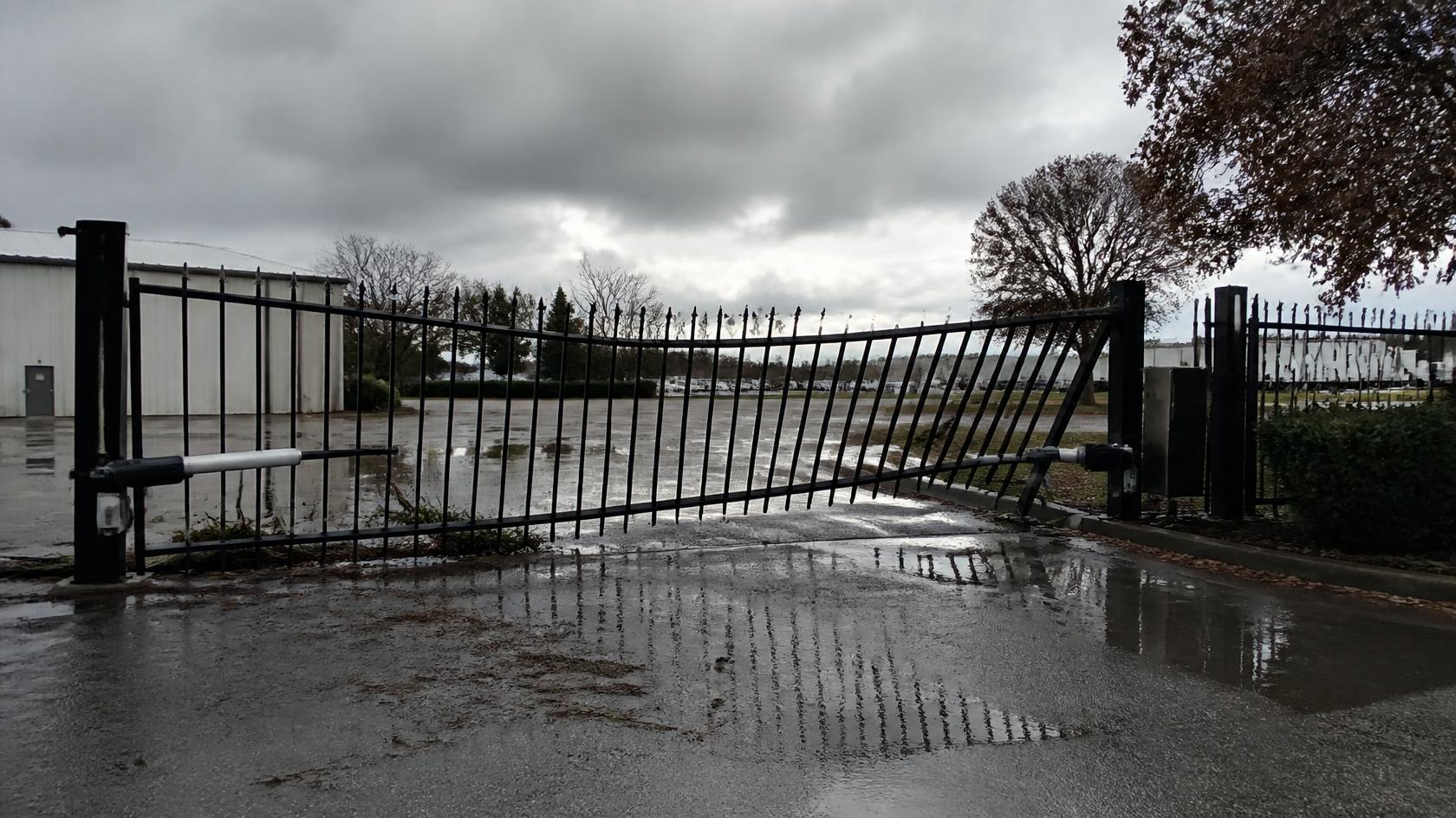
Fall storms can leave commercial gates in Oregon, IL with alignment problems, shifted posts, bent frames, damaged hinges, blocked sliding paths, or drainage-related issues. After strong wind or heavy rain, businesses should inspect the entire gate opening and surrounding fence before small problems begin affecting access, security, or winter readiness.
Storm Damage May Not Be Obvious Right Away
A commercial gate can appear usable after a storm while still developing problems.
Strong wind, saturated soil, falling branches, and debris can affect:
Gate posts
Hinges
Latches
Frames
Rollers
Guides
Nearby fence sections
The first warning sign may be something small, such as a gate requiring more effort to close or a latch sitting slightly out of position.
Those changes should not be ignored.
If the problem started immediately after severe weather, inspect the full gate system before adjusting only one piece of hardware.
Check Whether the Gate Still Closes Correctly
One of the easiest post-storm checks is simply operating the gate.
Open and close it several times.
Look for:
New resistance
Dragging
Uneven movement
Difficulty latching
Larger gaps around the frame
A gate that no longer locks correctly
A gate that previously worked normally but suddenly needs lifting or pushing may have shifted somewhere in the support structure.
The latch may be the most visible symptom, but a moving post or bent frame could be the actual cause.
Heavy Rain Can Shift Gate Posts
Fall storms often bring saturated ground.
When soil around a gate footing becomes wet or eroded, the post may begin moving.
Inspect for:
Leaning
Soil separation
Exposed concrete
Washout around the footing
Movement near ground level
Gate posts carry more load than typical line posts, so small changes can have a noticeable effect on alignment.
Oregon properties can also experience freeze-thaw conditions later in the season.
A post that already moved after heavy rain may become more troublesome once temperatures begin fluctuating around freezing.
Wind Can Push Gates Out of Alignment
Large swing gates can catch significant wind.
After a windy storm, look for:
Hinges that appear loose
Frames no longer sitting square
Latch misalignment
Gate stops that have shifted
Posts leaning away from their original position
Wind does not always bend the gate directly.
It may place repeated force on hinges or support posts until the gate begins sitting differently in the opening.
If the frame and posts remain structurally sound, adjustment may be possible.
If the gate has been twisted or the post has shifted substantially, a more involved repair may be needed.
Falling Branches Can Damage More Than the Frame
Branches and storm debris can hit the top or side of a commercial gate.
The visible dent may not be the only problem.
Inspect nearby:
Hinges
Welded connections
Gate posts
Latches
Chain link fabric
Top rails
A branch impact can bend the frame enough to affect closing even when the gate remains attached.
It can also loosen surrounding fence sections or damage protective coatings.
If the frame is no longer square, repeatedly adjusting the latch may not restore dependable operation.
Hinges Can Loosen After Storm Stress
Swing gate hinges should be checked after high winds or impact.
Look for:
Loose bolts
Excessive movement
Binding
Bent hinge components
Cracks near connections
A hinge problem can allow the gate to sag gradually.
Once one side drops, the latch may stop meeting correctly and ground clearance may decrease.
If the hinges are repaired, the support post should also be inspected.
New or adjusted hardware will not stay aligned if the post continues moving.
Sliding Gates Can Collect Storm Debris
Sliding commercial gates face a different set of post-storm problems.
Heavy rain and wind may leave:
Gravel
Mud
Leaves
Branches
Other debris
in the gate's travel path.
Check:
Rollers
Guides
Tracks where applicable
Stops
Frame alignment
A gate that begins grinding, shaking, or moving unevenly may simply be encountering resistance, or the storm may have damaged the movement hardware.
Do not continue forcing the gate through an obstructed path.
Clearing the area first can help determine whether a mechanical repair is also needed.
Drainage Problems Can Cause Repeated Gate Issues
If the same gate loses alignment after every heavy rain, the problem may involve the site rather than only the gate.
Look for:
Standing water
Mud
Erosion
Low spots
Runoff toward the posts
Exposed footing edges
A recurring drainage problem can weaken support around the gate posts.
Repairing the latch, hinges, or frame may temporarily restore operation, but the gate may shift again after the next storm.
The drainage issue should be identified so the repair plan addresses the conditions around the entrance as well.
Inspect the Surrounding Fence Section
A commercial gate does not operate independently from the fence around it.
After storms, inspect the sections connected to the entrance for:
Bent rails
Loose chain link
Shifted terminal posts
Broken fittings
Torn fabric
Movement near the gate can transfer stress into the surrounding perimeter.
If a terminal post has shifted, both the gate and chain link tension may be affected.
Repairing only the gate without stabilizing the connected fence section can leave the entrance vulnerable to repeat problems.
Look for Vehicle Damage After Storms
Storm conditions can indirectly increase vehicle impacts.
Wet pavement, debris, poor visibility, and temporary traffic changes may make it harder for drivers to maneuver around entrances.
Inspect for:
Fresh scrapes
Dented posts
Bent frames
Disturbed concrete
New alignment problems
Commercial entrances near loading areas or parking lots deserve particular attention.
If vehicle impacts happen repeatedly, consider whether the gate opening provides enough turning clearance.
Wider access, bollards, wheel stops, or better traffic flow may help reduce future damage.
Prioritize Gates That Control Important Access
Not every gate has the same urgency after a storm.
Give priority to entrances serving:
Main deliveries
Equipment yards
Employee parking
Outdoor storage
Restricted areas
Dumpster service
A secondary gate with cosmetic damage may be monitored.
A gate that does not close, lock, or move safely should be addressed sooner.
Businesses should focus repairs on access points where a failure could create a security problem or disrupt normal operations.
Decide Whether the Gate Needs Repair or Replacement
Repair may be practical when:
Damage is localized
Posts remain stable
The frame is still square
Hinges or latches can be replaced
Sliding hardware remains serviceable
Replacement may make more sense when:
The frame is severely bent
Gate posts are unstable
Multiple structural components are damaged
Corrosion has weakened the system
Previous repairs no longer hold
A storm does not automatically mean the entire gate needs replacement.
The decision should be based on the structural condition of the entrance and whether dependable alignment can be restored.
Prepare the Repaired Gate for Winter
Fall storm repair should also consider the colder season ahead.
After the gate is repaired, confirm that:
Ground clearance is adequate
Drainage around posts is improved where possible
Sliding paths are clear
Snow-storage plans avoid the entrance
Latches and locks operate correctly
A gate that is barely functional after storm repairs may create another problem once snow and ice arrive.
Completing the repair with winter operation in mind can help businesses avoid another interruption later in the season.
Restore Commercial Gate Access in Oregon, IL
Fall storms can affect commercial gates through wind, saturated soil, debris, branch impact, and vehicle activity.
The most effective repair starts with checking the entire entrance, including posts, hinges, latches, frames, sliding components, drainage, and surrounding fence sections.
Rockford Fence provides commercial gate repair, fence repair, installation, replacement, chain link fencing, security fencing, dumpster enclosures, and other commercial fence solutions.
Contact Rockford Fence for commercial gate repair in Oregon, IL. The team can inspect storm-related damage and recommend practical repairs based on the condition of the gate and surrounding perimeter.
