
Gate Repair in Dixon, IL: Common Problems at Commercial Entrances
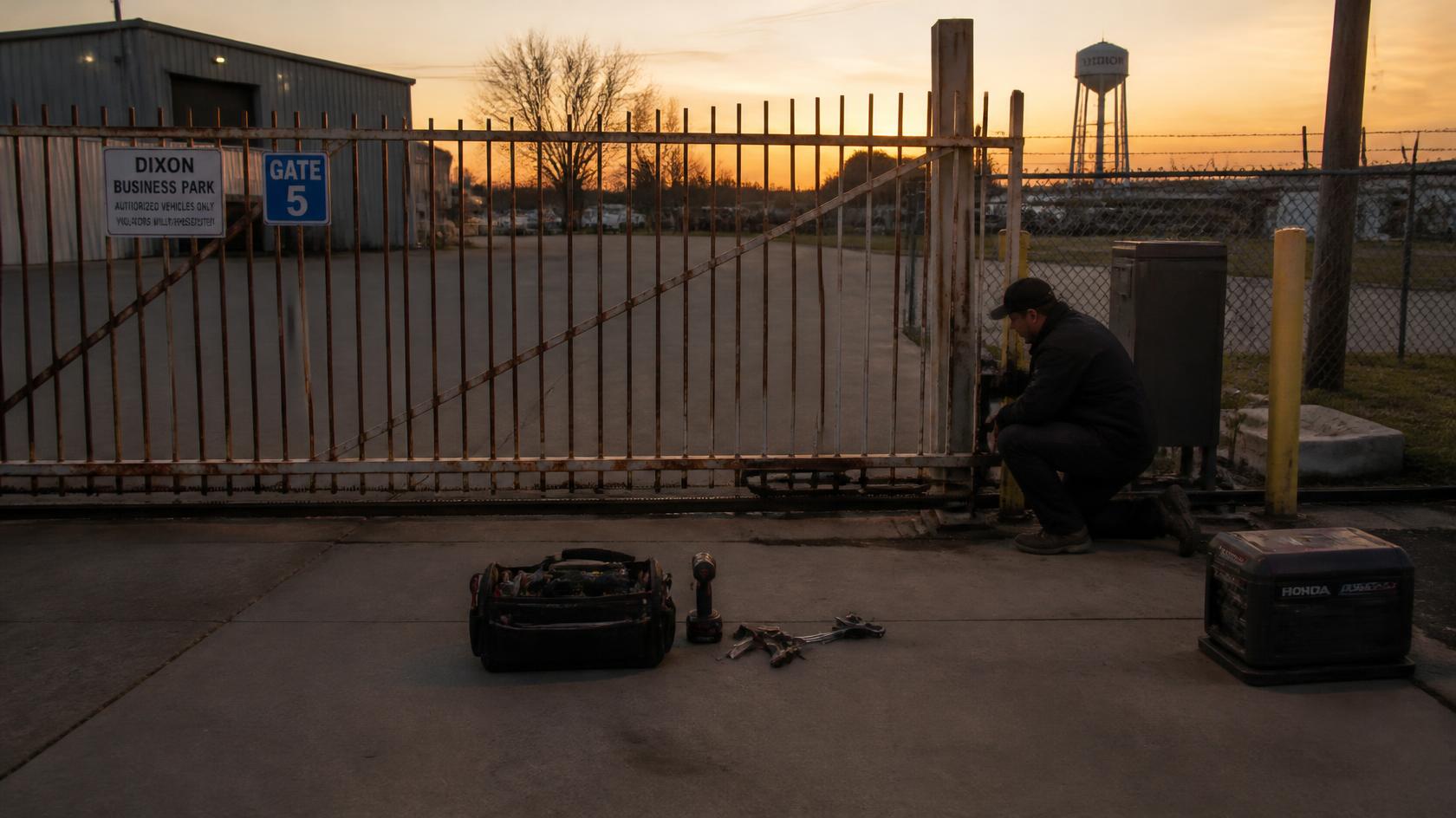
Commercial gate problems in Dixon often begin with sagging, dragging, latch misalignment, worn hinges, unstable posts, damaged rollers, or vehicle impact. Because gates handle more movement than most fence sections, early repairs can help prevent access problems from spreading into the surrounding fence, posts, and hardware.
Commercial Entrances Take More Daily Wear
A commercial gate may open and close dozens of times during a normal workday.
It may serve:
Delivery trucks
Employee vehicles
Equipment
Service crews
Waste-removal trucks
Customers
Snowplows
That repeated movement makes gates more vulnerable to wear than stationary fence sections.
Small changes in alignment can quickly affect how easily the gate opens, closes, and locks.
For businesses in Dixon, regular gate checks are especially useful before colder weather makes existing problems harder to manage.
Sagging Is One of the Most Common Gate Problems
A sagging gate may sit lower on one side or gradually move out of alignment with the latch post.
Possible causes include:
Worn hinges
Loose hardware
A shifting hinge post
Frame distortion
Repeated heavy use
Do not assume the hinges are always the only problem.
If the support post is moving, replacing or tightening the hinges may provide only temporary improvement.
The entire gate opening should be inspected before deciding on the repair.
Dragging Can Point to Several Issues
Commercial gates should clear the ground throughout their full range of movement.
Dragging may result from:
Sagging
Post movement
Uneven pavement
Gravel buildup
Soil changes
A bent frame
A gate that scrapes the ground puts additional stress on hinges, connections, and the frame.
The problem may become more noticeable when snow, ice, or frozen ground reduces clearance.
Repair should focus on why the gate has dropped rather than simply forcing it to continue operating.
Latch Misalignment May Be a Structural Warning
A gate that no longer latches properly may seem like a small hardware problem.
Sometimes it is.
However, repeated latch misalignment can also indicate movement elsewhere in the system.
Check for:
Leaning gate posts
Worn hinges
Bent frames
Loose connections
Ground movement
If the latch needs frequent adjustment, the gate may be shifting rather than the latch itself failing.
A commercial entrance should close and secure without being lifted, pushed sideways, or forced into position.
Loose or Worn Hinges Need Attention
Swing gates depend on hinges to support repeated movement.
Signs of hinge problems can include:
Excessive play
Squeaking or binding
Visible wear
Loose bolts
Uneven movement
Sagging near the hinge side
Minor adjustment may be enough when the hardware is still in good condition.
Badly worn or damaged hinges may need replacement.
The support post should also be checked because new hardware will not solve the problem if the post is unstable.
Gate Posts Can Shift Over Time
Gate posts carry more weight and movement than typical line posts.
Inspect them for:
Leaning
Movement near the footing
Cracked or exposed concrete
Soil erosion
Corrosion near the base
Impact damage
Dixon properties can experience freeze-thaw conditions that make existing footing problems more noticeable.
A post surrounded by wet or unstable soil may begin shifting enough to affect the entire gate opening.
Repair may involve resetting a structurally sound post or replacing one that is bent, corroded, or otherwise weakened.
Sliding Gates Have Their Own Common Problems
Sliding commercial gates rely on a clear path and properly functioning movement hardware.
Common problems include:
Worn rollers
Damaged guides
Uneven travel
Grinding
Shaking
Debris in the operating path
Track problems where applicable
Leaves, gravel, mud, snow, and ice can create additional resistance.
If the gate moves unevenly, inspect the rollers, guides, frame, and travel path together.
Continuing to force a struggling sliding gate can increase wear on several components.
Bent Frames Can Keep Problems Coming Back
Gate frames can be damaged by:
Delivery vehicles
Trailers
Forklifts
Landscaping equipment
Waste-removal trucks
Snowplows
A frame may look only slightly bent but still affect alignment.
Repeated latch adjustments or hinge work may not solve the problem if the frame itself is no longer square.
Visible dents, twists, scraped coatings, or changed clearances should be evaluated before smaller components are replaced.
Vehicle Impacts Often Affect More Than One Part
Commercial entrances are especially vulnerable to impact damage.
A vehicle may strike one post but also disturb:
The footing
Nearby fence sections
Rails
Chain link tension
Gate hardware
After an impact, the full opening should be inspected.
If the same entrance is repeatedly damaged, consider whether the layout creates a difficult turn or insufficient clearance.
Wider openings, bollards, wheel stops, or improved traffic flow may help reduce future damage.
Ground Conditions Can Affect Gate Alignment
Some gate problems begin below the visible fence.
Watch for:
Standing water
Mud
Erosion
Low spots
Runoff toward gate posts
Exposed footings
If the ground around a support post remains wet, seasonal movement can affect alignment.
This is especially important where a gate goes out of position at the same time each year.
The fence contractor may not handle major drainage work, but the condition should still be identified if it contributes to recurring gate problems.
Rust Can Weaken Critical Components
Metal gates and hardware should be inspected for more than surface appearance.
Check:
Hinges
Latches
Bolts
Frames
Post bases
Rollers
Welded connections
Minor surface corrosion may be manageable while the metal remains structurally sound.
More serious concerns include deep rust, flaking metal, weakened welds, thinning components, or hardware that breaks during adjustment.
Structural corrosion may require component replacement rather than another temporary repair.
Poor Clearance Can Create Operational Problems
Gate clearance matters around both the ground and nearby traffic.
A gate may struggle because:
Pavement has shifted
Gravel has built up
Snow reduces open space
Landscaping encroaches on the entrance
Stored materials block movement
Commercial gates should have enough room to operate without contacting nearby obstacles.
For swing gates, review the full swing path.
For sliding gates, keep the travel area beside the fence clear.
Dumpster and Service Gates Need Extra Attention
Dumpster enclosures and service entrances often receive heavy use and frequent vehicle contact.
Common problems include:
Bent posts
Loose hinges
Damaged latches
Frames out of square
Reduced clearance
Repeated impact damage
These gates may also be exposed to snowplows and waste-removal vehicles.
If repairs keep returning, the problem may be related to opening width or traffic patterns rather than the gate hardware alone.
Prioritize Problems That Affect Business Access
Not every issue has the same urgency.
Higher-priority repairs include:
Gates that will not close
Gates that will not lock
Unstable support posts
Frames that are badly bent
Sliding gates that bind or stop
Hardware that is close to failure
Minor cosmetic damage may be monitored.
Problems that interfere with security or normal business access should usually be addressed sooner.
When Repair Makes Sense
Commercial gate repair may be practical when:
Damage is limited to hardware
The frame remains structurally sound
Posts are stable
Rollers or guides can be replaced
Alignment can be restored
Corrosion is limited
Repair can often extend the useful life of an otherwise dependable gate.
The surrounding fence should still be checked to confirm that the problem is isolated.
When Replacement May Be More Practical
Replacement may make more sense when:
The frame is badly distorted
Gate posts are unstable
Corrosion is widespread
Repeated repairs keep failing
The entrance is too narrow for current traffic
Multiple structural components are damaged
Replacement also gives businesses an opportunity to improve gate width, access, or layout if the original design no longer fits how the property is used.
Keep Dixon Commercial Entrances Working Reliably
Commercial gate problems often start with small changes in movement, alignment, or hardware condition.
Catching sagging, dragging, worn hinges, post movement, roller problems, corrosion, or vehicle damage early can help prevent larger access issues.
Rockford Fence provides commercial gate repair, fence repair, installation, replacement, chain link fencing, security fencing, dumpster enclosures, and other commercial fence solutions.
Contact Rockford Fence for gate repair in Dixon, IL. The team can evaluate the entrance, identify the cause of the problem, and recommend practical repair or replacement options based on the condition of the gate and surrounding fence.
