
Gate Repair Near Me in Janesville, WI: Preparing Entrances for Winter
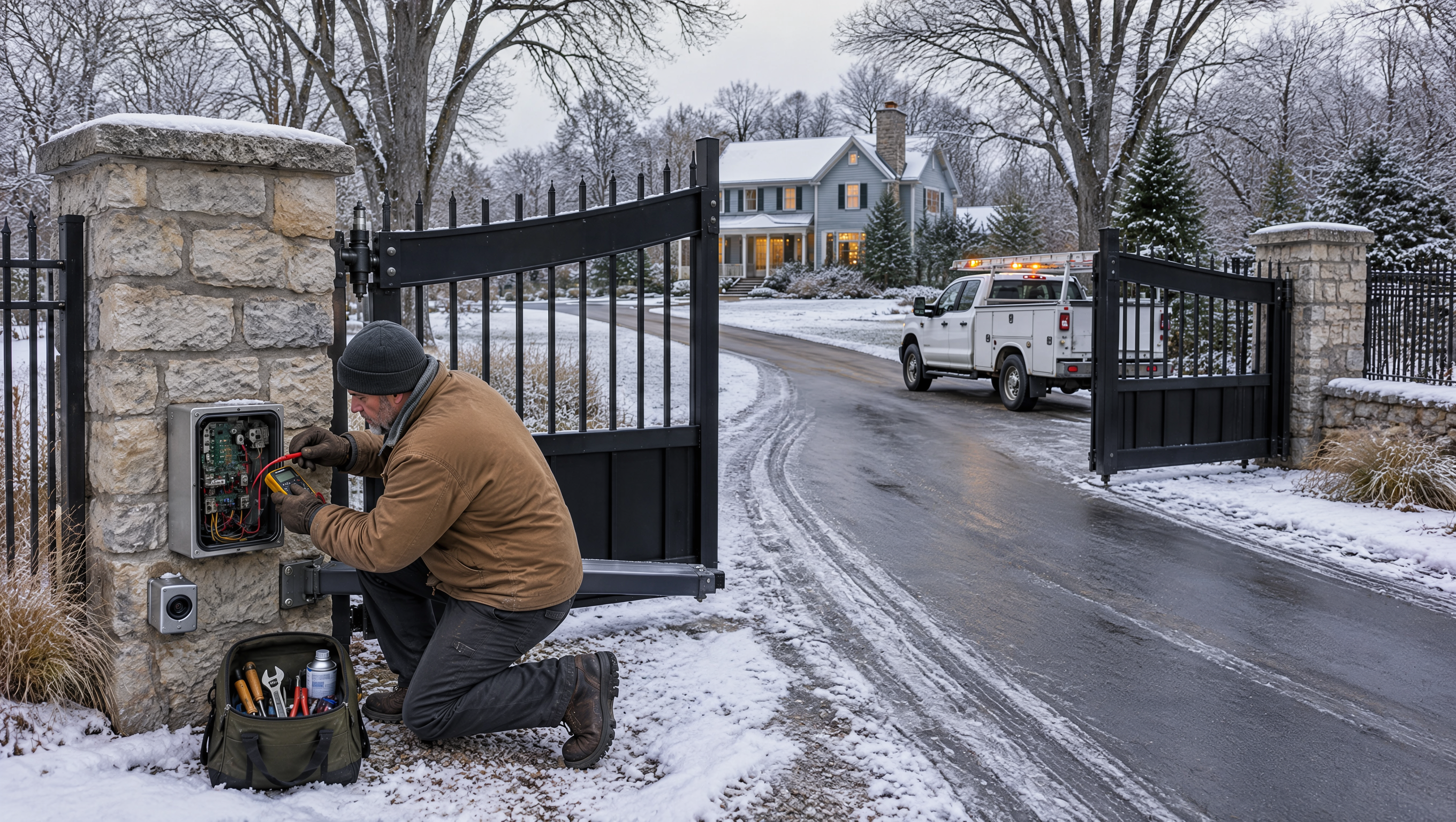
Commercial gate repair in Janesville should focus on keeping entrances aligned, secure, and easy to operate before snow and ice create added resistance. Businesses should check support posts, hinges, rollers, latches, ground clearance, drainage, traffic damage, and snow-storage areas so vehicle and pedestrian access remain reliable through winter.
Test the Entrance Under Normal Use
A gate inspection should begin with operation, not appearance.
Open and close the gate several times and watch how it behaves throughout the full cycle.
Pay attention to:
Dragging
Sagging
Grinding
Uneven movement
Difficulty latching
Reduced ground clearance
Excessive force needed to move it
A gate that barely functions in dry fall conditions may become more difficult to use once snow, ice, frozen debris, and colder temperatures affect the entrance.
Any unusual movement should be investigated before assuming the gate simply needs a small hardware adjustment.
Look at the Gate Alignment From a Distance
Stand back and view the entire opening.
The gate should sit evenly between its support points and line up naturally with the latch, stop, or closing position.
Warning signs include:
One side sitting lower
Uneven gaps
A frame leaning toward the post
Latch hardware no longer meeting correctly
A gate that must be lifted before closing
These symptoms may point to hinge wear, frame damage, roller problems, or post movement.
Repeatedly adjusting a latch will not solve an entrance that is physically shifting.
Gate Posts Should Be Checked Before Hardware
Gate posts carry more stress than typical line posts because they support repeated movement and heavier frames.
Inspect the base of each post for:
Leaning
Soil separation
Exposed concrete
Erosion
Corrosion
Vehicle impact
Janesville can experience freeze-thaw conditions that make unstable ground more noticeable as winter progresses.
If a gate post moves, the entrance may lose alignment even when the hinges or latch are still in usable condition.
Stabilizing the support structure should come before repeated hardware adjustments.
Swing Gate Hinges Can Reveal Early Problems
Swing gates rely on hinges to maintain height and alignment.
Check for:
Loose fasteners
Excessive play
Binding
Bent components
Cracks near connections
A worn hinge can allow the frame to drop enough to reduce ground clearance or move the latch out of position.
The support post should also be inspected at the same time.
A new hinge will not provide a lasting repair if the post itself continues leaning or shifting.
The gate, hinge, and post should be treated as one system.
Sliding Gates Need a Clear and Stable Path
Sliding gates create a different set of winter maintenance concerns.
Inspect:
Rollers
Guides
Stops
Tracks where applicable
Frame alignment
Full travel area
Remove gravel, mud, leaves, branches, and other debris before it freezes in place.
A sliding gate that shakes, grinds, or hesitates may have worn rollers or misaligned guides.
If movement remains rough after the path is cleared, mechanical repair should be considered before winter conditions add more resistance.
Check Ground Clearance Before Snow Builds Up
Ground clearance can become a major winter access issue.
Inspect the bottom of the gate and note whether it already passes close to:
Gravel
Asphalt
Concrete
Uneven soil
Raised pavement edges
Snow and ice can reduce usable clearance even further.
If the gate is already scraping or nearly touching the surface, determine whether the cause is post movement, hinge wear, frame distortion, or changing grade.
Correcting the underlying issue is more dependable than simply forcing the gate over the obstruction.
Latches and Locks Should Work Without Extra Force
A commercial gate should close and lock naturally when properly aligned.
Test:
Latches
Locks
Handles
Stops
Bolts
Closing points
If the gate must be lifted, pushed sideways, or slammed before it locks, the issue is likely larger than the latch itself.
Security hardware works best when the gate reaches the correct closing position consistently.
Before winter, repair misalignment that could leave the entrance difficult to secure after a snow or ice event.
Check Drainage Around the Entrance
Water problems around gates can become winter problems quickly.
After rain, look for:
Standing water
Mud
Erosion
Low areas
Runoff toward posts
Water that remains near an entrance may later freeze into the gate path or around the footing.
Repeated moisture can also contribute to soil instability around support posts.
If the same gate repeatedly loses alignment after wet conditions, drainage may be part of the cause.
Major drainage work may require separate service, but the condition should still be identified during gate repair.
Watch for Corrosion in Moving Components
Gate components are exposed to repeated movement as well as weather.
Inspect:
Hinges
Bolts
Roller hardware
Gate frames
Post bases
Welded connections
Surface rust may not require major repair, but structural corrosion deserves closer attention.
Warning signs include:
Flaking metal
Thinning components
Holes
Weak welds
Brittle hardware
Winter moisture and road salt can continue affecting already damaged metal.
Replacing severely weakened components before winter can help prevent a sudden access problem later.
Review Vehicle Damage Around the Entrance
Commercial entrances often sit in high-traffic areas.
Look for impact around:
Delivery gates
Loading entrances
Dumpster areas
Parking lot access points
Equipment routes
Warning signs include:
Scraped posts
Bent frames
Disturbed footings
Damaged guides
Shifted hardware
Even minor impact can change alignment.
If the same entrance is repeatedly damaged, the repair plan should also consider whether the gate needs more turning clearance, a wider opening, bollards, or wheel stops.
Repairing the frame alone may not solve a recurring traffic problem.
Make Space for Snow Removal
Gate repair should include a winter access plan.
Before the first significant snowfall, decide where snow will be pushed.
Avoid storing snow:
In swing gate arcs
Along sliding gate paths
Against support posts
Near gate stops
Where it narrows vehicle entrances
Snowbanks can reduce usable width and force trucks closer to posts.
They can also make a properly repaired gate appear to fail when the real problem is blocked movement.
Planning snow storage early can protect both the entrance and the surrounding fence.
Check Automated Gates Mechanically First
If the property uses an automated gate, start with the physical gate.
The operator may struggle when the entrance has:
Dragging
Poor alignment
Worn rollers
Unstable posts
Obstructions
Damaged hinges
Once the gate moves freely, operator-related symptoms can be evaluated more accurately.
Problems involving controls, sensors, electrical components, or the operator itself may require qualified service.
Safety features should not be bypassed to keep an automated gate moving.
The goal is a gate that operates freely and a control system that functions as intended.
Prioritize Problems That Could Block Access
Some gate issues deserve attention sooner than others.
Higher-priority repairs include:
Gates that do not close
Gates that do not lock
Unstable support posts
Severe dragging
Failed rollers
Bent frames
Structural corrosion
Minor cosmetic wear can usually be monitored.
For commercial properties, the most important repairs are those that affect security, delivery access, employee movement, or winter operations.
Prepare Janesville Entrances Before Winter Conditions Set In
Commercial gate repair before winter should focus on dependable movement, secure closure, stable support, and clear access.
Hinges, rollers, posts, latches, drainage, ground clearance, traffic damage, and snow-storage plans all influence how well an entrance performs once winter arrives.
Rockford Fence provides commercial gate repair, gate installation, chain link fence repair, security fencing, replacement, dumpster enclosures, and other commercial fence solutions.
Contact Rockford Fence for gate repair in Janesville, WI. The team can inspect entrance alignment, gate components, support posts, and surrounding fence conditions and recommend practical repairs before winter access becomes more difficult.
