Industrial Security Fencing in Northern Illinois: Best Options
For a business in Northern Illinois, the biggest threat to your fence isn’t a burglar with bolt cutters—it’s a January morning after a snowplow has passed. The constant barrage of road salt, slush, and freeze-thaw cycles attacks a fence’s structural integrity year after year. While many business owners wonder about the difference between chain link vs ornamental iron for security, the real starting point is choosing a material that can survive our harsh climate without turning into a rusty eyesore in just a few seasons.
Two key terms are critical here: gauge and coating. The wire’s thickness, known as its gauge, can be counterintuitive; a lower gauge number means the wire is thicker and stronger, like the difference between a thick rope and fishing line. For security, you want a low gauge. Just as important is the fence's "raincoat"—either a galvanized coating of zinc or a thick vinyl coating. These protective layers are non-negotiable defenses against the rust caused by constant moisture and salt spray.
When specified correctly, chain link becomes the reliable workhorse for industrial security fencing. For a large logistics center in Joliet, for example, an 8-foot, 9-gauge galvanized chain-link fence is a cost-effective way to secure the perimeter while allowing clear visibility for cameras. It delivers a powerful combination of strength, longevity, and value, proving that the "right" fence is about the material quality, not just the style.
The Professional Look: When to Invest in Ornamental Steel Fencing
Sometimes, your property needs to do more than just keep people out—it needs to look the part. For businesses where public image and perceived value are paramount, such as corporate campuses or high-end retail locations, ornamental fencing offers a significant upgrade in both security and style. This is the modern, durable version of the classic "wrought iron" look, sending a clear message of professionalism and strength.
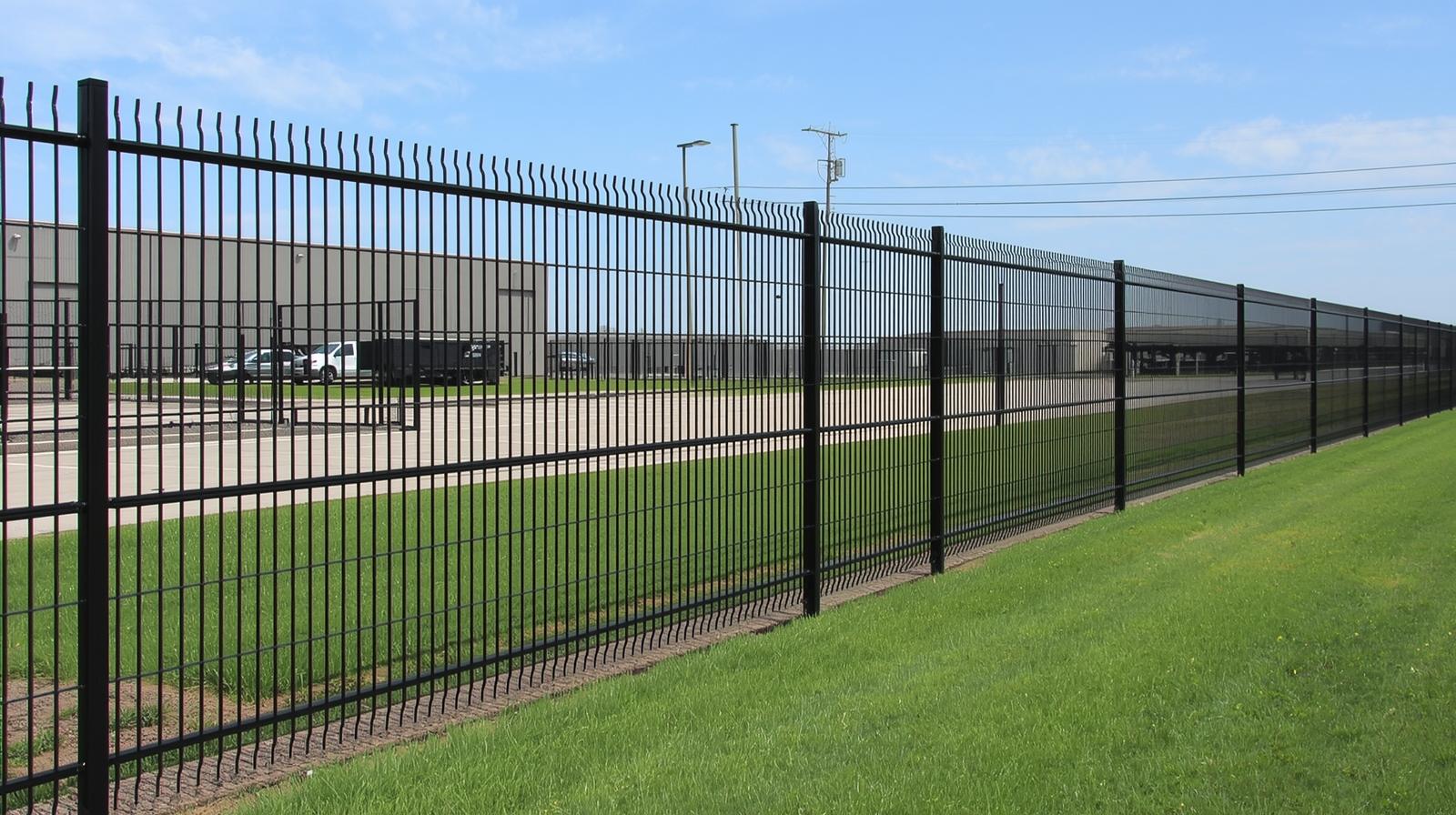
When security is the top priority, ornamental steel is the undisputed choice. Its rigid, heavy-duty construction is far more difficult to bend, cut, or climb than other options, making it a powerful tool for preventing unauthorized access. Think of it as moving from a simple barrier to a visible deterrent. The imposing presence of a steel fence tells potential intruders that you are serious about security, often stopping them before they even make an attempt. A proper wrought iron security fence installation provides both a physical and psychological barrier.
Of course, in our climate, any mention of steel brings up the question of rust. To combat Chicago-area winters, modern ornamental fences aren't painted; they're powder coated. This involves applying a dry powder that is then baked onto the steel, creating a finish far more durable than liquid paint. It seals the metal from road salt and moisture for decades. For areas where appearance is key but maximum security isn't, ornamental aluminum is a lighter, rust-proof alternative that provides the same great look.
Deciding between steel and aluminum comes down to your primary goal. If you’re protecting high-value assets, steel is the answer. If you need a maintenance-free fence to define a property line beautifully, aluminum is an excellent choice. As commercial fence contractors in Northern Illinois, we see this investment pay off by enhancing curb appeal and property value. But for critical infrastructure or a storage facility with high-value inventory, even ornamental steel may not be enough.
For Critical Assets: What Are High-Security Fence Options?
When you’re protecting more than just a property line—like valuable inventory, data centers, or critical equipment—a standard fence may not offer enough resistance. This is where anti-climb and anti-cut fence options become necessary. The core concept behind an anti-climb fence is simple: its design features openings so small that an intruder cannot get a handhold or foothold, making it nearly impossible to scale. This turns the fence from a simple divider into a genuine, difficult-to-breach physical barrier.
The two most common choices for this level of security are welded wire mesh and palisade fencing. Welded wire mesh is a rigid steel grid that’s not only difficult to climb but also incredibly hard to cut with common tools like bolt cutters. For a more visually intimidating deterrent, palisade fencing uses massive, spear-topped steel pales that send an unmistakable "do not enter" message. The decision between palisade fencing vs welded wire mesh often depends on whether you need a discreet, see-through barrier that’s hard to defeat up close or a formidable one that deters from a distance.
Deciding to install a high-security fence for an industrial facility is a serious step, typically reserved for protecting assets where any breach would be catastrophic. For most businesses, a robust ornamental steel or heavy-gauge chain link fence provides more than enough security. But no matter how strong your fence is, its effectiveness is often determined by its most-used component: the gate.
The Most Important Choice for an Illinois Winter: Your Gate
A strong fence is only as good as its gate. For a busy commercial property, the gate isn't just an entryway; it's the heart of your daily operations and security. It has to work flawlessly every time a truck or employee needs access, especially during the worst winter weather.
Many properties start by considering a swing gate, which operates like a huge door, swinging inward or outward. While effective in warmer climates, they present a significant problem in Northern Illinois. They need a perfectly clear path to open, and a single hard-packed snowdrift or patch of ice can render the gate completely useless, halting operations and often requiring a costly call for commercial fence repair.
This is why the cantilever slide gate is the superior choice for our region. Instead of swinging, this gate slides horizontally along the fenceline. Most importantly, it’s engineered to “float” over the driveway on rollers set back from the opening. There is no track on the ground that can get blocked by snow or ice, ensuring your entrance remains operational through even the heaviest storms.
When you combine this reliable hardware with automated security gates for business access, you create a system that enhances both efficiency and security. This allows for controlled entry without requiring an employee to battle the elements. Gate choice and automation are key decisions, but along with meeting Illinois industrial fencing code requirements, they also play a significant role in the overall cost.
What Really Drives the Cost of Industrial Fencing?
When planning a budget, many owners ask, "How much does industrial fencing cost per foot?" While this figure provides a baseline, it doesn’t tell the whole story. The true cost of a durable, secure fence is shaped by a handful of key decisions and conditions that go far beyond a simple length measurement. A guide to choosing a commercial security fence should always start with these factors.
The final project price is a combination of four primary factors. Think of them as the main ingredients in your security investment:
Material Type: Basic galvanized chain-link is the most economical, while ornamental steel costs more but offers superior strength and aesthetics.
Fence Height & Length: Taller and longer fences naturally require more material and labor, directly increasing the cost.
Gate System: A simple manual gate is far less expensive than a heavy-duty automated cantilever gate, which can be a significant portion of the total budget.
Site Conditions: A flat, clear fenceline is straightforward. If your property requires tree removal, brush clearing, or extensive ground leveling, expect higher labor costs.
Ultimately, a complex gate system or challenging terrain can have a much larger impact on the price than the fence material itself. This is why a one-size-fits-all "per-foot" price is often misleading. Reputable fencing companies in the Chicago suburbs will always conduct a site visit to assess these variables before providing a detailed, accurate quote for your property.
How to Hire a Pro: 5 Questions to Ask Your Fencing Contractor
Choosing from the many commercial fence contractors in Northern Illinois is as critical as choosing the right material. A proper installation is what stands between a 20-year asset and a leaning mess after just a few winters. The secret lies in conquering the frost line—the depth to which ground moisture freezes, which is about 42 inches in our region. If posts are set too shallow, expanding frozen soil will push them upward. This process, called frost heave, is the number one cause of premature fence failure in our climate.
To protect your investment, arm yourself with these questions to vet any potential installer and ensure they meet Illinois industrial fencing code requirements. Their answers will reveal their expertise and commitment to quality.
How deep will you set the posts to avoid frost heave? (The answer must be 42 inches or more.)
What material gauge and coating do you recommend for my property’s location and why?
Can you quote both a swing gate and a cantilever slide gate for the main entrance?
Are you fully licensed and insured for commercial work in my specific city/county?
What is the warranty on materials and labor? (This impacts future needs for commercial fence repair and maintenance services.)
Your Long-Term Security Investment: Making the Final Choice
Choosing a commercial security fence is about selecting a long-term business asset, not just a barrier. You can now confidently weigh the practical security of chain link against the formidable presence of ornamental steel, ensuring the choice aligns perfectly with your property’s needs and public image.
Crucially, a cantilever slide gate is the single best defense against being locked out by Northern Illinois snow and ice. Your next step is to use the questions provided to contact and vet qualified security fencing companies in the Chicago suburbs. This preparation ensures you can have a productive conversation about your project.
This approach transforms the fence from a simple line on a blueprint into a strategic investment in your property's future—a durable perimeter security solution that protects your operations and stands strong against our demanding climate.
