Maintenance Tips for Wood and Vinyl Fences
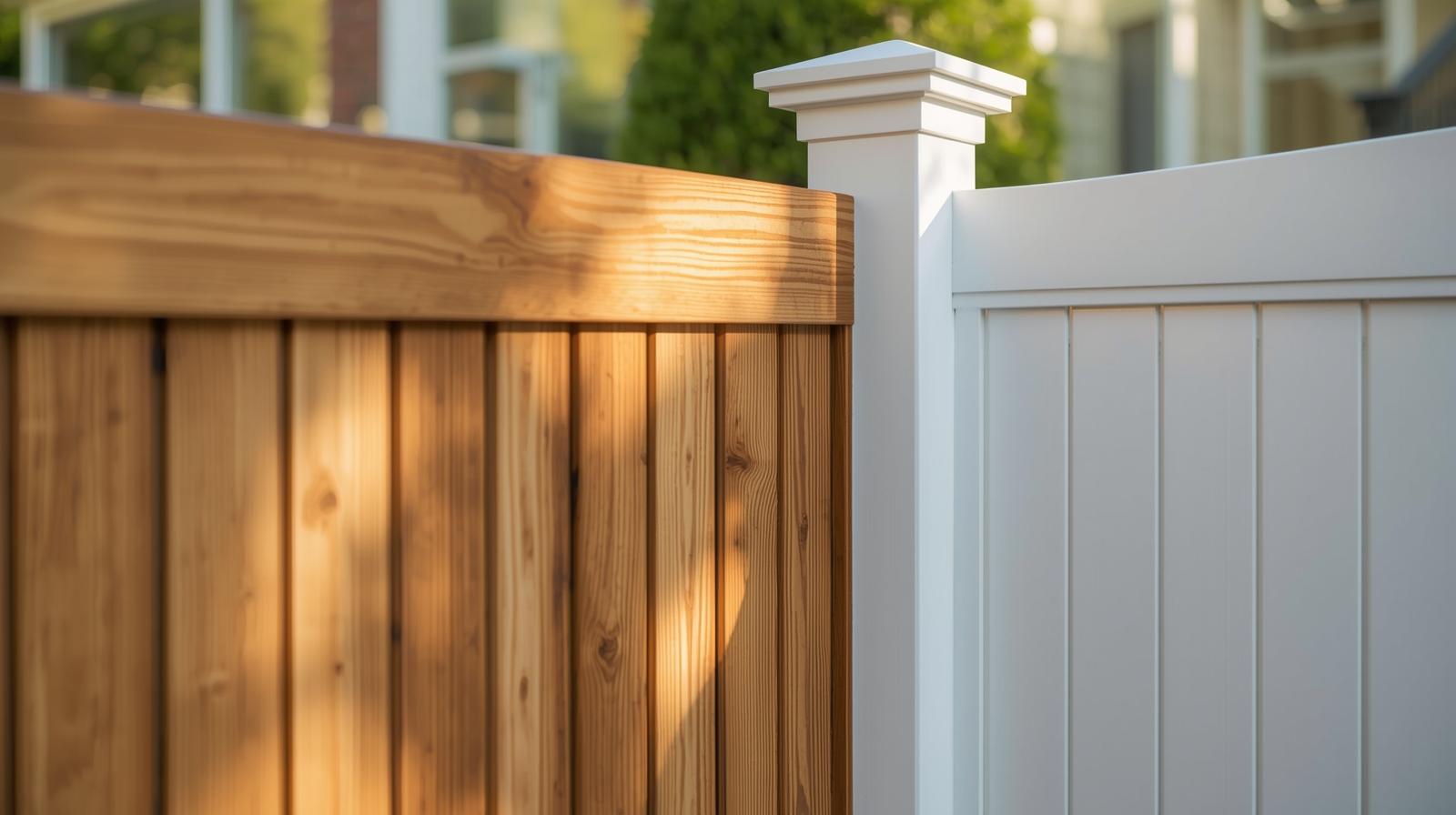
Before you even think about price or durability, the first question is almost always the same: which fence will actually look good with my house? The material you choose sets the entire tone for your property, influencing curb appeal for years. Finding the best privacy fence for your Illinois backyard starts with deciding between the timeless warmth of wood and the clean-lined look of modern vinyl.
Think of a wood fence as a blank canvas. It can be stained to highlight the natural grain of a cedar fence or painted any color imaginable to perfectly match your home's trim, offering unlimited creative control. A vinyl fence, by contrast, provides a more fixed palette. While modern PVC fencing styles and colors include appealing whites, tans, and grays, the look is designed for clean consistency, not custom-tailored color. This aesthetic trade-off is a key factor when weighing the pros and cons of cedar fence vs. vinyl fence.
The right material often depends on your home’s architecture. For instance, a historic Victorian in Evanston might be perfectly complemented by the rich character of stained wood. Meanwhile, a newer siding home in a Plainfield subdivision could look sharp and cohesive with a crisp, white vinyl fence, creating a completely different but equally appealing aesthetic.
The Upfront Investment: A Clear Breakdown of Initial Costs
When it comes to the initial price tag, wood fencing almost always has the lower upfront cost. On average, you can expect a professionally installed vinyl fence to cost about 30% to 50% more per foot than a standard pressure-treated pine fence. For a typical backyard, this difference can quickly add up to several thousand dollars, making wood an appealing choice if your primary concern is the immediate, out-of-pocket expense.
Of course, the material itself is only one part of the equation. Several key factors will influence the final quote from an Illinois installer, which helps explain why your neighbor’s project may have cost more or less than yours. Consider these variables:
Fence Height: A 6-foot privacy fence requires more material and labor than a 4-foot picket fence.
Style: Intricate designs with decorative tops will cost more than a simple, flat-top panel.
Material Grade: For wood, choosing premium cedar over standard pine will increase your cost.
Project Complexity: Slopes, multiple gates, and numerous corners all add to the installation time and final price.
Thinking through these factors helps you create a realistic budget and better understand the quotes you’ll receive. While the lower initial spend is a major point in favor of wood, the true value of each material becomes clearer when you consider the long-term costs of ownership, especially when facing our tough Illinois seasons.
The Illinois Climate Challenge: Which Material Survives Our Seasons?
Beyond the initial price, the real test for any fence is surviving an Illinois year. For a wood fence, the biggest threat is our constant cycle of wet and dry, freeze and thaw. Wood naturally absorbs moisture from rain and melting snow. When that trapped water freezes in winter, it expands, weakening the wood fibers from the inside out. This repeated process is what creates an opening for the two things that can shorten how long a wood fence lasts in Illinois: wood fence rot and insect damage.
Vinyl, on the other hand, is completely unfazed by moisture. However, it does have a different cold-weather concern. So, does a vinyl fence crack in cold weather? It can. In the extreme cold of a January deep freeze, vinyl becomes more rigid and less flexible. A direct, hard impact during these cold snaps—like from a stray hockey puck or an accidental bump with a snowblower—can cause a panel to crack instead of flex, especially on lower-quality products.
Choosing the best fence material for the Illinois climate means deciding which vulnerability you'd rather manage. The ongoing battle for a wood fence is a defense against moisture to prevent decay. For a vinyl fence, it’s about acknowledging the risk of impact damage in sub-zero temperatures. This reality of protecting your investment directly ties into the effort and cost of upkeep.
Your Weekends vs. Your Wallet: The Real Maintenance Demands
That question of how you spend your weekends leads directly to the reality of fence upkeep. Owning a wood fence is like having a beautiful wood deck—it requires a cycle of sealing or staining every two to four years to protect it from sun and moisture. This is a real project, often involving a pressure wash, allowing the fence to dry completely, and then applying the protective coat. For those who enjoy a satisfying DIY project, it's a rewarding weekend's work. For others, it’s a recurring expense to hire a pro.
Vinyl fence cleaning and care, on the other hand, looks completely different. Its main requirement is an occasional bath. A simple spray-down with a garden hose and soapy water is usually enough to remove dirt and grass clippings. Because of our humid summers, you might occasionally spot green or black mildew, but this is only on the surface and typically scrubs off easily. There is no protective coat to re-apply; the maintenance is about cleaning, not preserving.
Ultimately, your choice in maintenance comes down to your lifestyle. Do you prefer a hands-on project that keeps your fence looking its best, or would you rather have an option that asks for little more than a quick wash? This ongoing investment of time and money is a crucial part of your fence’s true expense, which goes far beyond the initial quote.
Beyond the Sticker Price: Calculating the True 15-Year Cost
When you’re comparing quotes, it’s natural to focus on the initial price tag. However, to understand the real financial impact, savvy homeowners look at the "Total Cost of Ownership." This simply means adding up the upfront installation price plus all the future maintenance money you’ll spend. While a wood fence often wins on day one, those recurring staining and sealing projects add up. After about a decade, the total you've spent on wood can easily meet or even exceed the initial cost of vinyl.
Thinking in terms of a 15-year lifespan, the math becomes much clearer. Here’s a simplified breakdown of the total cost for each:
Wood Fence: Upfront Cost + (Cost of Stain & Supplies x 4-5 times)
Vinyl Fence: Upfront Cost + (Minimal Cost of Soap & Water)
This long-term view changes the conversation from "which is cheaper?" to "which is the smarter investment for my budget?" While the higher initial price can be a vinyl fence con for some, others see it as pre-paying for decades of minimal hassle. A new fence almost always adds to your property value, but choosing the option that aligns with your long-term financial plan ensures it’s a happy, stress-free addition to your home.
When Accidents Happen: Which Fence Is Easier to Repair?
Life happens in the backyard, and sometimes your fence takes a hit from a stray baseball or a falling branch. If this happens to a wood fence, the fix is usually straightforward. You can simply remove the one or two damaged boards and nail new ones in their place. It’s often a quick, inexpensive repair that a handy homeowner can tackle in an afternoon. This board-by-board flexibility is a major advantage for wood.
Repairing a vinyl fence, however, is a different story. Because vinyl fences are manufactured as interlocking systems, a significant crack or hole from an impact often means the entire panel must be replaced. This is a more involved and costly fix than swapping out a few wood planks, making it one of the key vinyl fence cons to consider for the long term.
The final challenge for any repair is matching the new piece to the old. A new wood board will stand out until it weathers, and a replacement vinyl panel might be slightly brighter than the originals that have been exposed to years of Illinois sun. While you avoid wood fence rot and insect damage with vinyl, physical breaks present their own unique puzzle.
Your Final Choice: A Quick Guide for the Illinois Homeowner
The choice between vinyl and wood fencing isn't just about materials, but about how you value your time, your budget, and the unique demands of our Illinois seasons. It is an informed investment in your property's future.
To find your answer, simply ask what matters most. This guide on how to choose between wood and vinyl fencing boils down to your personal priorities:
Choose WOOD if… you prioritize a lower upfront cost, want limitless custom color options, and find satisfaction in a weekend staining or sealing project every few years.
Choose VINYL if… you prefer to invest more now for decades of minimal upkeep, value a clean and consistent look, and want to reclaim your weekends for relaxing, not maintenance.
Ultimately, the best choice is the one that fits your home, budget, and lifestyle. With a clear understanding of the trade-offs in cost, maintenance, and durability, you can make a confident decision that will serve your family and home perfectly for years to come
