
Security Fence Maintenance in Janesville, WI: Preparing Lots and Perimeters for Winter
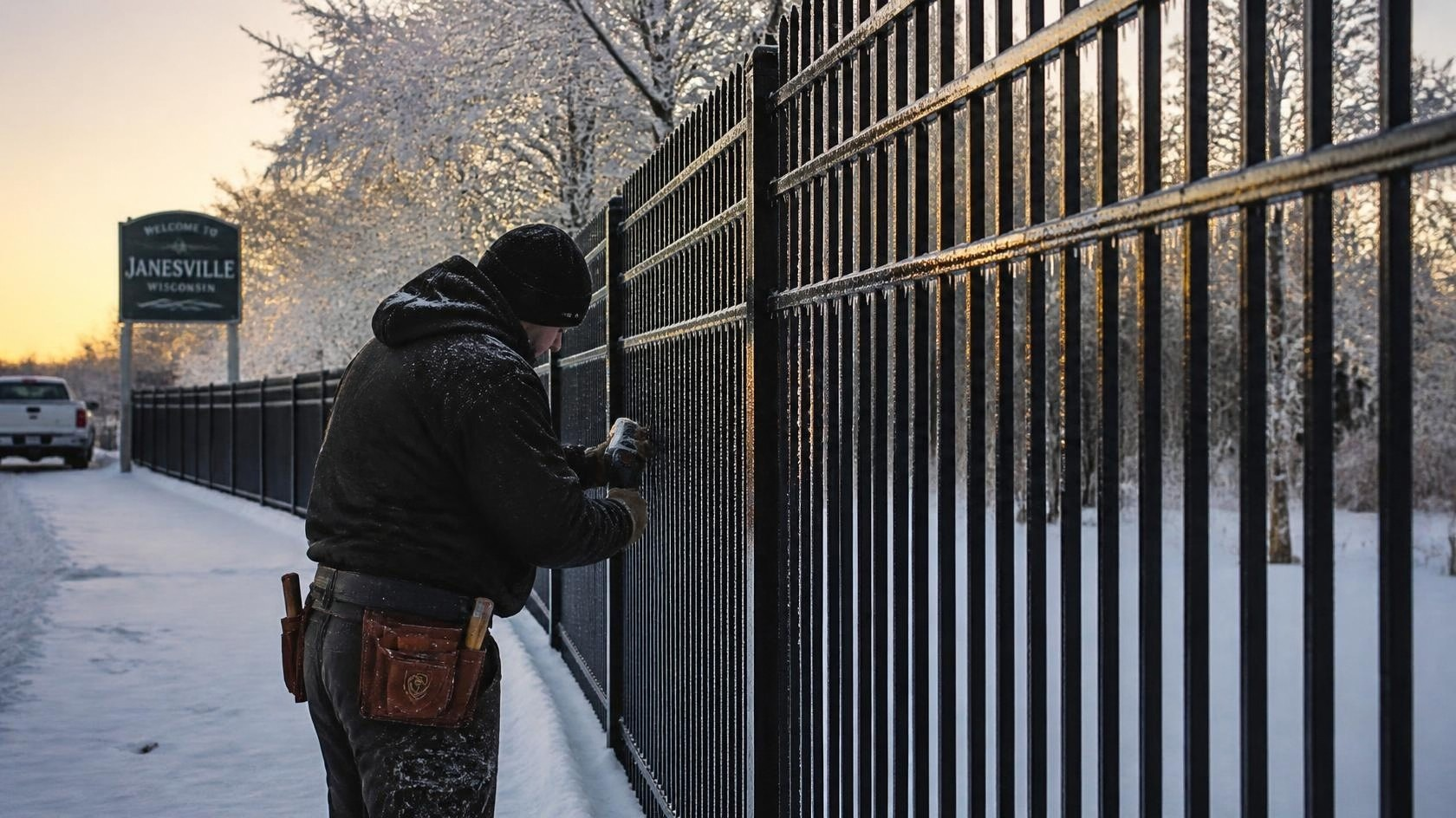
Security fencing around commercial lots, storage areas, parking areas, and equipment yards should be inspected before winter for loose fabric, unstable posts, gate problems, corrosion, drainage issues, and snow-removal risks. Janesville property owners and managers can reduce winter access and perimeter problems by correcting weak areas before snow, ice, and freeze-thaw conditions arrive.
Start With a Complete Perimeter Inspection
Winter preparation should begin with a full walk around the property.
Do not focus only on the main entrance. Security problems can develop along side boundaries, rear storage areas, low-traffic sections, and fence lines near trees or drainage paths.
Inspect:
Corners and terminal posts
Vehicle entrances
Pedestrian gates
Parking lot edges
Equipment yards
Outdoor storage
Dumpster enclosures
Sections near roads and driveways
Look for anything that has shifted, loosened, bent, or deteriorated since the previous inspection.
Prioritize Areas That Protect Valuable or Restricted Spaces
Not every part of a commercial fence carries the same level of importance.
Pay closer attention to fencing around:
Equipment
Inventory
Outdoor materials
Service areas
Restricted access points
Vehicle entrances
A loose section at the back of a storage yard may deserve more immediate attention than minor cosmetic wear near an open public area.
Maintenance should focus first on problems that affect access control or create openings in the perimeter.
Check Fence Posts for Stability
Posts support the entire fence system.
Before winter, inspect them for:
Leaning
Movement at ground level
Exposed concrete
Soil erosion
Corrosion near the base
Vehicle impact damage
Janesville properties can experience repeated freeze-thaw cycles. Posts already surrounded by wet or unstable soil may move more as temperatures fluctuate.
A structurally sound post may sometimes be reset.
Badly bent, corroded, or unstable posts may require replacement before they begin affecting nearby rails, fabric, or gates.
Inspect Chain Link Fabric and Tension
Chain link security fencing should remain reasonably tight.
Look for:
Sagging mesh
Torn fabric
Loose tension
Broken tie wires
Openings near posts
Gaps along the bottom
Loose chain link can become more vulnerable when snow is pushed against it.
If the fabric remains strong, it may be retensioned after damaged posts, rails, or fittings are repaired.
Brittle, heavily corroded, or badly stretched fabric may need sectional replacement.
Check Top Rails and Connections
Top rails and fittings help keep the fence aligned.
Inspect:
Bent rails
Rail sleeves
Brace bands
Tension bands
Tension bars
Tie wires
Bolts
A damaged rail can allow nearby mesh to sag or move.
Small hardware problems should also be corrected before winter winds or snow buildup place additional stress on the fence.
Test Every Gate
Security gates need to operate reliably throughout winter.
Open and close each gate several times and watch for:
Dragging
Sagging
Loose hinges
Latch misalignment
Bent frames
Difficult locking
Shifting gate posts
A gate should close completely without being lifted or forced into position.
If the latch repeatedly stops lining up, inspect the frame and support posts before adjusting the hardware again.
Repeated misalignment may point to a structural problem rather than a simple latch issue.
Prepare Sliding Gates for Snow and Ice
Sliding gates may develop different winter problems.
Before cold weather, inspect:
Rollers
Guides
Tracks where applicable
Frame alignment
Stops
Travel paths
Remove leaves, mud, gravel, and other debris that could freeze into place.
Grinding, shaking, or uneven movement may indicate worn rollers or damaged guides.
Addressing these issues before winter can help reduce strain on the frame and terminal posts.
Review Drainage Around Posts and Gates
Drainage can have a major effect on winter fence stability.
Look for:
Standing water
Mud
Low areas
Erosion
Exposed footings
Runoff toward posts
Wet soil followed by freezing temperatures can contribute to movement.
If a gate or fence section repeatedly shifts each winter, water around the footing may be part of the problem.
Correcting drainage along with fence repairs can help reduce recurring alignment issues.
Inspect for Rust and Corrosion
Metal fencing and hardware should be checked before winter moisture and road salt exposure increase.
Pay attention to:
Post bases
Gate frames
Hinges
Latches
Bolts
Tie wires
Welded connections
Minor surface rust may be manageable while the underlying metal remains strong.
More serious warning signs include flaking metal, thinning components, weakened connections, or hardware that breaks during adjustment.
Structural corrosion should be addressed before it spreads into larger sections.
Check Ground-Level Openings
Security fences should also be inspected along the bottom edge.
Gaps may develop from:
Erosion
Animal activity
Poor grading
Loose mesh
Soil settlement
These openings may affect perimeter control even when the upper fence remains in good condition.
Possible repairs may include restoring grade, retensioning fabric, adding appropriate bottom support, or correcting drainage.
Recurring openings usually deserve more investigation than simply adding soil.
Plan Snow Storage Before Winter
Snow removal can create fence damage when it is not planned carefully.
Identify where snow will be:
Plowed
Pushed
Stacked
Stored
Avoid repeatedly piling heavy snow directly against:
Chain link fabric
Gates
Fence posts
Rails
Dumpster enclosures
Snow pressure can stretch fabric and place additional load on posts.
Make sure snow piles will not block vehicle or pedestrian gates.
Inspect Areas Near Snowplow Routes
Fence sections near parking lots and drive lanes often face additional winter risks.
Check areas near:
Parking lot edges
Driveways
Loading zones
Dumpster access
Service entrances
Look for existing impact damage before winter starts.
Bent posts, scraped coatings, and narrow gate openings can become bigger problems once snow reduces visibility and available clearance.
If one area is repeatedly struck, consider whether bollards, wheel stops, wider openings, or improved traffic flow could reduce future damage.
Remove Vegetation and Debris
Fall is also a good time to clear material away from the fence line.
Remove:
Fallen branches
Heavy vines
Leaf piles
Tall weeds
Stored materials leaning against the fence
Vegetation can hide damage and hold moisture around posts and hardware.
Branches resting against fencing may also add extra weight once snow begins accumulating.
Keeping the fence line visible makes winter inspections easier.
Check Dumpster Enclosures and Service Gates
Dumpster areas often receive heavy vehicle traffic and frequent gate use.
Before winter, inspect:
Hinges
Latches
Frames
Posts
Ground clearance
Panel or fabric condition
Snow, ice, and waste-removal vehicles can make an existing alignment problem worse.
A gate that already drags or barely latches should be repaired before winter conditions reduce clearance further.
Decide What Should Be Repaired Now
Some maintenance items can wait, while others should be addressed before freezing weather.
Prioritize:
Gates that will not close or lock
Unstable posts
Torn chain link fabric
Bent rails
Large perimeter gaps
Loose sections near storage areas
Structural corrosion
Repair may be practical when the damage is localized and the surrounding fence remains strong.
Sectional replacement may be better when one area is severely damaged but the rest of the perimeter remains dependable.
Prepare Janesville Security Fencing for Winter
A secure winter perimeter starts with stable posts, properly tensioned fencing, working gates, clear drainage, and a snow-removal plan that does not place unnecessary pressure on the fence.
Rockford Fence provides commercial fence repair, installation, replacement, chain link fencing, security fencing, gates, dumpster enclosures, and other commercial fence solutions.
Contact Rockford Fence for security fence maintenance in Janesville, WI. The team can inspect lots, gates, and perimeter sections and recommend practical repairs before winter conditions arrive.
