Security Fence Options for Sycamore, IL: Cost, Durability & Best Uses (2026)
Security fencing in Sycamore, IL typically costs about $40–$180+ per linear foot in 2026, depending on material, height, gauge, and the level of intrusion resistance you need. For most businesses, chain link is the most affordable, while anti-climb welded wire and heavy steel systems provide the best combination of security and long-term durability.
For commercial and industrial properties in Sycamore, the right fence does more than mark a boundary. It helps control site access, deter theft and vandalism, protect equipment and vehicles, and improve overall property management. In a Northern Illinois climate, fencing also needs to stand up to snow, freeze-thaw cycles, moisture, and wind loads, so the cheapest option upfront is not always the best long-term value.
Why Security Fencing Matters for Sycamore Businesses
A well-designed security fence can help businesses:
reduce unauthorized entry
secure outdoor inventory and fleet vehicles
define access points more clearly
support insurance and liability goals
improve durability and lower replacement frequency over time
The best system depends on your property type. A contractor yard, office campus, warehouse, self-storage site, or industrial facility may all need different levels of protection. Welded wire and anti-climb systems are increasingly favored for higher-security settings because they reduce grip points while maintaining visibility beyond the fence line.
Typical Security Fence Cost Ranges in Sycamore, IL
For planning purposes, these are practical installed ranges for commercial work in the Sycamore market:
Chain link: $40–$70 per linear foot
Upgraded chain link: $50–$90 per linear foot
Aluminum security fencing: $60–$110+ per linear foot
Ornamental or heavy steel fencing: $70–$130+ per linear foot
Anti-climb / welded wire fencing: $90–$180+ per linear foot
Palisade or heavy-duty steel security fencing: $120–$200+ per linear foot
These figures are based on broader 2026 Illinois and national installed fence pricing, plus current commercial security fence system guidance showing welded wire and anti-climb products positioned above standard chain link in both rigidity and security value.
Chain Link Fencing: Best Budget Option
Chain link remains the most common entry-level security fence for commercial sites because it offers the lowest installed cost for large perimeters.
It works best for:
warehouses
light industrial sites
storage lots
service yards
back-of-building utility areas
Its main advantages are affordability, quick installation, and easy repair. Galvanized chain link also holds up reasonably well outdoors. The downside is that standard chain link offers only basic intrusion resistance. Without upgrades, it is easier to climb or cut than more security-focused systems. Commercial properties that need only light deterrence often start here and then add height, heavier gauge wire, or deterrent accessories later.
Upgraded Chain Link: Best Value for Mid-Level Security
For many Sycamore businesses, upgraded chain link is the best middle-ground solution.
Typical upgrades include:
smaller mesh openings
heavier-gauge wire
barbed wire or razor-wire deterrents where allowed
privacy slats or screening
stronger posts and hardware
This category gives you better resistance without jumping all the way to premium anti-climb systems. It is often the right fit for contractor yards, fleet storage, equipment enclosures, and medium-risk commercial properties. If your main goal is to improve deterrence while keeping the budget under control, this is usually where the value is strongest.
Aluminum Security Fencing: Low Maintenance, Better Appearance
Aluminum fencing is not usually the highest-security option, but it can make sense where appearance and corrosion resistance matter.
Best uses include:
office buildings
retail properties
mixed-use sites
visible commercial frontages
Its biggest advantages are low maintenance and strong weather resistance. Aluminum does not rust like untreated steel and typically performs well in wet or snowy conditions. The tradeoff is that it is generally less impact-resistant and less breach-resistant than heavy steel or welded wire security systems. It is a good fit when you want a more polished look than chain link but do not need maximum hard-security performance.
Ornamental or Heavy Steel Fencing: Strong and Long-Lasting
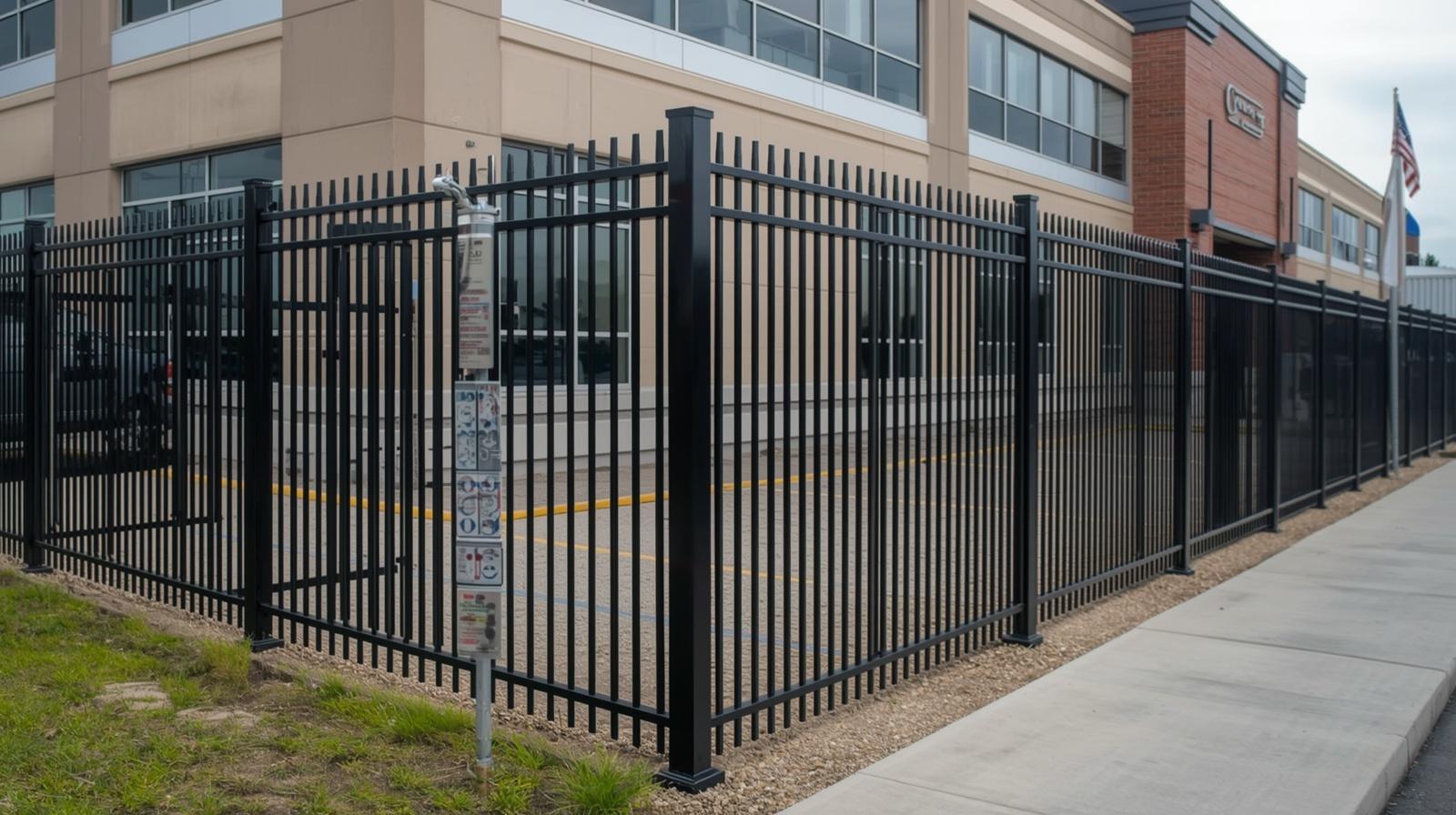
Steel fencing offers a stronger blend of durability, appearance, and perimeter control than chain link or aluminum.
It works well for:
manufacturing facilities
business parks
high-traffic commercial sites
properties that want a more permanent-looking perimeter
Compared with aluminum, steel offers greater impact resistance. Compared with basic chain link, it provides a more rigid and secure feel. In many commercial settings, steel is chosen when the owner wants a fence that looks substantial and holds up well over time. It costs more, but it often delivers stronger long-term value, especially on sites exposed to heavy traffic or repeated wear.
Anti-Climb / Welded Wire Fencing: Best for High Security
For businesses that need a real security upgrade, anti-climb welded wire fencing is one of the strongest options.
Why it stands out:
tight mesh reduces footholds
welded panels increase rigidity
visibility stays open for monitoring
tampering and cutting become more difficult
This style is a strong fit for:
utilities
industrial sites
equipment yards
high-risk storage
facilities with controlled-access needs
If your site holds higher-value assets or sees more trespass risk, anti-climb fencing is often the best balance between appearance, performance, and serious perimeter protection.
Palisade or Heavy Steel Security Fencing: Maximum Protection
At the top end of the market are palisade and other heavy-duty steel security systems.
These are best for:
critical infrastructure
government or municipal facilities
high-security industrial sites
properties needing maximum deterrence
These systems cost the most, but they offer the strongest breach resistance and longest service life. They are usually overkill for standard commercial storefronts or office properties, but they make sense where perimeter security is a primary operational concern.
Which Fence Makes the Most Sense for Your Property?
A practical rule of thumb:
Large yards on tighter budgets: chain link or upgraded chain link
Customer-facing commercial properties: aluminum or ornamental steel
Industrial and high-traffic sites: steel or anti-climb welded wire
High-security environments: anti-climb or heavy-duty steel systems
The right answer usually comes down to three questions: how much deterrence do you need, how visible is the property, and how long do you want the system to last before major replacement.
Midwest Durability Considerations
In Sycamore, durability matters because fencing must handle:
frost heave around posts
snow and ice buildup
seasonal moisture exposure
wind pressure on taller runs
That is why post depth, coatings, and structural rigidity matter so much. Galvanized and coated steel systems generally perform best when long-term durability is the goal, while aluminum performs well where corrosion resistance and lower upkeep are priorities.
Key Cost Drivers
Several factors can push pricing up or down:
Fence Height
A 6-foot perimeter fence costs less than an 8- or 10-foot security fence. Taller fences require more material, stronger posts, and more labor.
Material Strength
Standard chain link costs less than ornamental steel, welded wire, or palisade systems. Heavier materials usually bring better longevity and stronger security.
Security Add-Ons
Features that raise total cost include:
barbed or razor wire where permitted
privacy slats
thicker wire gauge
reinforced posts and rails
tamper-resistant hardware
Gates & Access Points
Vehicle gates, man gates, and access control prep can materially raise total cost. A perimeter with multiple openings almost always costs more per foot than a simple continuous run.
Site Conditions
Difficult terrain can increase labor and equipment needs. The most common issues are:
slope
poor drainage
soft or shifting soil
tight equipment access
existing pavement or obstructions
ROI: Security + Long-Term Value
For Sycamore businesses, the right security fence can deliver long-term returns through:
reduced theft and vandalism
lower replacement frequency
stronger access control
improved operational organization
better protection for inventory and vehicles
While chain link often wins on upfront price, steel and anti-climb systems frequently produce better long-term value on sites where risk is higher or the fence sees heavier wear.
FAQs
What is the most affordable security fence for a Sycamore business?
Chain link is usually the lowest-cost commercial option.
What is the most secure option?
Anti-climb welded wire and heavy steel systems provide the strongest intrusion resistance.
What lasts the longest?
Heavier steel security systems usually offer the longest lifespan when installed correctly and maintained well.
What is best for a warehouse or contractor yard?
Upgraded chain link is often the value choice, while anti-climb fencing is better for higher-risk sites.
Request a Site Visit & Quote in Sycamore & Northern Illinois
If you're planning a security fencing project in Sycamore, IL, Rockford Fence helps businesses compare fence types, balance cost with durability, and choose a system that fits the property’s actual security needs.
We help commercial clients select the right perimeter solution, plan gates and access points, and install durable fencing built for Midwest conditions.
Contact Rockford Fence today to schedule a security fence consultation and quote in Sycamore, IL.
