Wood Fence Installation in Machesney Park, IL: What Property Owners Should Know
Wood fencing remains one of the most popular choices for residential and commercial properties in Machesney Park, IL — but a successful installation depends on more than just picking a style. This guide covers wood species, post depth, style options, maintenance, and what local property owners should know before they start. Rockford Fence installs wood fencing throughout Machesney Park and the surrounding area.
Why Wood Fencing Stays Popular in Machesney Park
There's a reason wood fencing has been the go-to choice for Illinois homeowners for generations. It's versatile, visually appealing, and works with nearly every property type — from a modest residential lot in a Machesney Park subdivision to a larger rural parcel along the Rock River corridor.
Wood also offers something vinyl and chain link can't easily replicate: a natural warmth that complements landscaping, matches the architectural character of older neighborhoods, and can be customized in ways that factory-produced materials simply don't allow.
That said, wood is also the fence material that requires the most from the property owner. Understanding what you're committing to before installation is what separates a fence that looks great for 20 years from one that starts deteriorating in five.
Wood Species: Cedar vs. Pressure-Treated Pine
The two most common wood choices for residential fencing in northern Illinois are cedar and pressure-treated pine. Each has real advantages, and the right pick depends on your priorities.
Cedar
Cedar is a naturally rot-resistant wood, which makes it well-suited for the wet springs and freeze-thaw cycles common to the Machesney Park area. It contains natural oils that repel moisture and insects without chemical treatment.
Advantages of cedar:
Natural rot and insect resistance
Lightweight, which reduces stress on posts and hardware
Ages to an attractive silver-gray if left unsealed, or holds stain well
Less warping and shrinking than pine in humidity changes
Considerations:
Higher material cost than pressure-treated pine
Still benefits from periodic sealing or staining to maximize lifespan
Quality varies — clear-grade cedar performs significantly better than knotty grades
Pressure-Treated Pine
Pressure-treated pine is chemically treated to resist rot, decay, and insects. It's the more budget-friendly option and widely available throughout the region.
Advantages of pressure-treated pine:
Lower upfront material cost
Strong and durable when properly maintained
Widely available in standard fence dimensions
Considerations:
Must be allowed to dry fully before staining — typically 3–6 months after installation
Can warp or crack more noticeably than cedar as it dries
Requires regular sealing or staining to prevent moisture absorption over time
For most Machesney Park residential projects, cedar is the preferred choice when budget allows. For longer fence runs where material cost is a significant factor, pressure-treated pine with a consistent maintenance schedule performs well.
Wood Fence Styles: Choosing the Right Look and Function
Wood fencing isn't a single product — it's a category that includes several distinct styles, each suited to different needs.
Board-on-Board (Shadowbox)
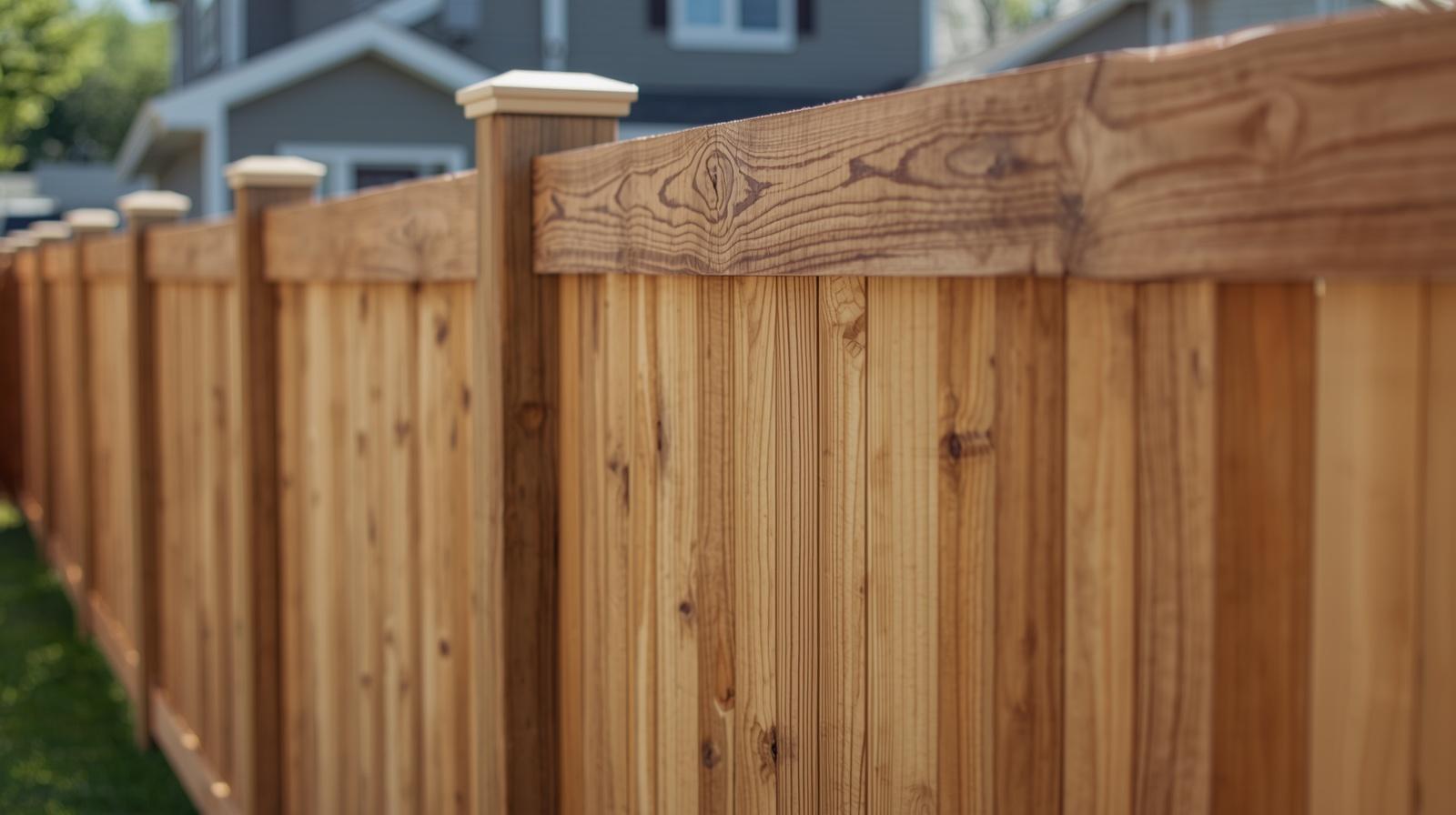
One of the most popular residential privacy fence styles in northern Illinois. Boards are alternated on both sides of a center rail, creating a fence that looks finished from either side and provides full visual privacy while allowing airflow between boards. That airflow matters — it reduces wind load on the fence, which helps posts stay plumb through Illinois storm seasons.
Stockade (Solid Privacy)
Boards are placed side by side with no gaps, creating a solid barrier. Provides maximum privacy but catches more wind than a shadowbox design. Best used in sheltered locations or where privacy is the absolute priority.
Split Rail
An open, rustic style typically used for property boundary definition rather than privacy or containment. Common on larger lots and rural properties. Not suitable for pet containment unless combined with wire mesh infill.
Picket Fencing
The classic open-style residential fence. Works well for front yards, decorative borders, and properties where boundary definition matters more than full privacy. Available in flat-top, dog-ear, and pointed styles.
Post and Rail
A practical, clean-looking fence common on transitional and semi-rural properties. Typically two or three horizontal rails between posts, used for livestock boundaries, pasture edges, or decorative rural aesthetics.
Post Installation: The Most Important Part of Any Wood Fence
No element of a wood fence installation matters more than the posts. Everything else depends on them. In Machesney Park — and across northern Illinois — the frost line is the controlling factor.
Illinois frost depth in this region runs 42 inches or deeper. Posts that are set above the frost line will heave as the ground freezes and thaws each winter. A fence that looks fine in October can be visibly leaning by March.
Proper post installation in this climate means:
Digging post holes to at least 42–48 inches — deeper on corner posts and gate posts that carry more load
Setting posts in concrete to resist lateral movement from wind and frost pressure
Using 4x4 posts for standard privacy fencing and 6x6 posts for gates and corners
Crowning concrete above grade so water drains away from the post base rather than pooling at ground level
Treating cut post ends with a preservative before setting
The post-to-ground contact zone is where wood fence failures begin. Any shortcut here will show up within a few seasons.
How Long Does a Wood Fence Last in Illinois?
A properly installed and regularly maintained wood fence in the Machesney Park area should last 15–20 years. Some cedar fences with diligent maintenance push past that range. Fences that are installed with inadequate post depth, never sealed, or left untreated after storm damage will deteriorate significantly faster.
The primary enemies of wood fencing in northern Illinois are:
Moisture at post bases — the most common cause of early failure
UV exposure — breaks down the surface and drives water into the grain
Freeze-thaw cycling — expands and contracts the wood repeatedly each winter
Insects — less common with cedar but a real concern for untreated pine
Wind damage — storm seasons in this region are hard on solid panel fences
Maintenance: What You Should Plan For
Wood fencing is not a zero-maintenance product. Owners who plan for regular upkeep get significantly more life out of their investment.
A practical wood fence maintenance schedule looks like this:
Year 1: Inspect posts and hardware after the first winter; re-tighten any loose hardware
Every 2–3 years: Clean the fence surface and apply a quality wood stain or sealant
Annually: Walk the fence line after major storms; look for leaning posts, cracked boards, or damaged sections
As needed: Replace individual boards or rails before deterioration spreads
Catching a single rotted post or a split board early is a straightforward repair. Ignoring it means the damage spreads to adjacent panels and what was a $200 fix becomes a $1,500 section replacement.
Permits, Property Lines, and Local Requirements
Before any post hits the ground in Machesney Park, there are a few practical steps every property owner should take.
Check local ordinances. Machesney Park and Winnebago County have regulations covering fence height, setback distances from property lines, and placement near intersections and road right-of-ways. Front yard fences are often subject to different height limits than rear yard fences.
Confirm your property lines. Fence disputes between neighbors are common — and almost always avoidable. If you don't have a recent survey, review your plat of survey before installation. Installing even a few inches over a property line can require a costly removal and reset.
Contact JULIE at 811. Illinois law requires all underground utilities to be marked before any digging begins. Post holes go deep — this step is not optional and is always the first call before installation starts.
HOA requirements. If your property is in a homeowners association, review the CC&Rs before selecting a fence style or material. Some associations restrict fence height, material type, or color.
A professional fence contractor familiar with the Machesney Park area handles these details as a routine part of the installation process.
Wood Fencing for Commercial Properties
Wood fencing isn't exclusively a residential product. It has a place in commercial applications as well — particularly for businesses or facilities that want a natural, finished appearance rather than the industrial look of chain link.
Common commercial uses include:
Dumpster enclosures — wood provides a clean, solid screen for waste areas
Equipment yard screening — blocking sightlines to storage and staging areas
Childcare facility perimeters — where a warm, residential feel is preferred
Property boundary definition on mixed-use or transitional commercial lots
For applications where security is the primary concern, chain link or ornamental fencing is typically the stronger choice. But where aesthetics and screening matter, wood delivers.
Why Professional Installation Matters
Wood fence installation looks straightforward — but the details that determine long-term performance are easy to get wrong without experience. Post depth, concrete footing technique, panel alignment, gate hardware selection, and drainage management all affect how a fence holds up through Illinois winters.
A fence that's installed correctly the first time is a fence that performs for decades. One that cuts corners on post depth or skips concrete footings will be a recurring maintenance problem within a few years.
Rockford Fence installs wood fencing throughout Machesney Park, Loves Park, Rockford, and surrounding communities in Illinois and Wisconsin. We work with homeowners, property managers, and commercial clients — and we build fences designed to handle what northern Illinois winters actually deliver.
Talk to Rockford Fence About Your Wood Fence Project
Whether you're planning a backyard privacy fence, a decorative front yard picket fence, or a wood enclosure for a commercial property, Rockford Fence can walk you through your options and provide a clear, honest estimate.
Visit rockfordfence.net or call us today to get started.
